REVIEW · AMSTERDAM
Amsterdam: Jordaan District Tour with a German guide
Book on GetYourGuide →Operated by Amsterdamliebe · Bookable on GetYourGuide
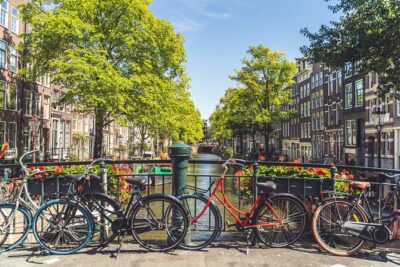
Jordaan feels like a postcard you can walk. On this 90-minute German-led stroll, I love the hidden courtyards you usually miss and the careful way you learn about the canal network and neighborhood shift into a prime address. One watch-out: the tour is German only, so if you want English commentary, you may feel left out.
The route weaves past photo-worthy bridges and backstreets, then sneaks you into intimate inner yards that make the district feel human, not museum-like. Guides such as Lili and Justin are singled out for answering lots of questions and keeping the pace friendly, which matters a lot on a short walk.
The timing is tight, so you get snapshots rather than long stops. If Anne Frank is your main focus, you’ll get context as you pass by, but you may still want to plan a separate, longer visit for deeper reading.
In This Review
- Key highlights at a glance
- Arriving in the Jordaan: what makes this walk work
- Meeting at Westerkerk: where the tour actually starts
- Anne Frank Monument and the first photo stop
- Westerkerk and Grachtengordel: canals and the UNESCO angle
- Courtyard stops: Sint Andrieshofje, Claes Claeszhofje, Karthuizerhofje
- Noorderkerk and Het Papeneiland: quieter moments on the route
- Van Brienenhofje and the secret garden with tulip mania
- Learning the Jordaan story: from working-class to desirable address
- German guide experience: great if you’re comfortable, limiting if not
- Price and value: is €27 for 1.5 hours worth it?
- Who should book this Jordaan tour
- Should you book this Jordaan District Tour with a German guide?
Key highlights at a glance

- Courtyard access in the Jordaan, including several small interior courtyards
- Anne Frank context as you pass her famous hiding place area
- UNESCO canal-system background tied to the 400-year-old canal layout
- Tulip mania story explained in a secret garden setting
- A former working-class neighborhood that changed shape but kept its older bones
Arriving in the Jordaan: what makes this walk work
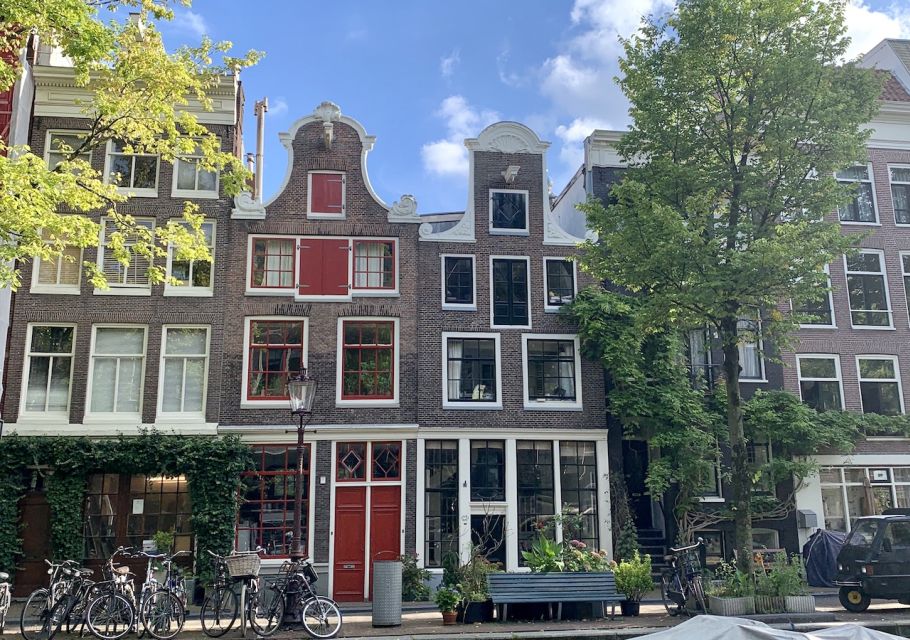
The Jordaan is one of those Amsterdam neighborhoods that looks perfect at first glance, then rewards you once you slow down. This tour is built for that second moment. You’re not only seeing the usual canal façades; you’re also stepping into the quieter spaces behind them—those courtyards and “hofje” style inner yards that give the district its calm feel.
What I like most is that the walk gives you three different ways to understand the area: daily life (backstreets and bridges), bigger Amsterdam systems (the canal network), and major cultural history (Anne Frank and the 17th-century tulip mania). That mix keeps it from turning into a simple photo loop.
One more practical plus: the tour is short—about 1.5 hours—so it’s easy to slot into an active day. You’ll be walking, but you won’t be stuck outdoors forever.
You can also read our reviews of more guided tours in Amsterdam



Meeting at Westerkerk: where the tour actually starts
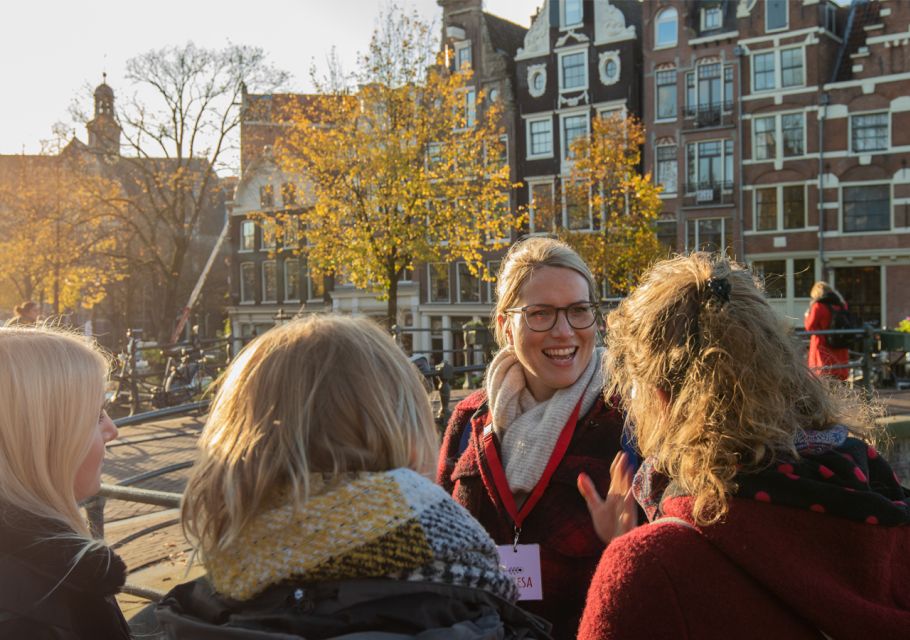
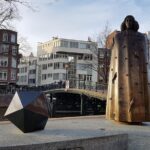
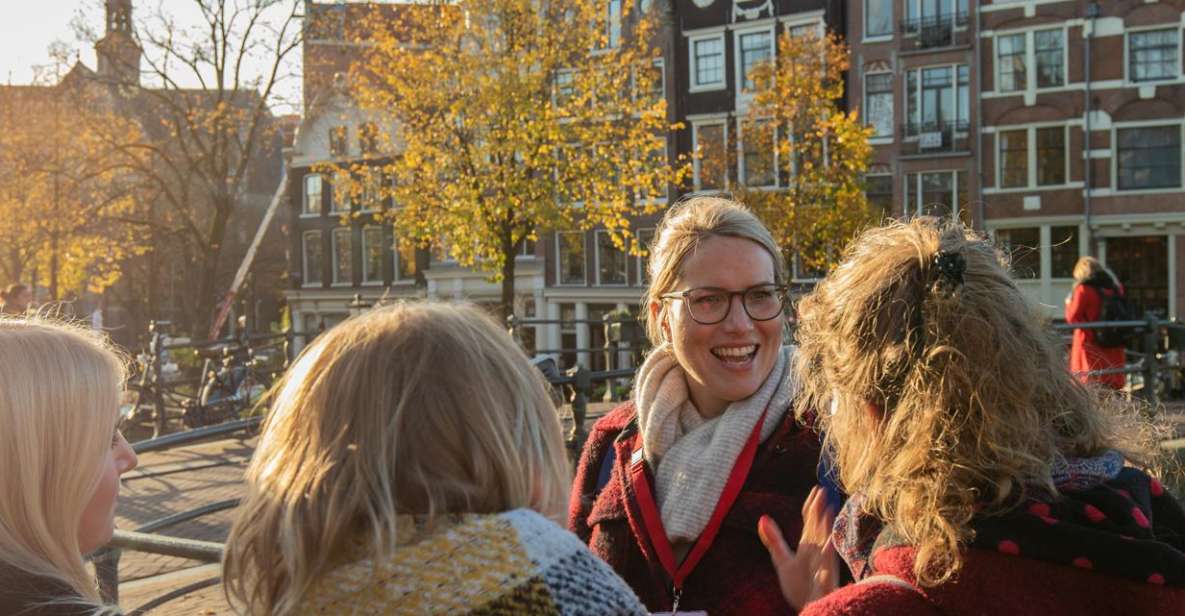
You meet in front of the Anne Frank statue on the southern side of the Westerkerk. Your guide wears a red name tag, so it’s not hard to spot them once you’re there.
This start location is smart. It puts you close to the tour’s main “story spine”: you begin with the Anne Frank Monument, then you move outward through the Jordaan toward the canal-zone viewpoints and the inner courtyards. If you’re arriving from a tram stop, you’ll likely find the area easy to navigate on foot.
Timing note: the schedule is segmented into brief guided moments and photo stops. That’s ideal for people who like structure, and it’s also a gentle warning for anyone who hates standing around waiting for the group. If you move at a normal pace, it should feel smooth.
Anne Frank Monument and the first photo stop
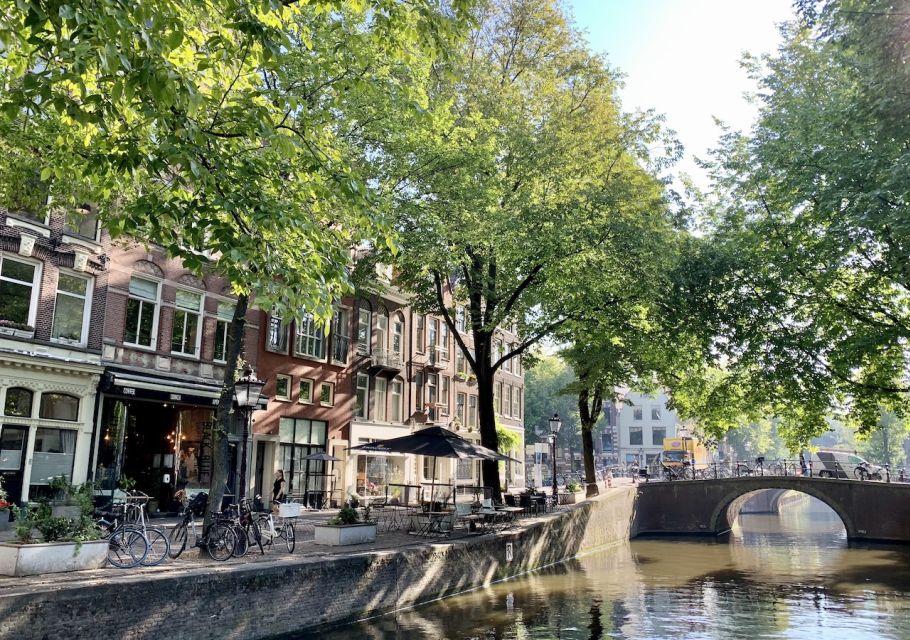
The tour begins at the Anne Frank Monument with a photo stop and a guided intro lasting about 15 minutes. This sets the tone right away: you’re not starting with architecture trivia, you’re starting with the person and the place.
Then, as the walk continues, you’ll get a brief insight into Anne Frank’s story because the route passes by her famous hiding place. The tour doesn’t pretend to replace a full Anne Frank visit with tickets and deeper study. Still, the benefit here is pacing: the story is placed right into the neighborhood streets, so you understand the physical geography around it.
If Anne Frank is personal or especially important to you, I recommend using this moment to ask questions—because the tour’s format gives you chances to clarify what you’re seeing.
Westerkerk and Grachtengordel: canals and the UNESCO angle

Next you move to Westerkerk for a short guided segment (about 10 minutes). From there, you head along the Grachtengordel area, with a photo stop and guidance (about 10 minutes).
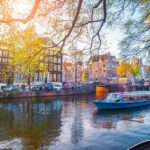
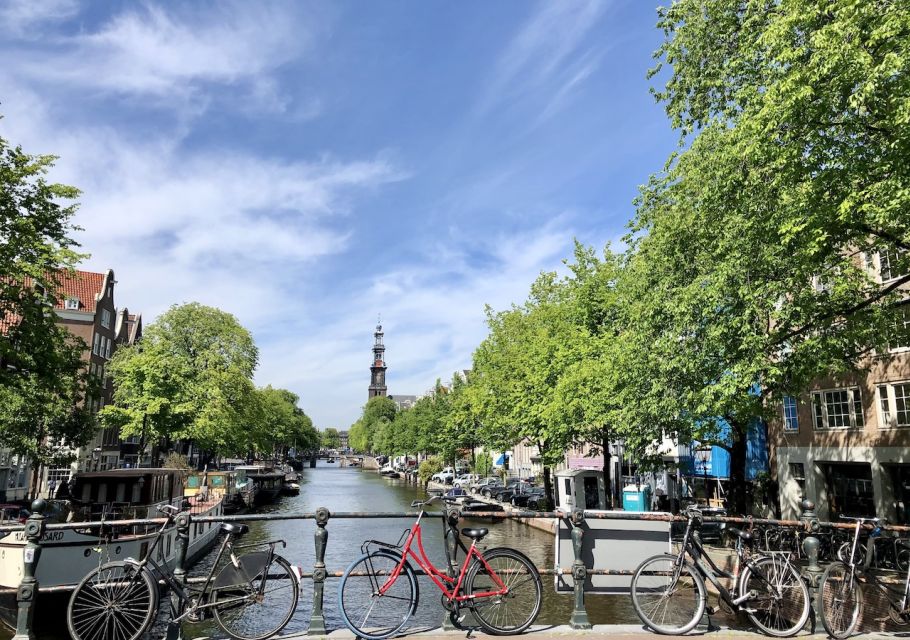
Here’s the value: you get the big-picture explanation for what you’re already looking at. The guide talks about the 400-year-old canal system, and you learn that it was declared a UNESCO World Heritage Site in 2010. Even if you’ve seen canal postcards before, this is the kind of context that turns scenery into understanding.
You’ll also get that practical Amsterdam skill—learning how the canal network shapes where people lived, how they moved, and how the neighborhood developed. And because the walk includes bridges and canal edges, you’ll naturally find yourself slowing down for photos without it feeling like a chore.
Courtyard stops: Sint Andrieshofje, Claes Claeszhofje, Karthuizerhofje
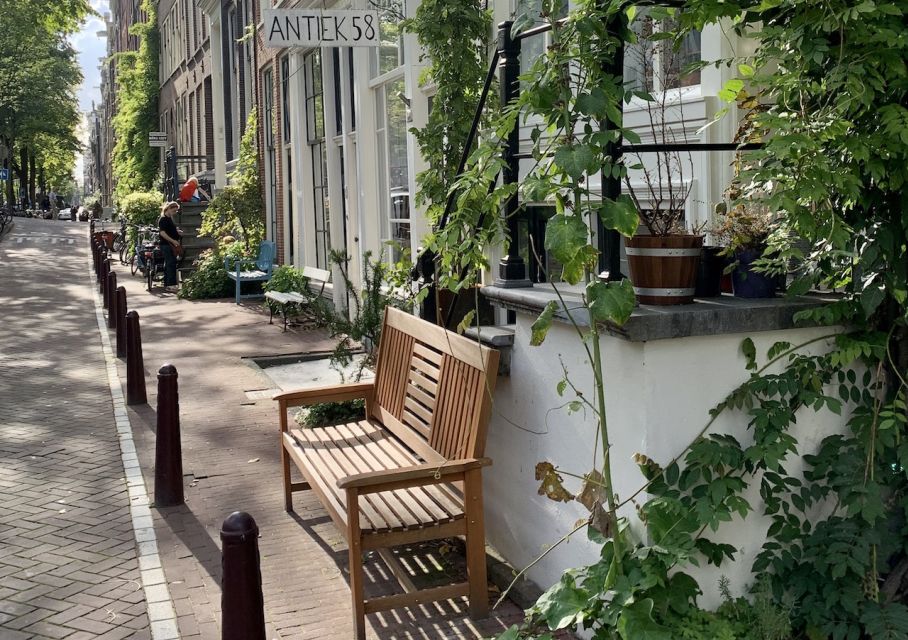
This is where the tour earns its reputation. You’ll visit multiple inner courtyards, each time with a photo stop plus guided context (about 10 minutes each). The route includes:
- Sint Andrieshofje courtyard
- Claes Claeszhofje
- Karthuizerhofje
Why these work so well in a group setting: courtyards are easy to overlook when you’re walking on your own. The Jordaan has hidden inner yards, and this tour is designed to get you into those spaces instead of just describing them.
In the feedback I’ve seen, people really like the feeling of being allowed into places they would otherwise never find. One guide highlighted in the German-language feedback is Lili, and that local familiarity shows up as clear answers to lots of questions. If you enjoy asking why a building exists, how neighborhoods change, or what courtyards were for, these stops are the best part of the route.
A small consideration: courtyards mean you’ll be switching between brighter canal streets and dimmer inner spaces. If your phone camera struggles in shade, keep that in mind and take a couple extra seconds before everyone moves on.



Noorderkerk and Het Papeneiland: quieter moments on the route
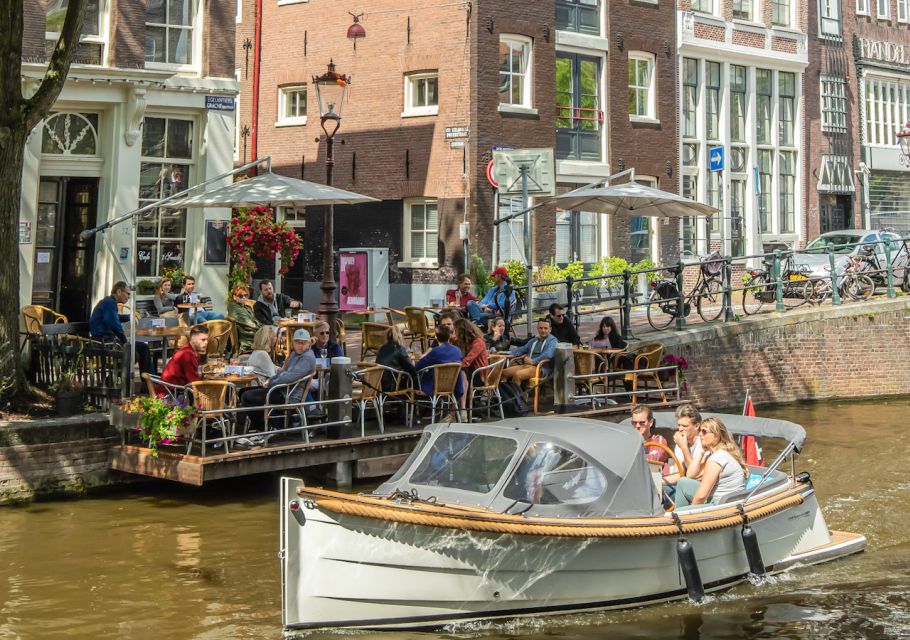
The tour then includes Noorderkerk for a short photo stop and guided time (about 10 minutes). After that you reach Het Papeneiland for a shorter photo stop and guide time (about 5 minutes).
These segments feel like the “breathing space” of the walk. You’re still in the story loop, but the schedule gives you quicker moments to look, listen, and then move. If your feet are starting to feel it, these shorter pauses can actually help you reset.
Het Papeneiland is a quick hit, so you’ll want to be ready to look around immediately—no lingering. But that’s also the point: the tour keeps energy up without turning it into a long shuffle.
Van Brienenhofje and the secret garden with tulip mania
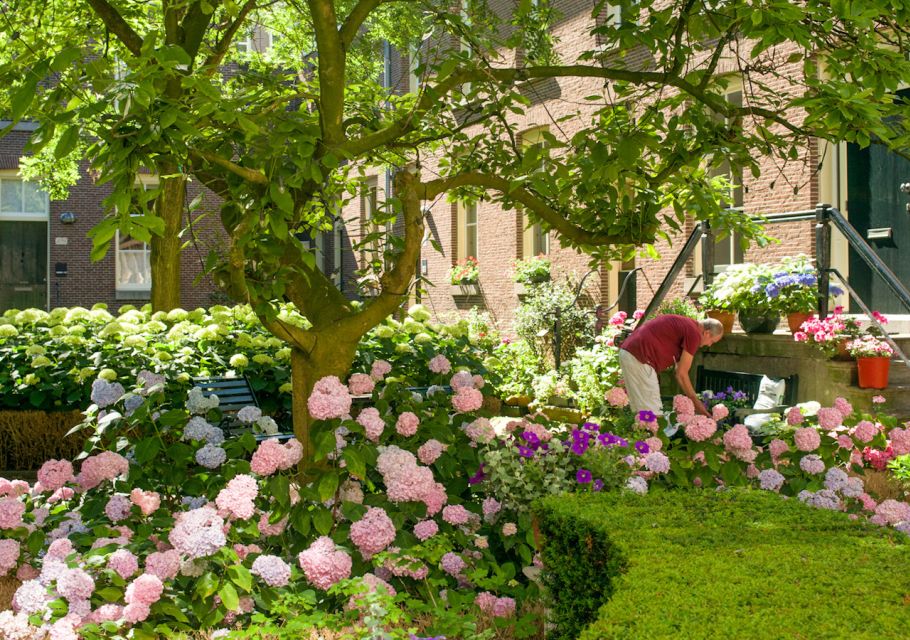
One of the biggest selling points is the visit to a secret garden, tied to hidden courtyard culture in the Jordaan. You’ll stop at Van Brienenhofje with a photo stop and guided time (about 10 minutes), and the garden experience is where the guide explains the tulip mania from the 17th century.
This is a clever way to teach history. Instead of sitting in a lecture-style moment, you get the tulip mania story in a green pocket of the neighborhood—an actual place that feels calm and tucked away. The contrast makes the story stick.
If you like that kind of cause-and-effect history (how a craze could shape money, trade, and everyday life), you’ll enjoy this part. It also complements the Anne Frank context earlier: you see two very different slices of Amsterdam’s past, both filtered through the geography of the Jordaan.
Learning the Jordaan story: from working-class to desirable address
Between the stops, the guide weaves the broader neighborhood arc: the Jordaan started as a former working-class area and, over recent decades, turned into one of Amsterdam’s most desirable neighborhoods.
What matters to you as a visitor is that the tour doesn’t treat this as a simple “then and now” before/after slideshow. You’re shown how the transformation happened while older elements—17th-century backstreets and bridges—still shape the look and feel today.
This also helps you understand why the courtyards matter. A neighborhood can change its social class without changing its physical structure. So the Jordaan stays charming even after the radical makeover. On this walk, you’ll feel that in the street layout: you’ll see the older bones, not just the modern polish.
German guide experience: great if you’re comfortable, limiting if not
The tour is led in German. That’s a real factor for your enjoyment. If you speak or understand German at least at a basic conversational level, you’ll likely have a smooth time, especially because the format gives you chances to ask questions during guided segments.
The feedback I’ve seen emphasizes guides who can answer lots of questions, and that’s where language really matters. If you’re not comfortable in German, the tour may feel like you’re watching a presentation through half the window. You can still enjoy the walking route, but you might lose some of the story depth.
Price and value: is €27 for 1.5 hours worth it?
The price is listed as $27 per person, and it includes €1.50 city tax per passenger. For a 90-minute walking tour, value comes down to what you’re getting beyond the street views.
Here, the value is the access. You’re paying for guided interpretation plus entry into courtyards/hidden inner yards, not just for someone walking beside you while you look at buildings. Courtyard access in the Jordaan is exactly the kind of experience that feels harder to DIY, because many of these spaces are not obvious to find on your own.
Also, you’re getting multiple theme threads in a short time: canals and UNESCO context, Anne Frank’s place in the neighborhood, and tulip mania in a secret garden. That’s a lot of “mental souvenirs” for a relatively brief tour.
Who should book this Jordaan tour
This tour is a strong match if you:
- want a guided introduction to the Jordaan without committing to a full-day neighborhood study
- like walking plus explanations, especially about canals and neighborhood change
- enjoy seeing behind-the-scenes spaces like hidden courtyards
- like history that connects to actual streets and doorways
It’s less ideal if you:
- need the tour in English (the guide language is German)
- prefer long, detailed stops for one topic like Anne Frank, since this route passes by and gives brief context
Should you book this Jordaan District Tour with a German guide?
If you want Jordaan in 90 minutes with real texture—canals, courtyards, and two major historical stories—then yes, this is worth booking. The secret garden portion and the chance to step into inner yards are the big wins, and guides like Lili and Justin are specifically praised for handling questions well and keeping the experience engaging.
Book it if you’re comfortable with German or willing to follow along mainly through visuals and occasional snippets. Skip it if language limits you too much, or if you’re looking for a deeper, longer Anne Frank experience on-site.