REVIEW · AMSTERDAM
Amsterdam: German-speaking boat trip with bar on board
Book on Viator →Operated by Starboard Boats · Bookable on Viator
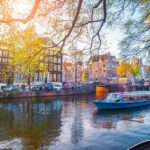
Amsterdam looks different from the water. This 1-hour electric canal boat trip uses German commentary to help you read the city as you glide past major sights. You’re not stuck staring at street signs; you’re seeing how the canals shape neighborhoods, bridges, and even the way people built for trade.
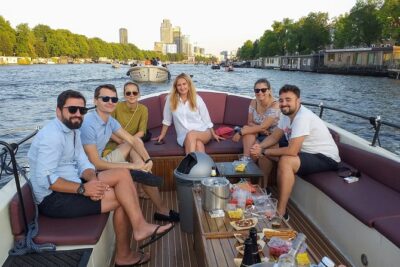
What I really like is the 100% electric open boat feel—quiet, airy, and perfect for photos without the usual motor drama. Second, the German-language hosting by Karolina stands out. Her vibe turns the usual landmark pass-by into a story you can follow, and the boat itself is apparently even better than the photos.
One thing to consider: it’s short and the focus is German. If you only want quick stops and a few landmark snaps, you’ll be fine—but if you don’t speak German, you may not catch every anecdote.
In This Review
- Key highlights worth your time
- Electric open boat and German narration: the best mix for first-timers
- Karolina’s German guide style makes landmarks make sense
- The route from the Amstel: where Amsterdam starts showing its “why”
- Stop 1: Amstel start points and what to watch
- Herengracht and the Golden Bend: mansions up close from street-level height
- Stop 2: Golden Bend tips (so you get the photo you want)
- Seven Bridges viewpoint: the postcard intersection of Reguliersgracht and Herengracht
- Stop 3: What you should do with your camera and your eyes
- Jordaan calm on Bloemgracht: a slower feel without leaving the city center
- Stop 4: Why Bloemgracht works on a 1-hour cruise
- Westerkerk near Anne Frank House: a landmark that rewards your attention
- Stop 5: What to notice around Westerkerk
- Magere Brug, the Skinny Bridge: iconic, romantic, and quietly historical
- Stop 6: Quick strategy for Magere Brug photos
- Ending near Rembrandt Square: your last sight and your next steps
- A simple way to use the cruise after you disembark
- Value and practicalities: is $26.70 worth your hour?
- Who should book this German canal cruise?
- Should you book Starboard Boats?
- FAQ
- How long is the Amsterdam German-speaking boat trip?
- Where does the tour start?
- Is there a bar on board?
- What language is the guide?
- Do I need a printed ticket?
- Can I cancel for a full refund?
Key highlights worth your time
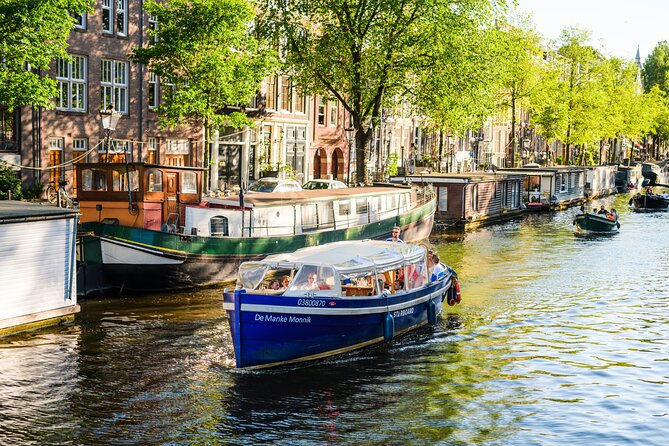
- Electric open boat comfort: smooth, modern ride with big canal views
- German guide experience with Karolina: clear, guided insight instead of random wandering
- Seven Bridges photo moment: a classic viewpoint where Reguliersgracht meets Herengracht
- Jordaan calm on Bloemgracht: colorful canal houses and a quieter feel
- Westerkerk tower views: a nearby landmark you’ll appreciate even without climbing
- Iconic Magere Brug story: the Skinny Bridge and its famous night-look
Electric open boat and German narration: the best mix for first-timers
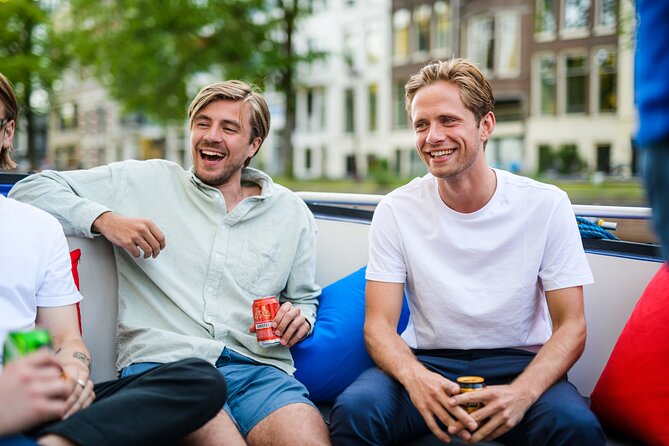
If you’re new to Amsterdam, canals can feel like a blur of water and brick. This trip solves that with two smart ingredients: an electric boat that keeps the ride pleasant, and German narration that helps you connect names you’ll see later on maps and in museums.
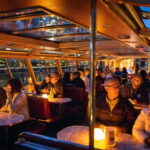
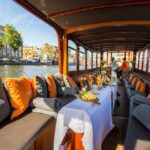
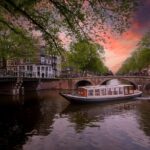
The boat is open-air, so you’ll feel the city more like a moving viewpoint. That’s great for spotting bridges, facades, and the way reflections stretch across the water. It also helps you understand why Amsterdam is so photo-friendly—because the city wasn’t designed only for streets, it was designed for waterways.
And with a maximum group size of 25, it’s not the kind of experience where you’re lost in the crowd. You can actually pay attention to what your guide is pointing out, and you’re more likely to get a smooth flow along the route.
You can also read our reviews of more boat tours in Amsterdam
Karolina’s German guide style makes landmarks make sense
The tour is guided in German, and that matters more than you might think. When your guide explains what you’re looking at—what a canal bank used to be, why certain bridges exist, what the mansions were for—you start to see patterns.
That’s where Karolina’s presence makes the biggest difference. The best part isn’t just that she’s enthusiastic; it’s that she turns the ride into something you can follow. One review highlights how the trip became unforgettable thanks to her hosting, and that matches the practical reality here: a guided canal cruise only works if someone gives you a reason to care about each turn.
You’ll also pick up little place-reading skills. For example, you’ll learn to notice the shifts in architecture and canal character as you move from one named waterway to another. Even if you don’t speak German perfectly, the rhythm of landmarks plus consistent commentary helps you stay oriented.
The route from the Amstel: where Amsterdam starts showing its “why”
This cruise begins on the Amstel, Amsterdam’s key river and a natural starting line for understanding the city. You’ll glide along its gentle current while your guide sets up the bigger story: Amsterdam began as a small fishing village and grew into a cultural and commercial hub.
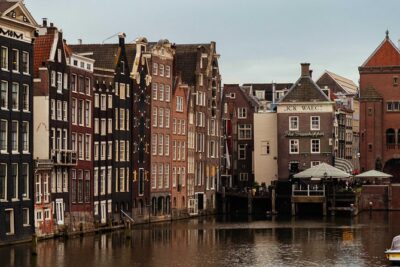
This first stretch is a great “orientation segment.” You’ll see the blend of older and newer architecture along the banks—plus the narrow bridges that create these tight, photogenic views. The canals don’t feel like scenery from a distance; they feel like living infrastructure, with buildings shaped around the water.
Stop 1: Amstel start points and what to watch
Keep an eye out for how quickly the river turns into canal-like “rooms” between bridges. That’s the secret of Amsterdam sightseeing: you don’t just move forward—you get framed views every few minutes.
Possible drawback here: the beginning moves briskly, because the best moments are spread across the whole hour. If you want your first photos immediately, arrive with your camera ready.
Herengracht and the Golden Bend: mansions up close from street-level height
Next comes Herengracht, one of the most famous canals in the city. The highlight is the “Golden Bend,” known for magnificent 17th-century mansions. This is where Amsterdam’s wealth-era architecture shows up in a way you can really feel from the water.
These weren’t just pretty houses. They were homes of wealthy merchants, and the canal layout helped display status and power along one of the city’s most important routes. From the boat, you’ll also get the calm-water advantage: facades reflect clearly, so the canal becomes like a mirror. That makes it much easier to capture the classic look than if you’re snapping from a crowded bank.
You can also read our reviews of more drinking tours in Amsterdam



Stop 2: Golden Bend tips (so you get the photo you want)
If the light is decent, take two shots: one wide (to show the mansions along the bend) and one tighter (to focus on windows and details). The reflections look best when the water is smooth and you’re not fighting wind.
One consideration: this is the kind of spot where people try to lean for perfect framing. With an open boat, keep your posture safe and steady—good photos come from timing, not overreaching.
Seven Bridges viewpoint: the postcard intersection of Reguliersgracht and Herengracht
Then you reach one of the most satisfying moments: the viewpoint of the Seven Bridges. Here, the Reguliersgracht and Herengracht intersect, and suddenly the city looks like a designed scene.
The payoff is the panorama feel. You’re seeing multiple bridges and canal segments layered together, with architecture lining up across the water like a layout drawing. It’s the sort of view people chase in Amsterdam for a reason—and it’s also genuinely useful for first-timers, because it helps you visualize how the canal network connects.
The cruise also notes the night angle: when bridges are bathed in golden light, it turns into a magical photo moment. That means if you can choose your time window, evenings tend to offer a more cinematic look.
Stop 3: What you should do with your camera and your eyes
Don’t just shoot. Pause and look first. The best photos here happen when you understand the “stack” of bridges and canals. Then you can compose intentionally instead of firing away.
Jordaan calm on Bloemgracht: a slower feel without leaving the city center
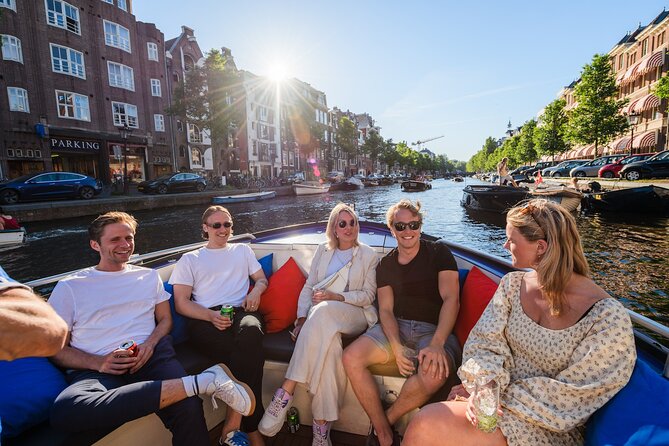
After the big iconic viewpoint, the route shifts into something more intimate: Bloemgracht, in the Jordaan district. This canal has a quieter vibe, like Amsterdam turning down the volume for a minute.
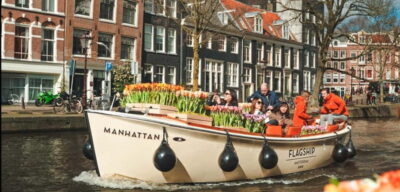
What you’ll enjoy along Bloemgracht is the mix of bridges, canal houses, and the visual charm of flower-lined banks when they’re in bloom. The street-level richness carries over from the water, including decorated facades and a sense of historical continuity.
Stop 4: Why Bloemgracht works on a 1-hour cruise
Because it’s a contrast stop. After the intensity of the Golden Bend and Seven Bridges area, Bloemgracht helps you breathe and look at Amsterdam at a more human scale—less “monument,” more “neighborhood character.”
Possible drawback: it can feel subtle compared to the headline landmarks. If you only chase the most famous names, this canal might not be your top photo spot. But if you like atmosphere, it delivers.
Westerkerk near Anne Frank House: a landmark that rewards your attention
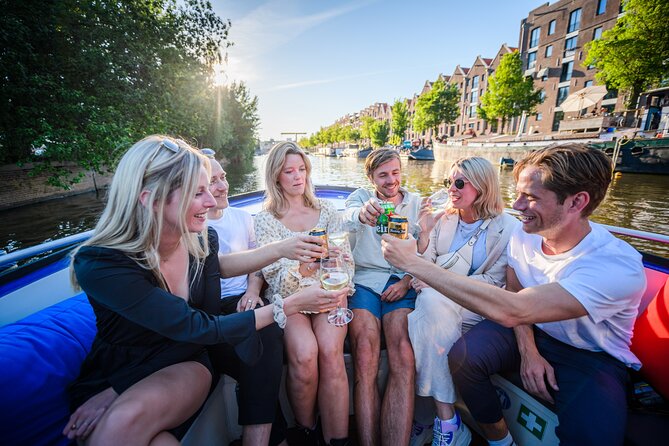
The cruise also takes you near Westerkerk, identifiable by its impressive tower over Amsterdam’s rooftops. It’s not only a recognizable part of the skyline; it also links you to Dutch religious and architectural heritage from the 17th century.
The tour’s framing is useful: Westerkerk is one of Amsterdam’s large Reformed churches, and it sits not far from the Anne Frank House. Even if you’re not stepping inside, seeing it from the water gives you a better sense of how the city’s major landmarks relate to the canal grid.
Stop 5: What to notice around Westerkerk
Watch how the tower sits above the canal buildings. It helps you grasp Amsterdam’s vertical layers: low canal facades, then suddenly a dramatic tower marker. That makes it easier to orient yourself later if you plan other sights on foot.
Magere Brug, the Skinny Bridge: iconic, romantic, and quietly historical
Another must-see moment is Magere Brug, nicknamed the Skinny Bridge. This charming bridge crosses the Amstel and is one of Amsterdam’s signature photo subjects.
What makes it extra satisfying on this route is the story connection. The bridge is associated with a legend: it was built in the 17th century by two sisters who lived on opposite sides of the river. Whether you treat that as pure storytelling or local folklore, it adds color to the view while you’re waiting for your photo moment.
Night is the best time for atmosphere. The cruise highlights that the bridge looks especially striking when lit up—more romantic, more postcard-like.
Stop 6: Quick strategy for Magere Brug photos
If you can, time your photos for when the bridge is fully in view, not partially blocked by nearby structures. And if it’s windy, keep your lens steady and wait for one calmer second—sharpness matters more than speed.
Ending near Rembrandt Square: your last sight and your next steps
The cruise finishes back near the Amstel River, not far from Rembrandt Square. That’s a practical ending point. It drops you close to a lively area where you can keep exploring on foot or hop onto public transport.
It also closes the loop nicely: you began on the Amstel’s river energy and end with the city center’s pulse. In an hour, you don’t just get scenery; you get a mental map of where key sights sit relative to each other.
A simple way to use the cruise after you disembark
Take a minute to match what you saw on the boat to the streets around you. You’ll be surprised how quickly canals become easier to understand once you’ve seen the bridge connections from the water.
Value and practicalities: is $26.70 worth your hour?
At about $26.70 per person for an approx. 1-hour cruise, you’re paying for three things: the boat experience, a guided walkthrough in German, and prime viewpoint timing across multiple canal areas.
Here’s the value logic I use when I’m weighing trips like this:
- If you’re short on time in Amsterdam, a 1-hour cruise compresses a lot of major sights into one smooth ride.
- If you want real learning (not just photos), German narration adds meaning to names like Herengracht, Bloemgracht, Westerkerk, and Magere Brug.
- If you want comfort, the electric boat and open-air design make the ride pleasant.
If you’re the type who only cares about one or two landmarks, it might feel like a lot of stops for one hour. But if you like variety and want the city to “click,” this is a good bargain.
Who should book this German canal cruise?
This is a strong fit if you:
- Want a fast, scenic orientation to Amsterdam from the water
- Enjoy guided explanations and like understanding what you see
- Like photo opportunities at bridge viewpoints, especially around the Seven Bridges area
- Prefer smaller group pacing (max 25)
It may be less ideal if you:
- Don’t speak German and you need every word explained to enjoy the experience
- Want a long cruise that spends lots of time at each stop
Should you book Starboard Boats?
I’d book this if you want an efficient “Amsterdam from the canals” session with solid guidance and a modern electric boat. The standout detail for me is the guide factor: Karolina’s hosting turned the ride into something memorable, and that’s the difference between a cruise you forget and one that helps you navigate the city.
If you’re flexible about timing, aim for a period when you can catch the Magere Brug night-light vibe. And if you’re a photo person, bring a plan: wide shots for canal breadth, tighter shots for mansion details, and at least a couple minutes of patience at the Seven Bridges viewpoint.
FAQ
How long is the Amsterdam German-speaking boat trip?
It runs for about 1 hour.
Where does the tour start?
You meet at The Starboard Dock – Canal Cruises, Amstel 178, 1017 AE Amsterdam.
Is there a bar on board?
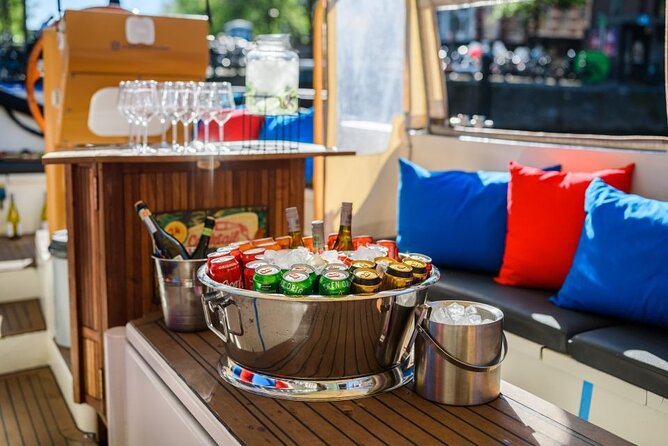
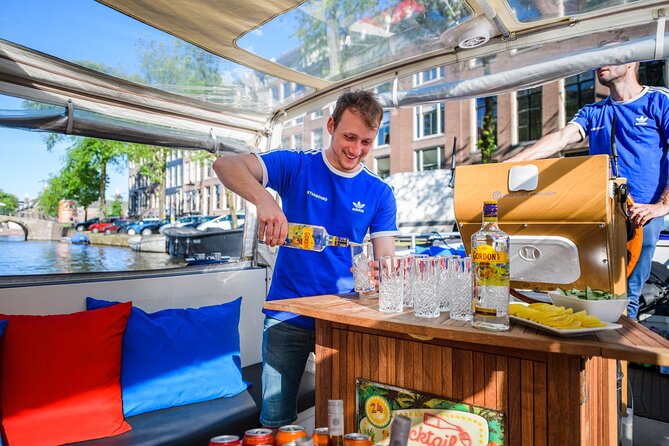
Yes, the trip includes a bar on board.
What language is the guide?
The guide speaks German.
Do I need a printed ticket?
No. You receive a mobile ticket.
Can I cancel for a full refund?
You can cancel up to 24 hours in advance for a full refund. If you cancel within 24 hours of the start time, you won’t get your money back.