REVIEW · AMSTERDAM
Rijksmuseum & Amsterdam City Center – Exclusive Guided Tour
Book on Viator →Operated by Babylon Tours Amsterdam · Bookable on Viator
A great day in Amsterdam starts with art. A private guide walks you through the Rijksmuseum highlights, then strings that Dutch story across the canals with stops you’d miss on your own. I love the way this tour ties Dutch masters to real streets and buildings, and I love the pace that gives you frequent photo chances while still hitting major landmarks. One thing to consider: it’s a full 5.5 hours with lots of short stops, so if you want long museum time in one room, you’ll need extra planning beyond this tour.
In the museum, you’re not just looking at famous names. You’ll connect bigger themes in Dutch history by seeing standout works like Rembrandt pieces and Vermeer’s The Milkmaid, plus details that usually pass people by, like 17th-century dollhouses and a major library space. And yes, you’ll likely come away able to say Rijksmuseum without wobbling on the syllables.
On the walking side, the route moves fast through different neighborhoods and eras—churches, gates, canal mansions, and hofjes. It’s a strong way to get your bearings, but you should expect brief moments at each exterior stop, not a deep sit-down at every location.
In This Review
- Quick Hits
- Rijksmuseum First: Why This Order Makes the City Click
- Inside the Rijksmuseum: Highlights, Timing, and What You’ll Actually Learn
- The Canal-Center Walk: St. Nicholas, Tears, Chinatown, and Historic Market Squares
- Golden-Age Houses and the Dutch East India Company: Architecture as a Storybook
- Churches, Canal Mansions, and Hofjes: How Amsterdam Held Many Lives in One City
- Finishing at Papeneiland: A Good Exit Point for Your Evening
- Price and Logistics: Is 287.18 Per Person Worth It?
- Who Should Book This Tour (and Who Might Skip It)
- Should You Book It?
- FAQ
- How long is the tour?
- Is lunch included?
- What language is the guide?
- Where does the tour start and end?
- Are museum and attraction entrances included in the price?
- Is this tour private?
- Can I cancel for a full refund?
Quick Hits
- Private, exclusive guide time: Just your party, not a shared group that splits your attention.
- Museum first, then city on foot: You’ll learn museum context, then watch it play out along canals and cobblestones.
- All entrance fees included: Your museum ticket is covered, and most exterior stops are free to view.
- Short, smart viewing windows: Expect many 5–10 minute stops, which is great for seeing a lot without burning the day.
- Flexible for weather: The tour runs rain or shine.
- Strong guide storytelling: Reviews highlight guides like Jacopo, Victoria, Josje, Giuseppina, and Paola for clear, passionate explanations.
Rijksmuseum First: Why This Order Makes the City Click
This tour starts at the Rijksmuseum, which is exactly where I’d begin if you want Amsterdam to feel more than postcards. The guide leads you through major museum highlights first, so when you later spot historic city layouts, church towers, and canal architecture, it lands with meaning instead of becoming random sightseeing.
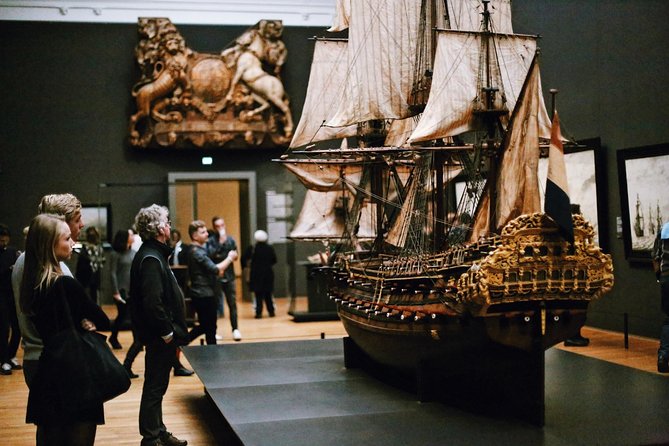
The Rijksmuseum portion is built for understanding. You’ll spend about 2.5 hours in the museum with a guided route that focuses on famous artists and also on the broader world behind them—politics, daily life, and what Dutch culture prized during different centuries. The tour even points out smaller objects that help explain big ideas, like how the Netherlands collected knowledge and status through art, artifacts, and design.
If you’re coming in with basic art interest, you’ll leave with a clearer picture. If you’re a serious art fan, you’ll still appreciate the framing, because the guide helps you connect masterpieces to the society around them. Either way, it’s a “why” tour as much as a “what to see” tour.
Practical heads-up: the museum has strict security rules. Bring only a handbag or a small thin bag for screening, and dress appropriately for entry at sites where dress requirements apply. Also, the museum can face occasional closures; if openings are delayed more than 1 hour from the tour start, the operator says it may swap to an appropriate alternative, and you won’t receive refunds or discounts for those delays.
You can also read our reviews of more guided tours in Amsterdam



Inside the Rijksmuseum: Highlights, Timing, and What You’ll Actually Learn
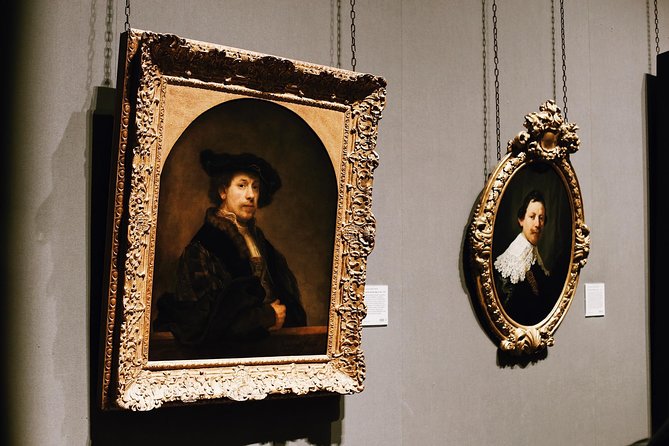
You’ll start in the Rijksmuseum’s public flow, where crowds can be real. The advantage here is simple: your guide keeps you moving through the most meaningful highlights without turning the day into an exhausting scavenger hunt. Reviews praise this exact skill—people credited guides like Jacopo with navigating school groups while still getting everyone to the right rooms.
In the museum, you’ll focus on:
- Dutch masters, including Rembrandt and Vermeer
- standout works like The Milkmaid
- supporting context through artifacts across centuries
- less-famous but fascinating items, including 17th-century dollhouses
- a noteworthy 19th-century library area with many stories tied to Dutch life and knowledge
The museum holds over 8,000 objects, so without guidance it’s easy to get overwhelmed or miss the “story points” that make the collection feel coherent. With a guide, you get a sequence. That matters because Dutch art and artifacts aren’t random; they’re connected to trade, faith, the changing role of the home, and how the Netherlands saw itself during the Golden Age.
You should also know that some rooms are quieter or restrict speaking. The tour notes say the guide will explain the rules before entering those spaces, which is helpful because you won’t feel like you’re accidentally breaking museum etiquette.
Overall, this museum portion is ideal if you want big names plus context. If your top priority is spending unlimited time in one gallery, you might prefer a slower self-paced plan and add a shorter guided session. But for most people, 2.5 hours with a focused route is a strong use of time.
The Canal-Center Walk: St. Nicholas, Tears, Chinatown, and Historic Market Squares
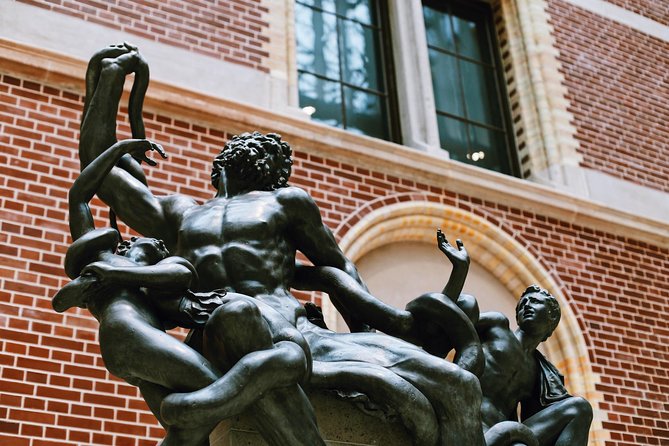
After lunch (not included; you’ll buy it yourself), the tour turns into a guided walk through the city’s older core. This is where the museum knowledge becomes visible: you’ll see how Amsterdam’s identity grew around waterways, religious life, commerce, and neighborhoods that still show their origins.
The first cluster hits major anchor points:
- St. Nicholas Basilica: you’ll hear how the main Roman Catholic church was built in the late 19th century when Catholics could profess faith publicly again after a long period of prohibition. It’s also described as a mix of architectural styles and artistic movements.
- Schreierstoren (Weeping Tower / Tower of Tears): this tower sits in the story of the medieval city wall. The tour notes the belief about women weeping there as husbands left for war or fishing—an example of how a building can become a legend.
- Zeedijk: you’ll walk through the Chinatown area of Amsterdam, with Asian markets and restaurants, plus the Zeedijk Buddhist temple described as the largest Chinese-style Buddhist temple in Europe. This stop adds a modern layer to the same central streets you’re walking through.
Then you shift into market-and-gate territory:
- Nieuwmarkt: an old city center square with a long record as a place for commerce and social life since the 17th century, helped by its location just inside the old city gate.
- The Waag: a 15th-century non-religious building tied to the city’s walls and originally used as a city gate. The tour highlights its varied roles over time, including guildhall, museum, and fire station.
This part is especially good for first-timers because it gives you names, origins, and the feel of the city’s daily life—without needing you to know Amsterdam geography ahead of time.
A consideration: many of these stops are short, around 10 minutes each. The guide does a lot in a limited time window, which is efficient, but it does mean you won’t linger at every facade like you might on a casual stroll.
Golden-Age Houses and the Dutch East India Company: Architecture as a Storybook
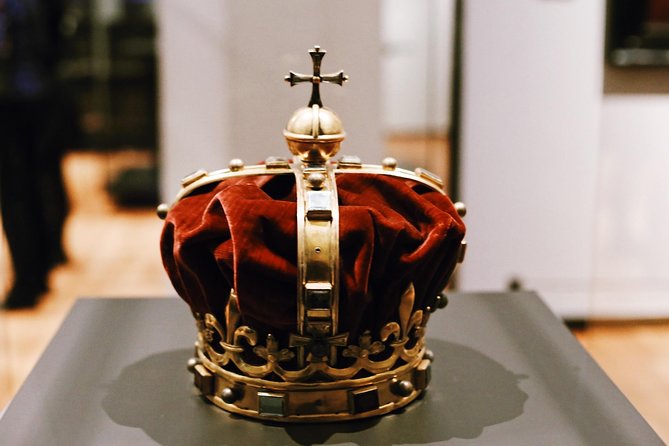
Next, the walking route focuses on Amsterdam’s famous house shapes and the power networks behind them. These are the kinds of details you can miss if you’re only hunting for big landmarks.
You’ll see:
- Trippenhuis and Klein Trippenhuis: the Trippenhuis is described as Amsterdam’s widest home, about 22 meters, while Klein Trippenhuis is one of the city’s narrowest houses across the street. Seeing them together helps you understand how wealth and taxes influenced building design.
- Oost-Indisch Huis: you step into the courtyard of the Dutch East India Company’s headquarters, described as the birthplace of the world’s first multinational corporation. Even if you’re not deep into Dutch colonial trade, the setting is a strong anchor.
- A second look at very narrow house architecture (Klein Trippenhuis again is explicitly called out), reinforcing the idea that land tax encouraged vertical, tight designs.
At this point, you’ll likely start noticing patterns in Amsterdam. The guide’s framing helps you read the city like a map of values—wealth, trade, design, and identity all show up in what people built and how they built it.
Churches, Canal Mansions, and Hofjes: How Amsterdam Held Many Lives in One City
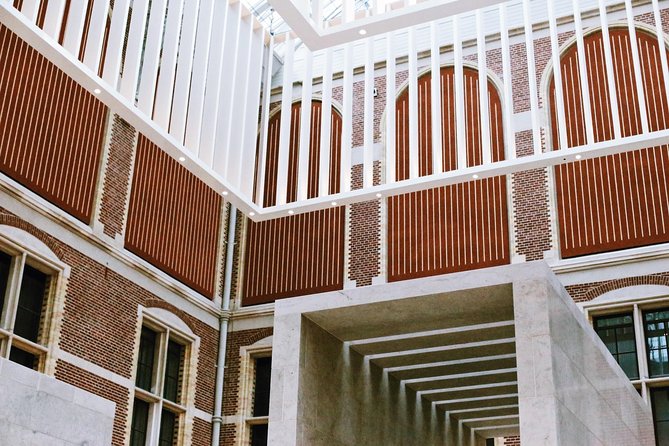
The afternoon loop adds religion, civic identity, and the quieter side of city life. This is where Amsterdam shows its contradictions in the best way: religious landmarks next to commercial squares, large wealth next to tucked-away courtyards.
You’ll encounter:
- Zuiderkerk: Amsterdam’s first purpose-built Protestant church designed by Hendrick de Keyser, with a defining tower.
- Stopera (Dutch National Opera & Ballet plus city hall complex): the building is described as taking at least 60 years to construct, which gives you a sense of how long-term civic investment shaped the city.
- Huis Aan De Drie Grachten: a rare 17th-century canal house at the junction of three canals, with facades facing three directions. It’s the kind of odd architectural situation that feels like a puzzle in stone.
- Begijnhof and Karthuizerhof (a larger hofje): the tour explains hofjes as almshouses built around secluded courtyards. Begijnhof is tied to the Beguines—unmarried women living together under vows of chastity. Karthuizerhof is described as the largest hofje, built for the city’s poor and elderly. These stops are short, but the concept is big: Amsterdam didn’t just build trade empires; it also built social shelters.
You’ll also see:
- Herengracht: the Golden Bend, lined with the city’s richest, ornate canal mansions from the Dutch Golden Age.
- Anne Frank House: you’ll pause outside where she hid during WWII. The tour also notes the Westerkerk next door, including that it has the tallest church tower in Amsterdam.
- Noorderkerk: a 17th-century Protestant church for the Jordaan district, with a cross-shaped floor plan reflecting Reformation ideals in worship.
- Coöperatieve Vereniging Karthuizerhof: again tied to hofje life, but worth noting because it shows the social-care side of Amsterdam’s historical fabric rather than only the wealth side.
This section is where the guide’s narrative style matters most. Reviews repeatedly highlight that guides made the stories understandable and tied details into one line of meaning. When a guide can do that, short stops feel like mini-lessons rather than photo breaks.
You can also read our reviews of more city tours in Amsterdam





Finishing at Papeneiland: A Good Exit Point for Your Evening

The tour ends at Het Papeneiland on Prinsengracht, described as one of the city’s prettiest canal corners. You’ll also hear about a brown café there dating to 1642, and it’s said to serve the best apple pie in town.
This ending spot is useful because Prinsengracht-adjacent areas make it easy to continue exploring on your own. You’ll likely finish with enough energy to grab dinner nearby, catch evening canal atmosphere, or just slow down for a walk after the structured route.
One practical tip: because lunch is on your own, plan lunch so you’re not rushing. If you start at 10:00am and run around 5.5 hours total, it helps to eat something you can handle outdoors and then return to walking without needing a long sit-down.
Price and Logistics: Is 287.18 Per Person Worth It?
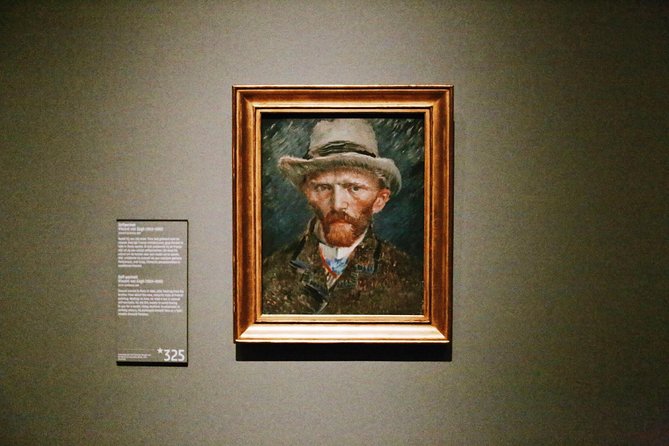
At about $287.18 per person for a 5.5-hour private experience, this isn’t a budget tour. But the value is real if you care about two things: first, guided museum learning, and second, a curated city walk that connects the museum to real architecture.
Here’s what you’re getting for the money:
- A private guided museum tour plus a guided walking tour across central Amsterdam
- entrance fees covered (at least for the Rijksmuseum, and many city-view stops are free to enter anyway)
- private transportation between tour locations if necessary
- tour operation rain or shine
- a guide who’s focused on explaining, not just escorting
The private-group angle is a big part of the cost. You get one guide to your own party, which usually means fewer delays and a better chance to ask questions. Reviews also point to professional guiding and good problem handling, with one account noting how the operator worked to correct an unexpected interruption and still provide a strong experience.
Where the price may feel less worth it: if you already know Dutch history and just want a casual canal stroll, you could probably do some of these exteriors on your own. But if you want the museum-to-streets connection and a guided route that’s built to cover a lot without wasting time, you’re paying for interpretation and efficiency.
Who Should Book This Tour (and Who Might Skip It)
This tour fits best if you:
- love art and want Dutch masters explained clearly
- want a structured introduction to Amsterdam’s core without needing to plot a route yourself
- like short stops with story context rather than long museum marathons
- appreciate a private guide and want more fluid questions and photo moments
- can handle moderate walking for the full 5.5 hours
It might be less ideal if you:
- want extended time in the Rijksmuseum without a guided pace
- prefer fully self-led wandering at your own rhythm
- dislike the idea that many key sights are viewed briefly from the outside
Also, you’ll want to follow the museum rules for bags and dress. If you’re the type who shows up with a big backpack or suitcase, it can slow you down at security.
Should You Book It?
Yes, if you want one guide-led day that makes Amsterdam feel readable. The museum portion gives you the historical and artistic context, then the walking route turns that knowledge into architecture and street-level storytelling. If you’re an art lover who also wants the city’s big landmarks and lesser-spot details, this is a strong match.
If you already have a long list of must-sees and you want maximum time inside any one place, consider adding a separate visit or a second, slower tour. But for most people planning a first or second trip, this private Rijksmuseum plus city-center walk is a smart way to see a lot without losing the meaning.
FAQ
How long is the tour?
It runs for about 5 hours 30 minutes, including a lunch break.
Is lunch included?
No. Lunch is a break where you buy food yourself.
What language is the guide?
The tour is offered in English.
Where does the tour start and end?
It starts at Cobra Café, Hobbemastraat 18, 1071 ZB Amsterdam, and ends at Het Papeneiland, Prinsengracht 2, 1015 DV Amsterdam.
Are museum and attraction entrances included in the price?
Entrance fees are included for the museum portion, and many of the sights on the walk are described as free to visit. Some stops specifically note admission not included.
Is this tour private?
Yes. It’s a private tour/activity, meaning only your group participates.
Can I cancel for a full refund?
Yes. You can cancel up to 24 hours in advance for a full refund. If you cancel less than 24 hours before the start time, the amount paid is not refunded.