REVIEW · AMSTERDAM
MUST DO: Amsterdam’s Red Light District tour with a local
Book on Viator →Operated by Trigger Tours · Bookable on Viator
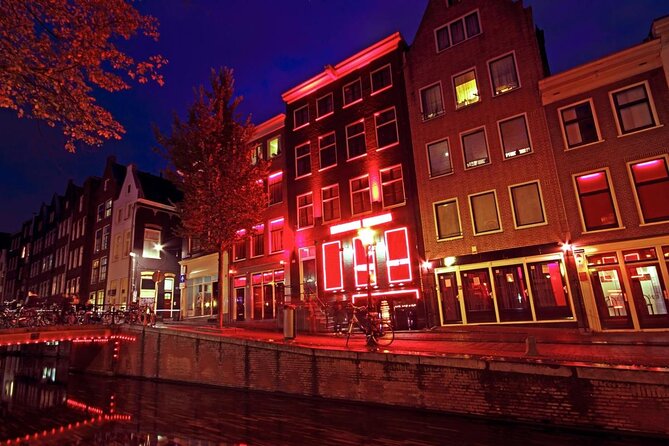
Night in Amsterdam has a second face. This local-led tour is a smart way to see the Red Light District after dark while an expert guide puts the streets into context, not just gossip. I also like the on-foot format, because it makes it easy to slow down, look around, and take in the atmosphere. One consideration: you’ll be walking on uneven streets at night, so it’s not a great pick if you have limited mobility.
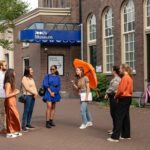
You meet at Geldersekade 2 (1012 BH), and the experience runs for about two hours with a maximum group size of 20. It’s in English, you get a mobile ticket, and it loops back to the start. Service animals are allowed, and it’s near public transportation, which helps if you’re pairing it with dinner plans.
In This Review
- Quick hits
- Why the night Red Light District walk makes sense
- Where you start (Geldersekade 2) and how to show up ready
- Stop 1: The Red Light District streets (what you’ll notice, what you’ll understand)
- The Dam and Amsterdam’s wooden-pile foundation (the “city built on trees” lesson)
- Pub The Ape (Int Aepjen): a 1540 wooden survivor
- Waag: the old city gate that became a guild center
- The smallest house in Amsterdam and VOC life
- The condom shop since 1987: modern norms in plain sight
- Time, pace, and why timing matters on this 2-hour route
- Who your guide can be like (and what great guiding feels like)
- Price value: $31.32 for an evening with multiple historic stops
- Who should book this (and who might want a different option)
- Should you book? My call
- FAQ
- FAQ
- How long is the tour?
- What does it cost?
- Where does the tour start?
- Is the tour in English?
- Is food or drinks included?
- How many people are in the group?
- Is it suitable for people with limited mobility?
- Is there free cancellation?
Quick hits
- A local guide after dark who frames what you’re seeing with real background, not shock value
- Old Town stops mixed in, so the tour isn’t only about the windows
- Pub The Ape (Int Aepjen): a surviving wooden building from around 1540
- Waag on the former defensive wall: a structure from the early 1400s with a new life as a guild hall
- A condom shop since 1987, explained as part of how the district has changed over time
Why the night Red Light District walk makes sense
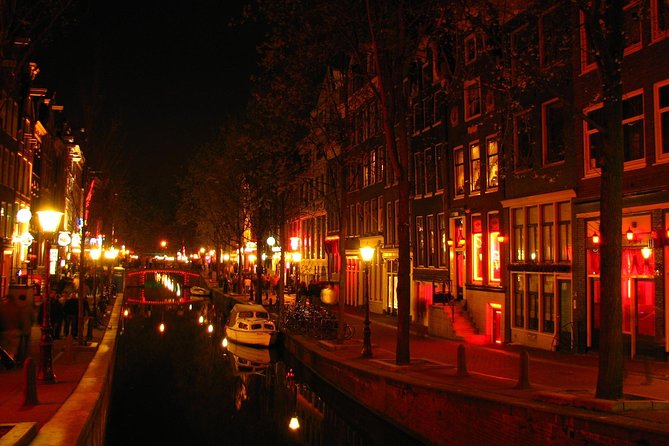
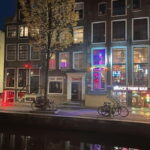
Daytime can feel like “just streets.” After dark, the district feels more like a living neighborhood—busy, complicated, and very Amsterdam.
What I like about this tour setup is that it keeps the focus on understanding. You’re not just walking past sights; your guide connects the modern scene to older Amsterdam: trade, building methods, old gates and guilds, and how the city’s rules shifted over time. That’s what turns the experience from awkward or uncomfortable into genuinely informative.
Also, you get the practical benefit of a guide-led route. The streets are narrow and easy to wander in the wrong direction. On foot with a local, you keep your bearings fast.
You can also read our reviews of more tours and experiences in Amsterdam.
Where you start (Geldersekade 2) and how to show up ready
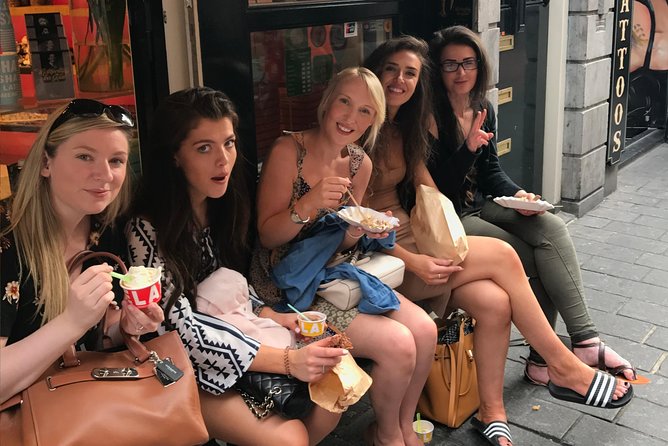
The meeting point is Geldersekade 2, 1012 BH Amsterdam. Plan to arrive a bit early. This tour can move promptly, and the group may leave if people are late—especially in weather that makes walking slower or more slippery.
Since it’s a nighttime walk, I’d wear shoes you’re happy to get a little scuffed. Bring a light layer too. Even if the weather looks fine when you leave your hotel, Amsterdam can cool down quickly after sunset.
With a maximum group size of 20, you should still be able to hear your guide, but you’ll get the best experience if you position yourself near the middle and don’t hang back at the very rear.
Stop 1: The Red Light District streets (what you’ll notice, what you’ll understand)
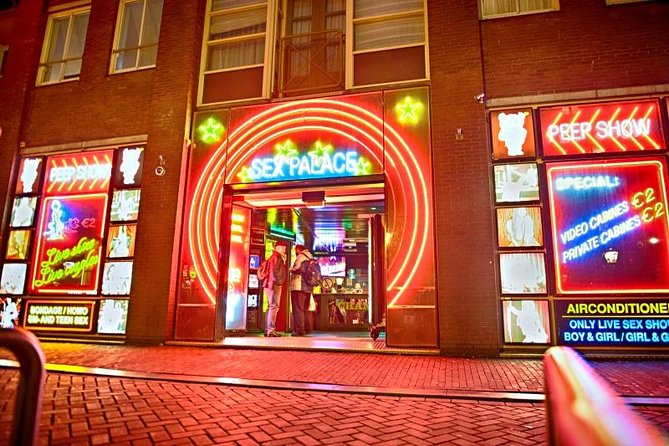
This is the core of the tour: you walk through the narrow streets and see the sights the Red Light District is known for, while your guide explains how the area works and how it has evolved.
Here’s the key value: the tour treats the district as part of the city’s history and current situation, not just a spectacle. You’ll learn about why the area developed as it did and what life looks like there now. That matters because the district often gets simplified online—this format helps you see the real structure of the neighborhood.
You’ll also get a better sense of how Amsterdam’s city planning and social life intertwine. The vibe can feel tense for some people, and that’s normal. What helps is having context as you walk, so your brain isn’t filling the blanks.
The Dam and Amsterdam’s wooden-pile foundation (the “city built on trees” lesson)
One of the most interesting parts of the route is the discussion of the Dam and the city’s unusual construction story—Amsterdam’s old foundation problem.
Amsterdam sits on a thick layer of fen and clay, plus peat and water. Since the soil wasn’t naturally solid enough, older houses needed wooden foundation piles. Those piles were driven deep—about 11 meters—until they reached a stable layer of solid sand. Your guide uses this to explain why so much of the city’s historic built environment is tied to engineering, not just architecture.
Why this matters for your tour experience: it gives you a different lens on the neighborhood. When you’re standing near old buildings and older street patterns, you can understand why the city looks the way it does. It’s Amsterdam as problem-solving.
Pub The Ape (Int Aepjen): a 1540 wooden survivor
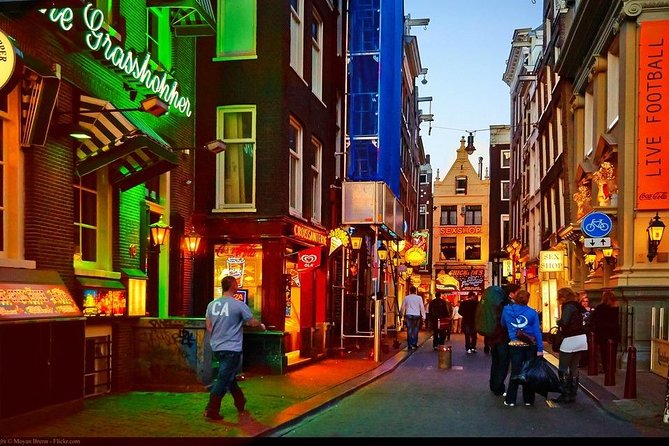
Then you hit a stop that makes the history feel real: Pub The Ape (Int Aepjen). It dates to around 1540 and is one of only two remaining wooden buildings in Amsterdam.
There’s a specific historical turning point your guide will mention: after a major fire in 1452, authorities pushed for brick facades. That’s why so many older wooden structures didn’t survive. So when you see Int Aepjen, you’re looking at a rare survivor from a period when building materials and regulations were very different.
Even if you don’t go inside, it’s a striking moment on the walk because it connects policy, disaster, and daily life. This is the kind of stop that makes you slow down without trying.


Waag: the old city gate that became a guild center
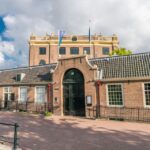
Next is the Waag, built around the 1400s. Your guide explains that it originally served as one of Amsterdam’s city gates and part of the defensive wall. It’s also described as the second oldest building in Amsterdam.
Later, the Waag had another role: it became a hub for guilds and craftspeople. In other words, the building didn’t just sit there. Amsterdam reused major structures as the city’s needs changed.
I like this stop because it adds a layer that many Red Light District walks skip. You’re not only learning about the district’s modern identity; you’re also learning how Amsterdam organized work, trade, and membership—through institutions like guilds.
The smallest house in Amsterdam and VOC life
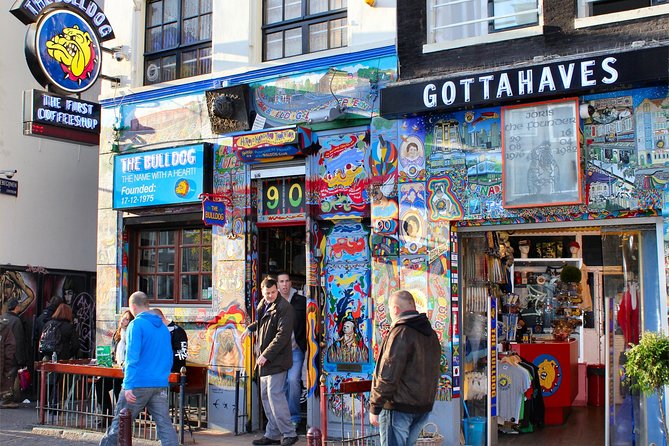
Another memorable stop on the route is the smallest house in Amsterdam, built around the 1700s.
Your guide explains that it first served as storage for the VOC (Dutch East India Company). Over time, people also lived in it for a very long stretch. This is one of those details that changes how you picture “historic Amsterdam.” It’s not just canals and grand facades. It’s also cramped spaces tied to trade and survival.
This stop works well during an evening tour because it’s easy to miss when you’re just passing by. With a guide, you’re given the story to match the size.
The condom shop since 1987: modern norms in plain sight
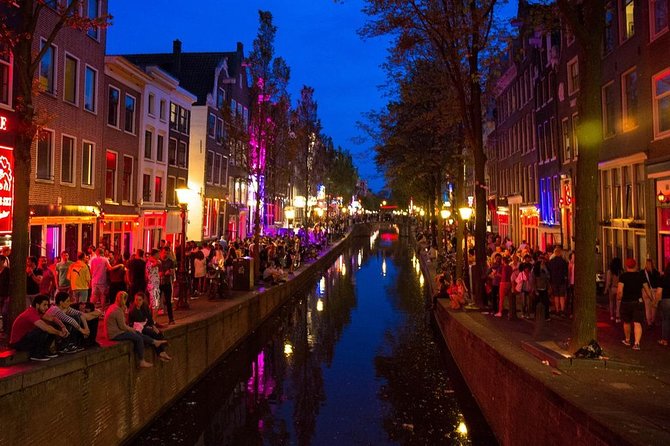
One of the most talked-about stops is the condom shop described as the world’s first dedicated condom store, in place since 1987.
Your guide frames this as part of how the district has evolved. Instead of pretending the sex industry is hidden or irrelevant, the tour points out that it’s integrated into the area’s day-to-day reality—and into public-health thinking over time.
For some people, this stop can feel awkward. That’s okay. What helps is staying respectful and letting your guide explain the context. You’ll get a clearer picture of how attitudes and services changed, rather than treating everything as one big monolith.
Time, pace, and why timing matters on this 2-hour route
The tour runs for about two hours and is a walking experience. In practice, you’re getting a compact route with several named stops and explanations. That’s why shoes and punctuality matter.
The small-group size (up to 20) is part of the appeal. You’re close enough to hear your guide, and you’re not stuck in a huge crowd shuffling two feet at a time. That said, if you linger too far back, you’ll miss parts of the stories.
I’d also keep your expectations realistic. This isn’t a slow, museum-style tour. It’s a city-walk tour where the guide strings together history and current context while you move.
If you’re expecting a super gentle pace, plan for the fact that you’ll be walking continuously.
Who your guide can be like (and what great guiding feels like)
The tour’s reputation for guide quality really shows in the guide names that come up often: Ben, Robin, Sander, and Max.
What stands out is the ability to make history feel alive with clear storytelling and humor. More than one guide is described as doing a strong job explaining the district’s history while keeping it fun. And that balance matters here, because the subject can go from educational to uncomfortable fast if the guide isn’t careful.
Also, I like that strong guides tend to add practical local tips—not just facts. That can help you plan the rest of your evening in the area, especially if you want to connect the tour to dinner or a quick stop nearby.
Price value: $31.32 for an evening with multiple historic stops
At $31.32 per person, this is priced like a budget-friendly guided walking tour in a major city. The value comes from what you get for that time.
You’re paying for:
- an English-speaking local guide
- a structured walking route after dark
- multiple historic stops (wooden building, former city gate, old trade-related site, plus the condom shop discussion)
- and the fact that the walk is free in terms of admission (the tour is mainly the guiding)
If you normally skip walking tours because you don’t want “too much talk,” this one still earns your time. The stops are specific, and the context helps you see what you’d otherwise miss while wandering.
You don’t get food or drinks included, so budget for that separately. But the tour itself is set up like an evening primer: you finish with a stronger understanding of what you saw and why it matters.
Who should book this (and who might want a different option)
I think this is a great choice if you:
- want a guided way to understand a controversial district without going in blind
- like city history that’s tied to buildings, trade, and how cities function
- enjoy night walking when you have a route and context
It can also work for older teens, depending on the timing and how the tour is handled. One family’s experience suggested a specific earlier departure felt more appropriate for a 17-year-old, while they felt a later option worked better for adults.
It’s not the right fit if you have limited mobility, since the tour involves walking on uneven streets. If that’s your situation, you’ll likely be frustrated rather than informed.
And if you’re the type who gets quickly unsettled by red-light imagery, consider your comfort level before booking. This tour is contextual, but it’s still the Red Light District.
Should you book? My call
If you want your Amsterdam to be more than postcards, I’d book this. You get a local, English-led walk that ties the Red Light District to older Amsterdam—foundations, defensive walls, guild life, trade, and changing norms.
I’d only skip it if night walking is hard for you, or if you already know you don’t want to be in this particular neighborhood at all. Otherwise, show up on time, wear solid shoes, and let the guide give you the context. It turns a charged area into something you can actually understand.
FAQ
FAQ
How long is the tour?
It runs for about 2 hours.
What does it cost?
The price is listed as $31.32 per person.
Where does the tour start?
The meeting point is Geldersekade 2, 1012 BH Amsterdam.
Is the tour in English?
Yes, it’s offered in English.
Is food or drinks included?
No, food and drinks are not included.
How many people are in the group?
The tour has a maximum of 20 travelers.
Is it suitable for people with limited mobility?
It is not recommended for travelers with limited mobility.
Is there free cancellation?
Yes. You can cancel up to 24 hours in advance for a full refund.