REVIEW · AMSTERDAM
Exclusive small-group Amsterdam Red Light District tour
Book on Viator →Operated by Trigger Tours · Bookable on Viator
A short walk can tell a long story. This Amsterdam Red Light District tour uses a local, on-foot route to explain how De Wallen formed, what people actually do here, and how the city around it grew. In just about 2 hours, you get street-level context without trying to cram Amsterdam’s whole history into one stop.
What I really like is the pace. It’s short, small-group, and built for questions, so you’re not stuck silently following for two hours straight. The second thing I like is the way it mixes the famous stuff with very real Old Town details, from wooden-pile building history to places like Pub The Ape (Int Aepjen) and the Waag.
One consideration: this is a sex-work-focused area, and the tour talks about it plainly. If you’re hoping for a polite, photo-only version of De Wallen, you might find the content too direct for your comfort level.
In This Review
- Key things that make this tour worth your time
- Why a 2-Hour Red Light District Walk Fits Amsterdam Perfectly
- Meeting at Geldersekade: Getting Oriented Fast
- De Wallen Through Local Eyes: How Myths Get Replaced by Context
- Stop by Stop: How the Old Town Layers Get Explained
- Pub The Ape (Int Aepjen): A Wooden Building That Survived a City Crisis
- The Dam and the City Built on Trees: Amsterdam’s Ground Rules
- The Oldest Part of Town: Why Age Shows Up in the Streets
- The Waag: City Gate to Guild Hub
- The Smallest House of Amsterdam: VOC Storage to Long-Term Living
- The Condom Shop Since 1987: Modern Commerce in a Historic District
- Value and Pricing: Is $63.67 Worth Two Hours?
- Who This Tour Is Best For (And Who Should Skip It)
- Should You Book This Amsterdam Red Light District Tour?
- FAQ
- How long is the Amsterdam Red Light District walking tour?
- What is the price per person?
- Where is the meeting point?
- What’s included with the ticket?
- Is this a guided walking tour?
- What’s the group size limit?
- What start times are available?
- Is it suitable for people with limited mobility?
- Is there free cancellation?
Key things that make this tour worth your time
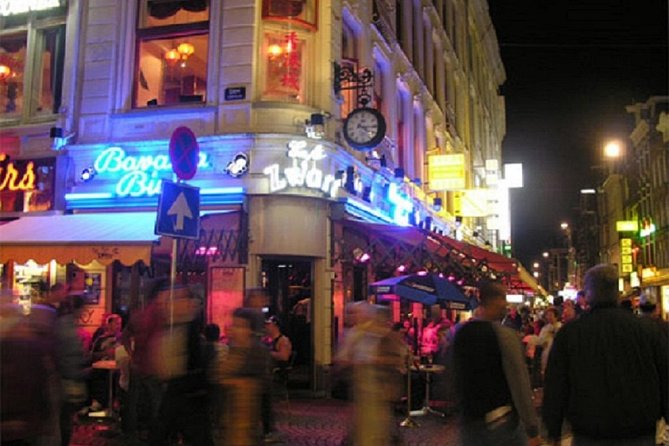
- De Wallen from a local perspective, with context behind the myths
- A tight 2-hour route that fits a packed Amsterdam day
- Old Town wayfinding through sites like Waag, Int Aepjen, and small historic buildings
- Amsterdam’s wooden-pile building story tied to the city’s ground and foundations
- Real-world modern history, including a condom shop that’s been operating since 1987
Why a 2-Hour Red Light District Walk Fits Amsterdam Perfectly
Amsterdam can be intense. One canal cruise can turn into three museums. One “quick stop” becomes a full afternoon. That’s why I like the format here: a 2-hour walking tour that stays focused on the Red Light District and the surrounding Old Town connections.
Instead of treating De Wallen like a theme park, you’re guided through it as a real neighborhood with roots in Amsterdam’s oldest urban fabric. You also get the big advantage of being on foot: you notice doorways, street shapes, and street-level details that you’d miss if you only view the area from a bus window or across a canal.
The other practical win is timing. This tour offers multiple start times, which matters because Amsterdam schedules can be tight. Also, it’s a mobile ticket, so you’re not dealing with paper pickups or extra steps once you’re in the city.
You can also read our reviews of more tours and experiences in Amsterdam.



Meeting at Geldersekade: Getting Oriented Fast
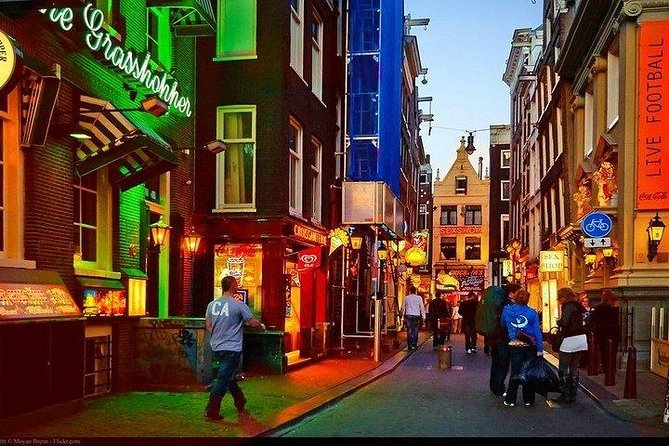
You’ll meet at Geldersekade 2HS, 1012 BH Amsterdam, and the tour ends back at the same meeting point. That matters more than it sounds. In a maze like this, starting and ending at one spot keeps the route simple, especially if you’re planning dinner or another activity immediately after.
With a maximum of 32 travelers, you should expect a group that’s large enough to feel lively but small enough to still get personal answers. The tour is also described as suitable for most travelers, with service animals allowed and proximity to public transit.
If you’re thinking about comfort: the tour is explicitly not recommended for limited mobility. Since it’s a walking route with narrow streets, you’ll want to choose something else if you need step-free access.
De Wallen Through Local Eyes: How Myths Get Replaced by Context
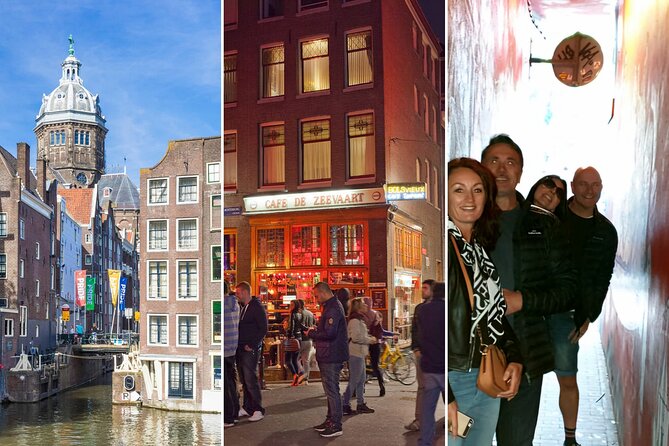
The main idea is simple: you’re walking De Wallen while hearing how it developed, not just what it looks like today. The tour frames the area through local perspective, so you’re not stuck with only tourist stereotypes or moralizing commentary.
Expect the guide to connect three things:
- The famous street environment you’ve seen in photos
- The coffeeshop culture people associate with Amsterdam
- The sex work industry as part of the area’s economic reality
That trio is why this tour works for many people. You learn the area isn’t only about one topic. It sits inside a city with nightlife rules, commerce, and everyday life right beside the controversy.
This is also where guide style matters. In the guide accounts, Adam is praised for mixing entertainment with clear explanations and giving people chances to ask questions. Aarre is described as accommodating, very informative, and able to adjust the tour to needs. If you value a Q-and-A pace, that’s a strong sign.
One more note: De Wallen stories can get graphic depending on how you handle details. One account points to the kind of stories that can be shocking in subject matter. If you’re sensitive to that, keep your expectations set as you choose your approach to this neighborhood.
Stop by Stop: How the Old Town Layers Get Explained
Pub The Ape (Int Aepjen): A Wooden Building That Survived a City Crisis
One of the most striking stops is Pub The Ape, also known as Int Aepjen. It dates to around 1540 and stands out because it’s one of only two remaining wooden buildings left in Amsterdam.
Why it matters: a major fire in 1452 changed building rules. After that point, the government pushed for brick facades. So when you see Int Aepjen, you’re not just looking at a pub. You’re seeing an older architectural survival story, still sitting inside a district that people often only experience through its modern reputation.
Drawback to plan for: if you’re the type who wants a strictly non-alcohol, non-tourist experience, this is still a pub. You’ll be there for context, not to treat it as a sit-down stop.



The Dam and the City Built on Trees: Amsterdam’s Ground Rules
Another stop focuses on the city’s foundation reality: Amsterdam’s soil includes thick fen and clay, which meant early buildings couldn’t safely rest on normal ground. Instead, houses were built on wooden piles driven down to reach a stable sandy layer, about 11 meters deep.
This is one of those “boring facts” that becomes powerful when you’re walking through a place. You start noticing how Amsterdam is engineered to exist where it does. Even if you never think about foundations at home, here you can connect it to the way the city grew and why building choices shaped what you see today.
If you’re already fascinated by infrastructure and how cities are built, you’ll appreciate this stop. If you’re more focused on photos and stories, it can feel more technical than you expected, but it’s the kind of context that makes De Wallen’s setting feel less like a movie set.
The Oldest Part of Town: Why Age Shows Up in the Streets
The tour also frames the area as part of Amsterdam’s Old Town, calling out that the Red Light District area is tied to the city’s oldest section. The payoff is that the guide can connect age with atmosphere: narrow streets, long-running institutions, and buildings that reflect layers of growth.
This isn’t just trivia. When you hear the area is among the oldest parts of the city, the street scale starts to make sense. You stop thinking only about modern nightlife and start understanding how long these streets have served specific urban functions.
Possible drawback: if you’re hoping for a purely Red Light District-focused story with minimal detours, the Old Town framing may take some time. Still, it helps you see the neighborhood as a place with history rather than a single attraction.
The Waag: City Gate to Guild Hub
The tour includes the Waag, which used to be one of Amsterdam’s city gates. It was built around the 1400s and is described as the second oldest building of Amsterdam.
Then it shifted roles: after its time as part of the defensive wall system, it was used as a guild and craftsman organization space, with guilds situated within the Waag and around the square.
This stop is valuable because it shows how buildings change jobs across centuries. Amsterdam’s defensive needs gave way to organized trade and craftsmanship. Walking near a structure like this while you talk about De Wallen’s surrounding area makes the city’s evolution feel less random.
Drawback: if you’re mainly looking for sensational De Wallen stories, Waag can feel like a slower, architectural pause. But it’s a strong counterweight that gives the district a bigger setting.
The Smallest House of Amsterdam: VOC Storage to Long-Term Living
You’ll also see the smallest house of Amsterdam, built around the 1700s. The tour explains that it started as storage for the VOC trading company and later became a home where people lived for a long time.
This is a great stop for two reasons. First, it reminds you Amsterdam’s trade wealth shaped daily life and housing options. Second, it’s a reminder that the city didn’t only contain grand houses and obvious landmarks. Small buildings were part of how the city worked.
If you’re short on patience, it can still be worth it. The context turns the concept of smallest house into a story about commerce, storage, and how people adapted around economic systems.
The Condom Shop Since 1987: Modern Commerce in a Historic District
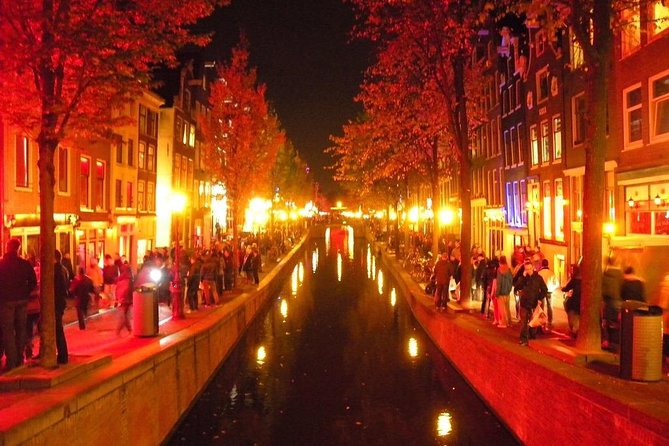
One stop is a condom shop described as the world’s first of its kind, operating in this location since 1987. The tour also notes you can get size-customized condoms and a variety of special types.
This stop lands differently depending on your expectations. If you’re expecting only old streets and old buildings, this introduces a present-day, practical side of how the area functions. If you’re curious about how Amsterdam treats sex-related business with a mix of regulation, commerce, and frankness, this is directly in that lane.
It’s also a reminder that the district is not just about fantasy. People sell products, manage demand, and meet needs. Even if you don’t personally visit that shop, hearing the long-running presence (since 1987) gives you a timeline you can carry with you.
Value and Pricing: Is $63.67 Worth Two Hours?
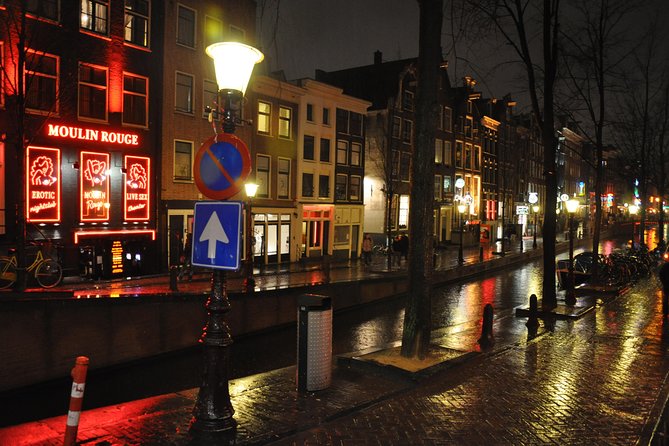
At $63.67 per person for roughly 2 hours, you’re paying about $32 per hour. That sounds simple, but the real value is what your money buys: a guided route that ties together De Wallen, Old Town, and specific landmark context without forcing you to research and connect dots on your own.
A few additional value signals:
- It’s small-group, up to 32 travelers, which helps keep the Q-and-A part of the experience possible.
- It includes admission ticket free in the stop descriptions, so you’re not paying extra at each landmark in the way you sometimes see on longer museum-heavy tours.
- It includes a mobile ticket, which reduces friction when you’re moving fast between activities.
- It offers group discounts, useful if you’re traveling with friends or family.
Timing-wise, it’s typically booked about 37 days in advance. That’s a clue: this isn’t a “wait until you’re bored” kind of tour. If De Wallen is on your list, it’s smart to lock it earlier so you can match it with your schedule.
Who This Tour Is Best For (And Who Should Skip It)
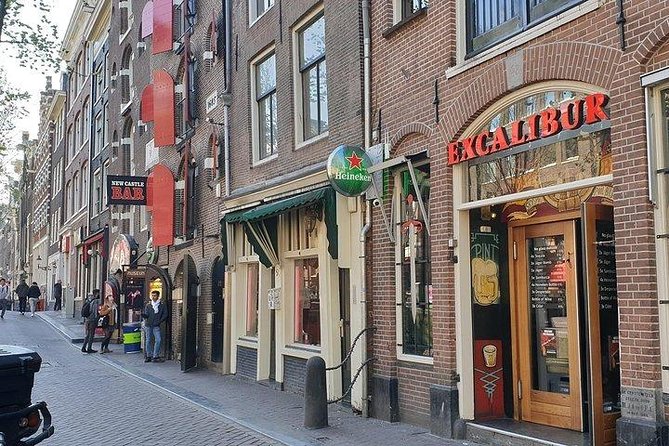
This tour is a good fit if you want:
- A time-efficient introduction to De Wallen
- Local context that explains how the district fits into Amsterdam’s older city structure
- A walk-and-question style with room for dialogue
It’s also a reasonable choice if you like architectural and historical detail as part of the story, not just background noise. The mix of Int Aepjen, Waag, the smallest house, and Amsterdam’s foundation history makes the walk more than a single-topic tour.
You might want to skip it if:
- You need step-free access. It’s not recommended for limited mobility.
- You want a mostly light, non-graphic experience. The stories can get serious, and the topic is never treated as sanitized.
Should You Book This Amsterdam Red Light District Tour?
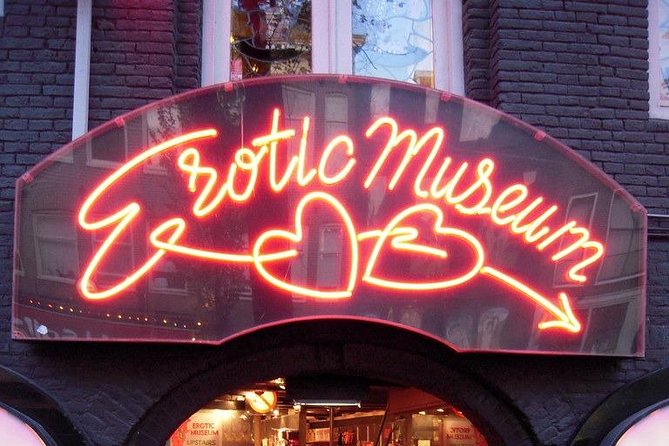
If your goal is a 2-hour, on-foot orientation that connects De Wallen to Old Town landmarks, I think it’s a solid booking. The best reason is the structure: you get the famous area plus the city mechanics and historical buildings that help the neighborhood make sense. That makes the walk feel less like a gimmick and more like a smart way to understand a controversial corner of Amsterdam.
I’d book it especially if you:
- Like asking questions and want a guide who can keep up a conversation
- Want something you can fit between other plans
- Appreciate small, specific stops like Int Aepjen and the Waag rather than only street-level views
If you’re easily uncomfortable with the topic, or you’re not willing to hear direct explanations, then choose a different Amsterdam experience where the content matches your comfort level.
FAQ
How long is the Amsterdam Red Light District walking tour?
It runs for about 2 hours.
What is the price per person?
The price is $63.67 per person.
Where is the meeting point?
The meeting point is Geldersekade 2HS, 1012 BH Amsterdam, Netherlands.
What’s included with the ticket?
It uses a mobile ticket, and the stop descriptions indicate admission ticket free.
Is this a guided walking tour?
Yes, it’s a walking tour through the Red Light District and nearby Old Town areas.
What’s the group size limit?
The tour has a maximum of 32 travelers.
What start times are available?
There are multiple start times, so you can choose what fits your schedule.
Is it suitable for people with limited mobility?
It is not recommended for travelers with limited mobility.
Is there free cancellation?
Yes. You can cancel for a full refund up to 24 hours in advance.