REVIEW · AMSTERDAM
Cheese making workshop next to De Hallen, heart of Amsterdam
Book on Viator →Operated by De Kaasserie · Bookable on Viator
Cheese, made by hand, in Amsterdam. In a small-group workshop at De Kaasserie near the De Hallen food zone, you get practical, beginner-friendly instruction while I love the calm pace and how take-home cheese is built into the experience. You’ll also get bonus recipes so your new skill doesn’t vanish the next day.
The only real drawback to note: this is a hands-on class, so you’ll want to show up ready to roll up your sleeves and get a little messy. If you’re hoping for a purely observational food tour, this one might feel a touch too active.
In This Review
- Key things that make this workshop worth your time
- A hands-on cheese workshop next to De Hallen
- Why rennet and acid coagulation is the whole point
- De Hallen and Ten Katemarkt: starting in Amsterdam’s food pocket
- The studio setup at De Kaasserie
- Your step-by-step cheese process (what you’ll actually do)
- Experimenting with herbs and colors (simple ways to get results)
- Tasting your cheese with spices and a drink
- What you take home (so the workshop doesn’t end when it’s over)
- Price and value: what $144.49 covers (and why it can be fair)
- Who should book this cheese-making class
- Quick practical tips before you go
- Should you book this cheese workshop?
- FAQ
- Where does the cheese-making workshop start?
- How long is the class?
- Is the workshop offered in English?
- How many people are in the group?
- What cheese types will I make?
- Are ingredients and materials included?
- Can I take cheese home?
- Is there any tasting during the workshop?
- What’s the cancellation policy?
Key things that make this workshop worth your time
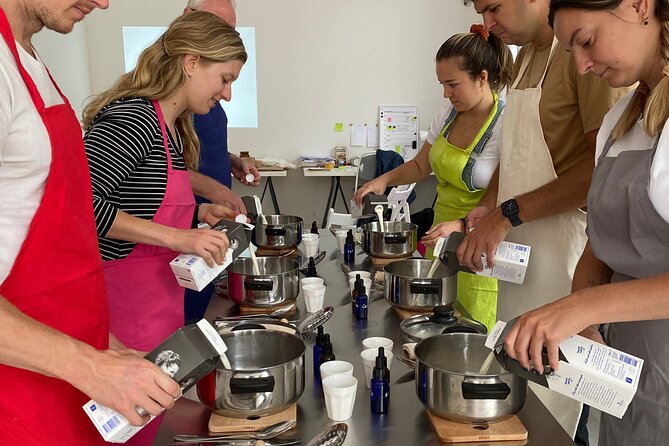
- Two cheese styles in one session: you make one fresh cheese coagulated with rennet, then another coagulated with acid.
- Hands-on from start to finish: all ingredients and materials are included, which keeps the class beginner-friendly.
- Flavor experiments at the end: when you finish the acid cheese, you can try herbs and color ideas.
- You eat what you make: there’s a homemade cheese tasting with a drink.
- Small group means real attention: the class caps at 8 travelers, so you’re not lost in a big room.
- Take-home tools and recipes: you can bring your two cheeses and basic tools, plus recipe instructions via email.
A hands-on cheese workshop next to De Hallen
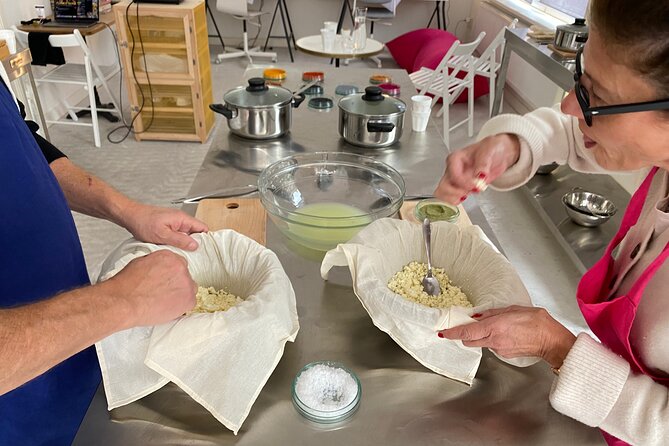
This is the kind of Amsterdam food experience that feels personal fast. You’re not watching from the sidelines. You’re making fresh cheese with your hands, learning the logic as you go.
I like that the experience is set up to work even if you’re a total beginner. You get guidance, and you’re not left to figure things out with a vague, do-your-best vibe. The small group size also matters here. It turns a class into a conversation.
You’ll spend about 3 hours on the whole experience. That’s a sweet spot: long enough to learn two methods, but not so long that it becomes a chore.
You can also read our reviews of more tours and experiences in Amsterdam


Why rennet and acid coagulation is the whole point
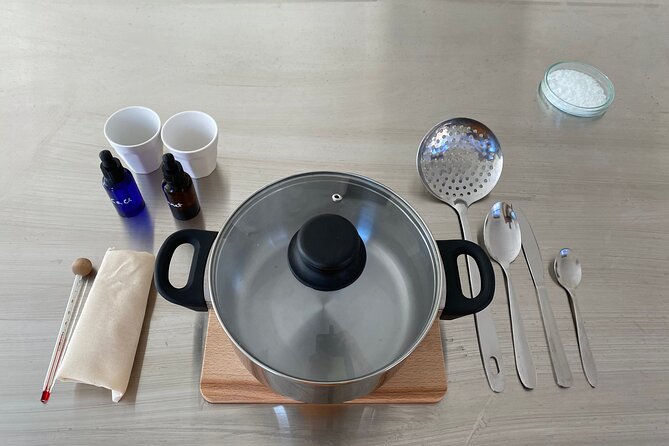
Fresh cheese-making sounds romantic, but the real magic is chemistry you can actually see. In this class, you’ll learn two approaches to coagulation.
First comes the rennet method. Then you’ll switch gears and make a second fresh cheese using acid. The contrast is the value. You start to understand that cheese isn’t one single process. It’s different ways of guiding milk proteins into curds.
When you finish the acid-coagulated cheese, the fun part kicks in. You’re encouraged to experiment with herbs and colors. That’s not just for looks. It’s training your palate and your instinct for balancing flavors in something simple.
If you love food design ideas—how texture, color, and seasoning change what you’re eating—you’ll probably feel right at home.
De Hallen and Ten Katemarkt: starting in Amsterdam’s food pocket
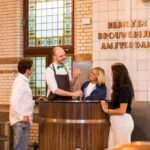
The experience begins at De Kaasserie (Bellamystraat 8, 1053 BL Amsterdam). You then go through the area around De Hallen and Ten Katemarkt, both tied to Amsterdam’s food culture.
I like this setup because it puts you near the city’s everyday food energy, not in an isolated studio bubble. You get your bearings in a real neighborhood context before you start working with milk and tools.
Also, it helps that this part of Amsterdam is easy to reach by public transportation. So you’re not burning half the day just getting there and back.
The studio setup at De Kaasserie
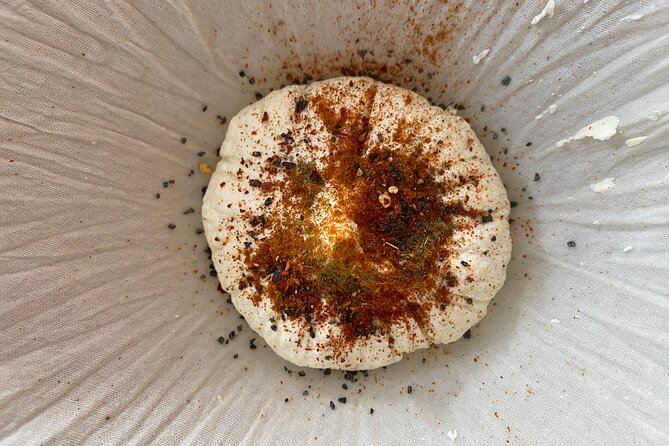
Your cheese-making happens in a food design studio setting. That matters. A studio tends to feel calmer than a traditional kitchen class, and this one has that gentle, focused tone.
All ingredients and materials are included. That’s one of the best ways to make a workshop actually beginner-friendly. You don’t need to guess what you’re missing, and you don’t need a shopping list that turns your day into a hunt.
The class format is also built for small-group learning. With a max of 8 people, you can ask questions without feeling like you’re stealing time. You can also get quick help if something isn’t behaving the way you expected.
Your step-by-step cheese process (what you’ll actually do)
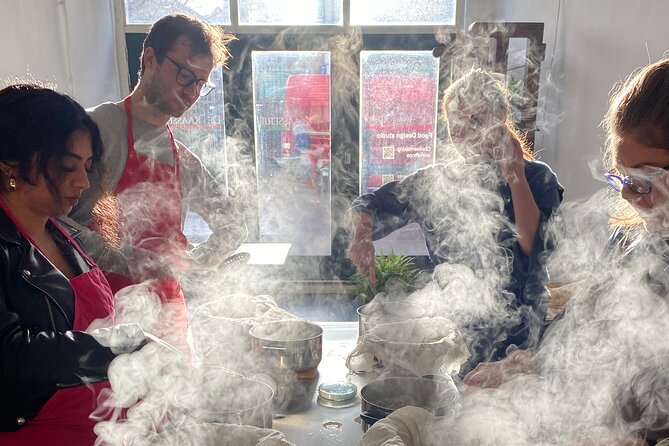
You’ll make two fresh cheeses during the session. Each one teaches a key concept.
For the rennet cheese, you’ll work through the steps that lead milk to form curds using rennet. You’ll learn the timing and the basic handling needed to end up with a fresh result rather than something aged or complicated.
Then you’ll make the acid-coagulated cheese. This method follows a different logic: acid replaces rennet as the main driver of curd formation. In plain terms, you’re comparing two roads to the same destination—fresh cheese.
During the acid cheese portion, you’ll be encouraged to personalize it with herbs and colors. This is where the workshop stops being only technical and becomes creative. You get to test ideas in a setting where mistakes are part of learning.
You’ll also do a homemade cheese tasting at the end. It’s one thing to make cheese. It’s another to taste and compare what you made with what the class produces along the way.
You can also read our reviews of more tours and experiences in Amsterdam




Experimenting with herbs and colors (simple ways to get results)
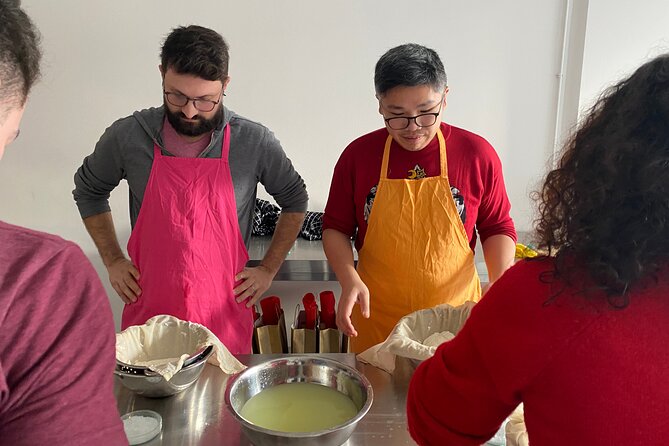
This is the moment where I think most people enjoy themselves the most. You can keep it classic, or you can play.
Herbs are easy to understand: add them, mix them in, and you immediately change aroma and flavor. Colors are more of a playful science. They push you to think about how you present and season food, not just how it tastes.
What I like is that you’re not stuck with one flavor plan. The workshop nudges you to make choices. That means your final cheese feels like your project, not a copy.
If you’re the type who likes to cook by instincts—taste, adjust, then move on—this part will feel satisfying instead of stressful.
Tasting your cheese with spices and a drink
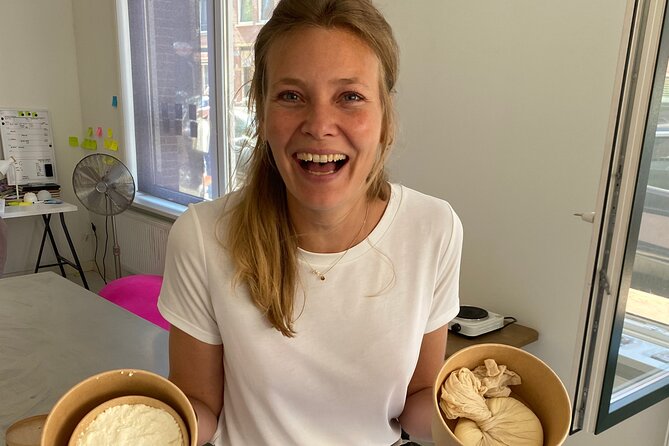
After the making, you’ll sit down for a tasting of homemade cheeses. It’s served with spices and herbs, plus a drink to finish the session.
This tasting is practical. It gives you a reference point for what fresh cheese should taste like. It also shows you how flavor additions change the final bite.
I find tastings like this especially useful because it turns the class into a repeatable skill. Later, when you try making something at home, you’ll remember what good feels like.
It’s also a good reset. Your hands are probably a bit busy by the end of cheese-making, and tasting lets you slow down and enjoy the results.
What you take home (so the workshop doesn’t end when it’s over)
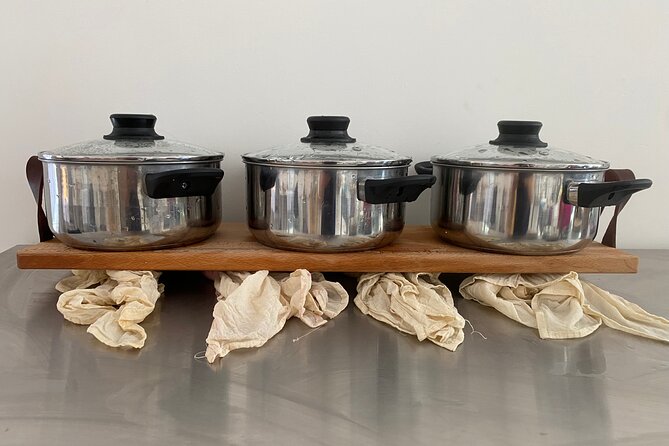
You can take with you your two cheeses and the basic tools. That’s a big deal for value, because you’re not leaving with just memories and a full stomach.
You’ll also get recipe instructions via email. That’s the part that helps you keep going after the class. Making cheese at home has a learning curve, but recipes give you a clear trail back to what you made here.
From a practical standpoint, the fact you make two types of fresh cheese means you can try two different starting points at home. You’ll have a built-in comparison for what you prefer.
Price and value: what $144.49 covers (and why it can be fair)
At $144.49 per person, this isn’t a throwaway activity. You’re paying for three things: instruction, included materials, and a small-group format.
The included ingredients and materials matter because they remove hidden costs. If you’ve ever tried to start a food hobby by buying supplies first, you know how quickly expenses add up. Here, you get the practical experience without the upfront guesswork.
The small group size also keeps the experience from feeling generic. With up to 8 people, you’re more likely to get real help and clear answers. That’s the difference between learning a technique and just getting through a checklist.
Finally, you take home two cheeses and basic tools. That turns the workshop into a mini kit plus food. You’re not paying only for the lesson—you’re getting outputs.
If you’re a cooking fan or you love food craft, this price starts to look more reasonable. If you only want a quick taste without the hands-on work, you may prefer a different kind of tasting experience.
Who should book this cheese-making class
This workshop is a strong match if you fall into any of these buckets:
- You’re a food lover who wants something hands-on and local-feeling.
- You like learning the why behind cooking techniques, not only the how.
- You want a beginner-friendly class that doesn’t assume you already know tools and terminology.
- You’re traveling with a partner or small group and want a shared activity that isn’t a long walking tour.
You might skip it if you’re trying to fill your schedule with low-effort sightseeing only. This is a make-and-take experience. You’ll be working with ingredients and tools during the session.
It’s also a good choice for people who like calm, peaceful learning environments. The overall vibe is designed for patience and focus rather than speed.
Quick practical tips before you go
A couple things will make the experience feel smoother:
- Wear clothes you don’t mind getting a little dairy on them. Even careful work can get messy.
- Come with curiosity. Cheese-making rewards attention to small changes.
- Plan your schedule so you have time after the class to enjoy your take-home cheeses.
Since this activity is near public transportation, you don’t need a car to make it work. And confirmation is received at the time of booking, which helps you plan without stress.
If you’re the type who likes flexibility, you can cancel for a full refund if you cancel at least 24 hours before the experience starts.
Should you book this cheese workshop?
Yes—if you want a hands-on Amsterdam food experience that teaches you real technique. The two-method format (rennet then acid) gives you a deeper understanding than a basic “make one cheese” session. The small group size helps you learn without feeling rushed, and the take-home cheeses plus email recipes make it more than a one-day novelty.
Skip it only if you want purely observational sightseeing or if you dislike working with your hands in a kitchen-like setting. If you’re okay with a bit of mess and you enjoy learning through doing, this is the kind of class you’ll remember—and reuse.
FAQ
Where does the cheese-making workshop start?
The meeting point is De Kaasserie, Bellamystraat 8, 1053 BL Amsterdam, Netherlands.
How long is the class?
The duration is about 3 hours.
Is the workshop offered in English?
Yes, it’s offered in English.
How many people are in the group?
The class has a maximum of 8 travelers.
What cheese types will I make?
You’ll make two types of fresh cheese: one coagulated with rennet and one coagulated with acid.
Are ingredients and materials included?
Yes. All ingredients and materials are included in the class.
Can I take cheese home?
Yes. You can take home the two cheeses you make, along with the basic tools.
Is there any tasting during the workshop?
Yes. At the end, there’s a homemade cheese tasting with a drink.
What’s the cancellation policy?
You can cancel for a full refund if you cancel at least 24 hours before the experience’s start time. Free cancellation is available, and there’s also a note that it may be rescheduled or refunded if the minimum traveler requirement isn’t met.
You Might Also Enjoy
More Workshops & Classes in Amsterdam

More Cheese in Amsterdam
- Zaanse Schans Windmills, Clogs and Dutch Cheese Small-Group Tour from Amsterdam
★ 4.5 · 2,369 reviews