REVIEW · AMSTERDAM
Bill’s Bike Tour Amsterdam – Culture, Liberalism & Tolerance
Book on Viator →Operated by Bill's Bike Tour · Bookable on Viator
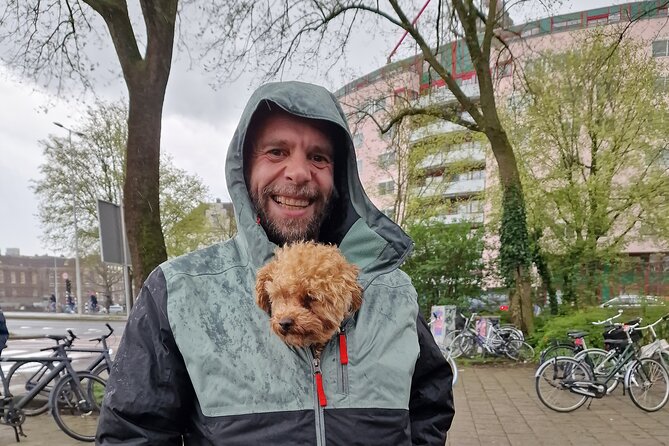
A bike tour with its own puppy pilot. Bill (Pim) guides you through Amsterdam’s lesser-known streets, with puppy Herman as your friendly wingman. You’ll skip the busiest routes and roll into calmer neighborhoods, plus a ferry crossing that changes the feel of the trip.
I love the max 12 travelers cap; the ride stays relaxed and you can actually chat. I also like that you get included photos and videos, so your hands and eyes stay on the streets.
The main consideration is the good-weather requirement, since this is an outdoor ride with ferry time.
In This Review
- Key things to know before you go
- Why this bike tour beats a simple checklist
- Bill (Pim) and Herman: the guiding style that keeps it fun
- The 3-hour route: what you’ll see at each stop
- Hotel de Windketel and the weird charm of small-scale Amsterdam
- Keith Haring in Amsterdam: street art with real scale
- Molen De Bloem: windmills and the Netherlands staying above water
- Tony’s Chocolonely tasting: ethics you can actually taste
- Gashouder: a former gas factory turned club stage
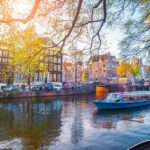
- Prinseneiland: canals beyond the tourist strip
- Haarlemmerpoort: a medieval gate that anchors the city’s edges
- Houthavens: from lumber port to reclaimed housing
- Hotel Pontsteiger and the River IJ view
- Pllek: snack and a drink by the water
- NDSM Wharf: art walls and pop-up creativity
- The Veronica Ship: Pirate Radio connection in Amsterdam North
- Museum Het Schip: Amsterdam School architecture (and the Gaudí link)
- Realengracht and the wooden draw bridges
- Westergasfabriek area and Café Pacific: wrap with stories over a drink
- Ferry ride value: why it changes the tour
- What the culture theme means in real life
- Practical stuff: bikes, cold weather, and what to bring
- Is it good value at $79.79 for three hours?
- Who should book Bill’s Bike Tour Amsterdam
- Who might want a different option
- Should you book this tour?
- FAQ
- How long is Bill’s Bike Tour Amsterdam?
- How many people are on the tour?
- Where does the tour start?
- Is a ferry ride included?
- What’s included in the price besides the bike?
- Is bottled water included?
- What should I do if the weather is bad?
- What if the minimum number of travelers isn’t met?
- Do I get an actual ticket on arrival?
- Is free cancellation available?
Key things to know before you go
- Small group (12 max) keeps the pace human and the explanations focused.
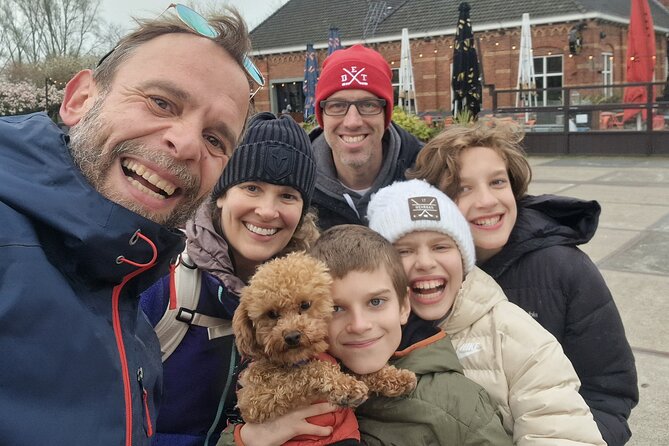
- Bill (Pim) + Herman gives you a tour that’s part culture lesson, part feel-good street theater.
- Ferry transfer is included, so the IJ river becomes part of the route.
- Art, architecture, and water engineering show up at multiple stops, not just one.
- Snacks plus a chocolate tasting turn a few stops into real breaks.
Why this bike tour beats a simple checklist
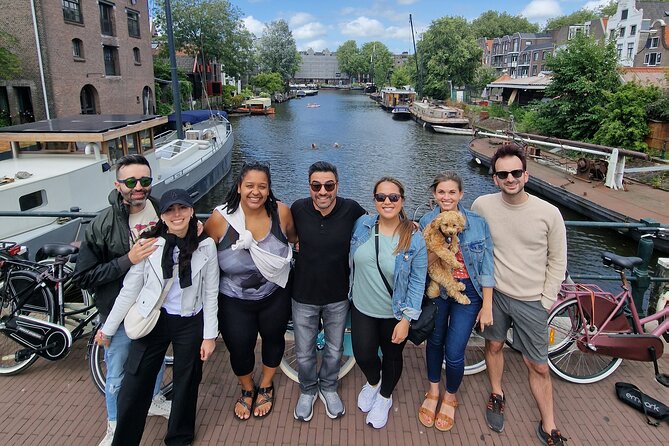
Amsterdam can feel like a loop: canal cruise, museum, crowded streets, repeat. This tour is built to do something different. You bike through quieter blocks and lesser-visited areas, where the city feels more like a place people actually live and work.
The “Culture, Liberalism & Tolerance” theme isn’t just a marketing line. You get stories and context about everyday Dutch norms—how communities function, how tolerance shows up in public life, and how Amsterdamers talk about difference. You’ll also learn why the Netherlands looks the way it does, especially around water management and land reclamation.
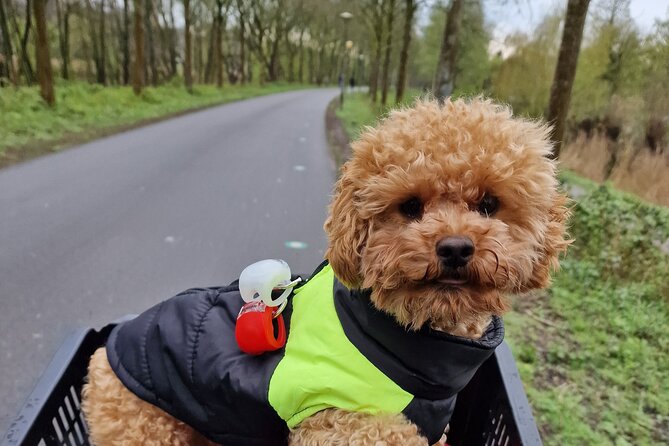
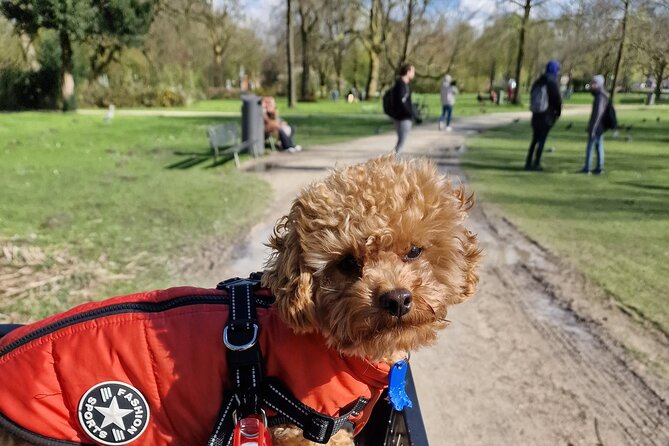
And yes, the puppy Herman thing is real. It’s not just cute; it changes the rhythm. People smile more, the group talks more, and the tour feels less like a lecture and more like a guided neighborhood walk… with cycling.
You can also read our reviews of more cycling tours in Amsterdam
Bill (Pim) and Herman: the guiding style that keeps it fun
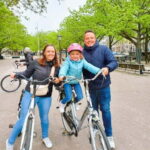
Bill—also known as Pim—runs the tour with a light touch. From stop to stop, he mixes practical storytelling with big-picture ideas about Dutch culture. The explanations tend to connect what you’re seeing on the street to how the country works: water control, design choices, and the social habits that make Amsterdam run.
Then there’s Herman. This wingman puppy is part of the experience from the start: calm, well-behaved, and a magnet for attention. In a city where people often keep their phones up, Herman and Bill’s pace encourage you to slow down. One nice extra: the tour includes photos and videos, so you don’t feel like you must document every moment with your own device.
The 3-hour route: what you’ll see at each stop
You’ll cover a lot of ground in about three hours. Expect frequent quick stops (think 5–15 minutes) plus two longer snack and art breaks. The stops are short on purpose. They give you context without turning the ride into a slog.
Hotel de Windketel and the weird charm of small-scale Amsterdam
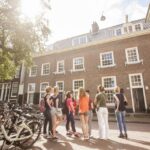
You kick off at Hotel de Windketel, described as the smallest hotel in Europe of the 20th century. It’s a perfect warm-up stop because it tells you Amsterdam isn’t always about monuments. Sometimes it’s about scale, clever design, and making tight spaces work.
This first stop also helps you settle in. You’re not thrown straight into heavy culture; you get a quick orientation moment, then you’re back on the bike.
Keith Haring in Amsterdam: street art with real scale
Next comes the Keith Haring mural. The tour calls it the biggest piece on public display in Europe of the famous New York artist, painted on the wall of the former depot of the Stedelijk Museum.
What I like about this stop is how it shows Amsterdam’s mix of formal culture and street culture. You’re used to thinking of the city as museums and galleries. Here, art sits in an everyday setting, tied to an older building repurposed for something new.
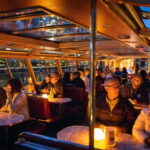
Molen De Bloem: windmills and the Netherlands staying above water
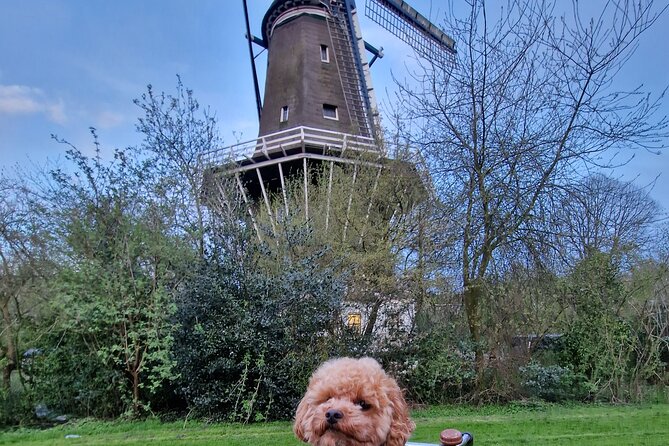
At Molen De Bloem, Bill explains draining the lands and land reclamation—including the fact that about a quarter of the Netherlands is below sea level. That single detail changes how you see the city. Amsterdam isn’t just scenic. It’s engineered.
If you’re the type who likes facts that connect to what you see, this stop is one of the most useful. It gives you a framework for understanding later neighborhoods built on reclaimed areas.
Tony’s Chocolonely tasting: ethics you can actually taste
Then you’re at Tony’s Chocolonely Superstore, with a chocolate tasting tied to the company’s push for slave-free chocolate produced without child labor. The tour frames it as the moment the company upset the global chocolate industry by pushing for reform.
Even if you’re not a chocolate superfan, this works because it turns an abstract ethical claim into something sensory. And you’re not just eating a snack—you’re stopping to understand why the company matters.
Gashouder: a former gas factory turned club stage
At Gashouder, you get a look at a former gas factory turned nightlife space, noted as an especially exquisite nightclub in Amsterdam. The tour also names big-name DJs—Armin van Buuren, Hardwell, Afrojack, Tiësto, DonDiablo, and Martin Garrix—as artists who had big breakthroughs there.
This is one of those “only in Amsterdam” moments. The building wasn’t built as a club, yet it became one. It’s reuse, not replacement, and it makes the city feel less disposable.
Prinseneiland: canals beyond the tourist strip
You’ll reach Prinseneiland, described as a secret canal district where you experience the canal system away from the city-center crowds. The value here is simple: you get the canal beauty without being packed in with everyone trying to get the same photo.
The canal network is one of Amsterdam’s defining features. This stop helps you see it as a lived-in environment, not just a backdrop.
Haarlemmerpoort: a medieval gate that anchors the city’s edges
At Haarlemmerpoort, you stand at a medieval entrance gate into Amsterdam from the direction of Haarlem. It’s a short stop, but it gives you a historic “pin” on the map—one more layer to the city beyond canals and modern neighborhoods.
If you like your travel with a sense of timeline, this is a helpful moment. You’ll feel how the city has expanded and reshaped, but also how certain edges stayed meaningful.
Houthavens: from lumber port to reclaimed housing
Next is Houthavens, once a lumber port and now reclaimed for new housing development. The tour emphasizes it as sustainable and dynamic, and it ties the neighborhood back to the ongoing process of land reclamation.
This is where the earlier water-and-reclamation lesson starts to click. You’re not just hearing about reclaimed land—you’re seeing how it becomes places to live, build, and gather.
Hotel Pontsteiger and the River IJ view
You then stop at Hotel Pontsteiger, a contemporary building beside Pontsteiger Pier overlooking the River IJ. The tour also notes it’s about 3 km from the Anne Frank House and 4 km from the Rijksmuseum—useful if you want to mentally place yourself during the trip.
Even if you don’t go inside, the exterior stop works as a “big picture” pause. You can look over the water and get a clearer sense of where Amsterdam’s neighborhoods sit relative to the IJ.
Pllek: snack and a drink by the water
At Pllek, you take a longer break for a snack and drink in a popular bar setting described as a luxury container bar with a gravel beach overlooking the IJ. The vibe matters here: you’re not just taking a break; you’re shifting from biking mode to social mode.
This is also where you’ll appreciate the tour’s timing. The tour still keeps you moving, but it gives your body a chance to reset before the ferry and the more art-forward stops ahead.
NDSM Wharf: art walls and pop-up creativity
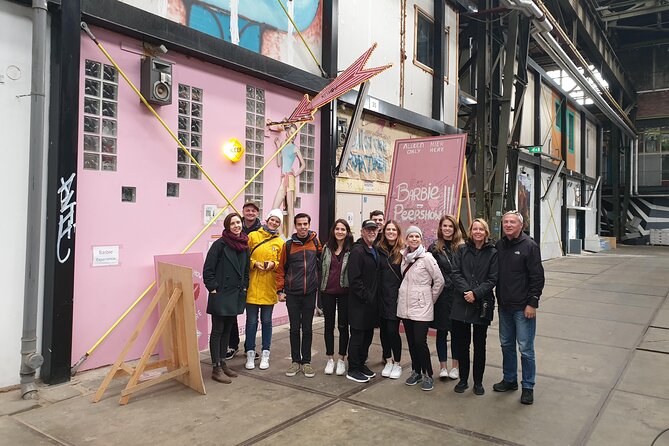
The tour’s next leap is across the IJ at NDSM Wharf. It’s accessed via a quick ferry ride, and the focus is on graffiti and pop-up art from local artists.
This stop is valuable because it shows another Amsterdam angle: the creative re-use of industrial space. You get more color and texture here than at most museum stops, and it feels local rather than staged.
The Veronica Ship: Pirate Radio connection in Amsterdam North
Then you head to the Veronica Ship in Amsterdam North. The tour notes it’s the inspiration of the movie Pirate Radio. It’s brief, but it’s a fun cultural link if you like film and music history.
Even if you don’t know the movie, the point lands: Amsterdam has strong pop-culture echoes in real places, not just on screens.
Museum Het Schip: Amsterdam School architecture (and the Gaudí link)
At Museum Het Schip, you see an iconic 1923 apartment complex and museum highlighting Amsterdam School architecture. The tour also connects this style to a famous architect influence—Antoni Gaudí.
This is a strong stop if you care about design. Het Schip isn’t just a building you pass by. It’s a style you can recognize: the shapes, the character, and the idea that ordinary life deserves thoughtful architecture.
Realengracht and the wooden draw bridges
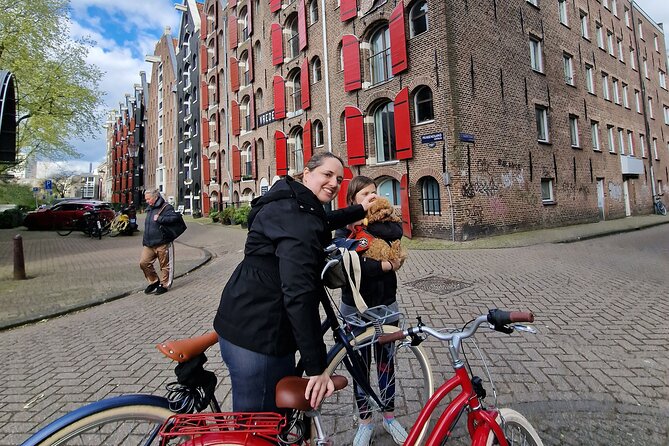
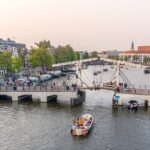
As you circle toward the end, you stop at Realengracht, highlighted as the most scenic wooden draw bridges in Amsterdam. The reason this matters: it’s functional scenery. You’re looking at infrastructure that also happens to look great.
This is the kind of stop that makes your photos make sense later—you’ll remember where the bridges were in relation to the canals.
Westergasfabriek area and Café Pacific: wrap with stories over a drink
Finally, you end at Bill’s favorite bar at Café Pacific near Westergasfabriek. The tour includes time to share a drink, stories, and meet new people.
In a city where many tours stop at the last photo location, this ending is different. It gives a social landing spot, and it turns the bike ride into a more complete experience.
Ferry ride value: why it changes the tour
A ferry transfer isn’t just transportation. It’s a mood shift. When you cross the IJ, you stop squeezing everything into “streets and sidewalks” mode. The river becomes a visual break, and the neighborhoods you’re biking toward feel less like a straight line.
Also, because the ferry is included, you don’t have to hunt for the right connection on your own. One less stress point makes the three hours feel smoother.
What the culture theme means in real life
The tour name includes liberalism and tolerance, and that theme shows up in the way Bill talks about Dutch life. In practical terms, it’s about how Amsterdam works as a place where different people share public space—and how communities create norms that keep daily life functional.
You also see culture through buildings and public art:
- Street art at the Keith Haring mural shows how art can live in older institutional spaces.
- Gashouder’s reuse of a gas factory shows how Amsterdam treats structures as adaptable.
- Het Schip’s architecture shows how design ideals shaped everyday housing.
So you’re not just consuming facts. You’re learning to read Amsterdam like a city: water, design, and social habits all intertwined.
Practical stuff: bikes, cold weather, and what to bring
The tour includes use of bicycle, transfer by ferry, photos and videos, and snacks plus a small chocolate treat. The only food note is that the route includes a snack and drink stop at Pllek, so come hungry enough to enjoy it.
Bring a plan for comfort:
- Good weather is required. If the forecast looks rough, be ready for rescheduling or a refund option if it’s canceled due to poor weather.
- Bottled water is not included. You can bring your own refillable bottle and non-alcoholic drinks if you want to stay comfortable on the ride.
One more practical detail from the experience style: because Bill provides photo/video coverage, you’ll likely spend less time fiddling with your phone while moving. That can make the trip feel calmer.
Is it good value at $79.79 for three hours?
At $79.79 per person, you’re paying for three things at once:
- A bike and route planning that gets you away from the busiest parts of town.
- Multiple culture stops that cost time (and often money elsewhere), like the Keith Haring mural context, the windmill explanation, and the architecture-focused visit.
- Included extras that reduce what you’d otherwise buy on your own—snacks, chocolate tasting, and a ferry transfer.
The personal size matters too. With a maximum of 12 travelers, you’re not crammed into a herd. In Amsterdam, that difference is real. It often turns a “nice tour” into a tour you actually remember.
If you only have one short window to see neighborhoods beyond the center, this is the kind of ride that compresses value into a single afternoon.
Who should book Bill’s Bike Tour Amsterdam
This tour fits best if you want:
- Neighborhoods over landmarks, especially calmer canal areas and river-adjacent spots.
- A guide who connects what you see to how Dutch life works, including norms around tolerance.
- A relaxed pace with comfort breaks (not just nonstop biking).
- A fun group setup—small, friendly, and led by Bill (Pim) with Herman in the mix.
It’s also a smart pick if you’ve already done the big museum circuit and want your second Amsterdam day to feel local.
Who might want a different option
If you hate the idea of being outside for a while, keep this in mind: the tour requires good weather. Also, it’s a cycling tour—most people can participate, but it’s not designed as a slow, stroller-friendly walk-through.
Should you book this tour?
I think you should book it if you want Amsterdam to feel like a real place, not a theme park. The small group size, the ferry element, and the mix of art, architecture, windmills, and chocolate make it more than “just a bike ride.”
Skip it only if you’re traveling at a time when weather uncertainty is high, or if you strongly prefer a museum-heavy day with minimal riding.
If you’re flexible on timing and you want a guided route that shows culture through everyday streets, Bill’s Bike Tour Amsterdam is a strong choice.
FAQ
How long is Bill’s Bike Tour Amsterdam?
The tour lasts about 3 hours.
How many people are on the tour?
The tour has a maximum of 12 travelers.
Where does the tour start?
The meeting point is Waterspiegelplein 10, 1051 PB Amsterdam, Netherlands.
Is a ferry ride included?
Yes. Ferry transfer is included.
What’s included in the price besides the bike?
The tour includes use of bicycle, ferry transfer, photos and videos of the tour, snacks (including a small chocolate treat), and tips, tricks, and recommendations for your stay.
Is bottled water included?
No. Bottled water is not included, and you’re encouraged to bring your own water and non-alcoholic drinks.
What should I do if the weather is bad?
The experience requires good weather. If it’s canceled due to poor weather, you’ll be offered a different date or a full refund.
What if the minimum number of travelers isn’t met?
If it’s canceled because the minimum number of travelers isn’t met, you’ll be offered a different date/experience or a full refund.
Do I get an actual ticket on arrival?
You’ll use a mobile ticket.
Is free cancellation available?
Yes. You can cancel for a full refund up to 24 hours in advance of the experience’s start time.