REVIEW · AMSTERDAM
Amsterdam: Houseboat Museum Entry Ticket
Book on GetYourGuide →Operated by Boat Boys · Bookable on GetYourGuide
A real freight ship home sounds like a film set. This ticket lets you walk through the Hendrika Maria, a 1914 cargo vessel turned into a houseboat in 1967, with an interior that still feels like the 1970s. You’ll also get the story of how one family of four lived on board when it was still doing freight work.
I really like two things here. First, the original 1970s interior—yes, expect a lot of orange, yellow, and brown, plus the sense that the boat has layers of daily life built in. Second, the visit is interactive, with plenty of shared context about the boat’s past and the people who lived there.
One thing to keep in mind: it’s a real houseboat, so space is limited and the stairs are steep. If you don’t do well with narrow walkways or climbing steps, plan accordingly.
In This Review
- Key highlights to look for
- Stepping Onto the Hendrika Maria: What You’re Visiting
- Cargo Ship Roots: How Freight Life Shapes a Home
- The 1970s Interior Look: Small Spaces, Big Atmosphere
- Inside the Rooms: What You’ll Actually See
- The Sailing Mast and Leeboard: Practical Tech with Stories
- Interactive Storytelling and the Pace That Fits Real Life
- Price and Value: Is $12 Worth It?
- Tips to Make Your Visit Smoother
- Who Should Book This Houseboat Museum Ticket
- Should You Book the Houseboat Museum Entry Ticket?
- FAQ
- How long does the Houseboat Museum visit take?
- Is the Houseboat Museum inside a real houseboat?
- What is included with the ticket?
- Is food or drinks included?
- Can I take photos inside?
- What languages are available?
- Is the museum suitable for everyone given the stairs?
- Can I cancel for a refund?
- Is there a reserve and pay later option?
Key highlights to look for
- A 1914 cargo ship converted in 1967 into a residential houseboat
- Original 1970s interior details in a small, lived-in space
- A family-of-four living setup from the days it ran as a freight barge
- Interactive museum storytelling that connects the past to the present
- Only Houseboat Museum in Amsterdam, focused on one specific boat’s history
- Photo-friendly with a no-flash rule for the interior
Stepping Onto the Hendrika Maria: What You’re Visiting
The Houseboat Museum in Amsterdam is housed in a functioning-feeling vessel, not a big, polished building. When you step aboard, you’re on the Hendrika Maria, a ship that began life as a 1914 cargo ship and later shifted into residential use after being converted into a houseboat in 1967. That one timeline detail is the whole point: you’re not just looking at history behind glass. You’re walking the same kind of corridors and spaces that residents used.
I’d frame it like this: you’re getting a guided “how did this work day to day?” look at life afloat. The museum teaches you about the boat’s freight days—when it carried goods and traveled to places like Scandinavia—and then shows how those needs shaped the layout and practical features. Then, it lands on a later chapter: the interior style and living rhythm from when it became a regular home (with the interior starting from the 1970s).
If you like travel that’s tactile—wood, tight corners, stair steps, real-scale rooms—this kind of place is fun. You get that instant contrast between the idea of a house and the reality of living on water.
You can also read our reviews of more tours and experiences in Amsterdam



Cargo Ship Roots: How Freight Life Shapes a Home
What makes the museum click is that it doesn’t treat the boat like a static relic. It explains the working logic of the ship, including how it used to operate as a freight barge. You’ll learn how a family of four lived on board, both when it was still used for freight and after it transitioned to a houseboat life.
That matters because it changes what you notice inside. You’re not only looking for decor or pretty rooms. You start asking practical questions: Where would people move? Where would storage go? What parts of the boat were essential for travel and work? Even if you don’t nerd out on maritime function, the museum makes the everyday feel understandable.
A lot of the interest here is in the contrast: a working vessel has different priorities than a comfortable home. When you see how the boat adapted, you get a real sense of “repurposing before it was fashionable.” The museum’s storytelling ties those two worlds together—freight routines on one side, domestic routines on the other.
The 1970s Interior Look: Small Spaces, Big Atmosphere
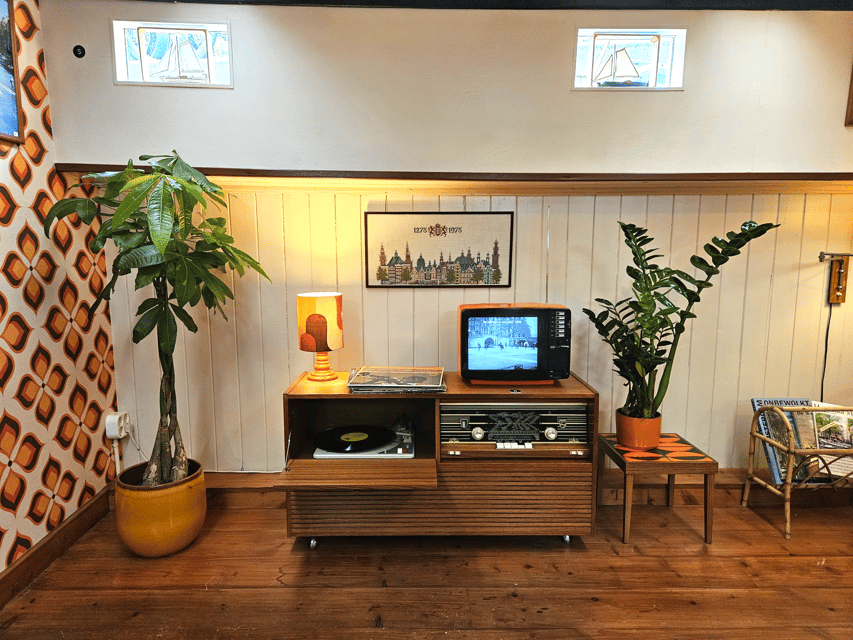
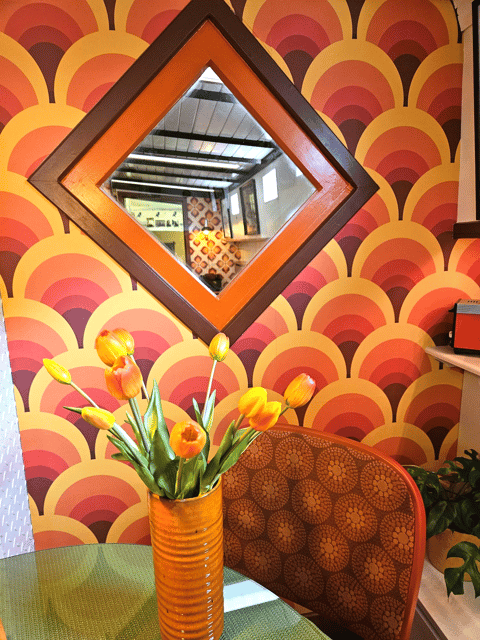
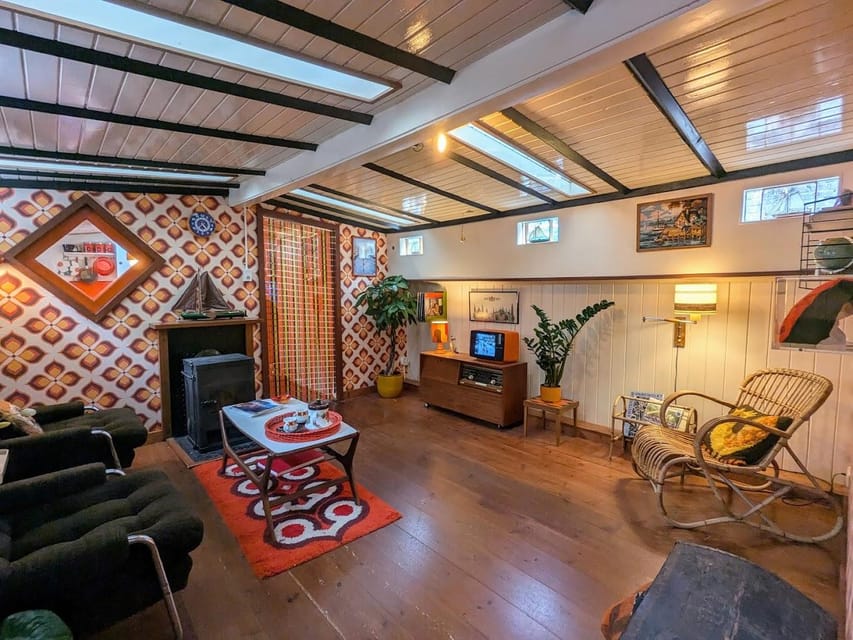
The interior is described as still original from the 1970s, and you can feel that immediately. The boat’s look is a very specific time capsule: orange, yellow, and brown show up repeatedly, and the rooms feel like they were designed for living, not for display.
This is where I think the museum gets its strongest reactions. People love it when a place feels honest, not sanitized. Because it’s inside a real houseboat, the space is limited. That means every corner is close. You’ll likely see how residents arranged daily life in fewer square meters than you’d expect, and how that shaped movement and storage.
There’s also a scale reality check. One of the practical takeaways you can plan around is that the main loop can be quick. If you follow the audio guide through the spaces efficiently, the visit can feel like around 15 to 20 minutes for the core walk-through. That doesn’t make it less interesting—it just means you should treat it like a focused stop, not an all-afternoon museum.
If you’re hoping for a giant exhibition with endless rooms, you might feel underwhelmed. But if you want a compact, character-rich “walk through history” experience, the small scale is part of the charm.
Inside the Rooms: What You’ll Actually See
The museum experience is built around letting you move through the boat and understand how people lived. You’ll explore the living areas on the houseboat, learn about the history of the vessel, and get the context for how it became a home in the first place.
Because the boat is limited in space, the interior can feel like a series of connected snapshots rather than a sequence of roomy, separate exhibits. In practice, that means you’ll notice details quickly: the way doorways and corners funnel you forward, the way rooms overlap in function, and how “home” can be built on a vessel with its own geometry.
Photography is allowed, but there’s a clear rule: no flash photography inside. So if you like low-light interior shots, bring your camera settings accordingly (or just rely on normal phone camera performance and move slowly). Flash can ruin the vibe and it’s not allowed anyway.
Also, plan for steep stairs. The museum is literally on a boat, so you’ll likely be climbing and descending. If you don’t do well with stairs or tight footing, factor that into your pacing. You’ll get more out of the visit if you’re not stressed about where you’re stepping.
The Sailing Mast and Leeboard: Practical Tech with Stories
One detail I really appreciate here is that the museum doesn’t just show the living side of the boat. It also points out key sailing features—especially an original sailing mast and a leeboard.
These parts help explain the boat’s former purpose. In earlier freight days, the vessel traveled for transportation and trade, including routes to Scandinavia. The mast and leeboard make the story feel physical, not abstract. You can understand how the ship handled travel and why certain pieces mattered.
And here’s why that’s valuable for your visit: you start linking the museum’s history to the boat’s actual shape and function. When a museum talks about travel routes but you can’t see the gear, it stays theoretical. Here, the practical equipment is visible, and that makes the ship’s history more believable and easier to picture.
You can also read our reviews of more museum experiences in Amsterdam






Interactive Storytelling and the Pace That Fits Real Life
This is an interactive museum, and it tends to work best if you match your energy level to a compact boat visit. You walk through, learn as you go, and then you’re done before you feel like you’ve sat through a long presentation. That makes it a good choice for travelers who want something different without eating half a day.
The experience also comes with language support. You can get information in English, French, Traditional Chinese, German, Spanish, Portuguese, Italian, and Dutch, which is great if you want to follow along comfortably rather than relying on translations you barely understand.
The pace can vary depending on how slowly you read, how many photos you take, and how long you linger with the audio guide. If you like to take in every room carefully, you might naturally extend your visit. If you want the highlights fast, you can.
Price and Value: Is $12 Worth It?
At $12 per person, the Houseboat Museum is priced like a small, focused attraction. The big question is whether it feels like a bargain or a rip-off based on how you like museums.
Here’s the honest value math I’d use:
- If you enjoy boats, interiors, and a personal-history style exhibit, $12 is likely a fair trade for a compact walk-through that feels real and specific to one vessel.
- If you expect a large museum with many rooms or a long timeline you can spread out all afternoon, you may feel it’s expensive for the time you’ll spend inside.
The boat’s size and the steep stairs also contribute to the visitor experience. It’s not a slow, sprawling wandering day. It’s a short walk with a strong sense of place.
So I’d call it good value if you’re open-minded and want a quirky, human-scale slice of Amsterdam life—especially if you like the idea of seeing how people lived on water rather than just looking at canal houses from the outside.
Tips to Make Your Visit Smoother
A few practical pointers can make this ticket far more enjoyable:
- Wear shoes you’re comfortable walking in. The boat has steep stairs, and the space can feel tighter than a normal museum.
- Expect a tight interior. You’ll be moving through a real dwelling, not a wide gallery. Slow down so you don’t feel rushed.
- Plan it as a short stop. If you follow the audio guide closely, the experience can land around 15 to 20 minutes for the core loop.
- Bring your phone or camera, but remember: no flash inside.
- If you’re sensitive to colors or dated interior styles, just know what you’re walking into. The museum leans into the 1970s look, and that’s part of the authenticity.
Who Should Book This Houseboat Museum Ticket
I think this ticket is best for:
- People who like maritime themes and practical history
- Travelers who enjoy small-scale, character-rich interiors
- Anyone curious about how families adapt daily life to tight spaces
- Visitors who want a different angle on Amsterdam beyond canals and museums
It may not be ideal if:
- You want a long, spacious museum experience
- You have mobility concerns with steep stairs
- You dislike tours that feel compact and time-efficient
Should You Book the Houseboat Museum Entry Ticket?
Book it if you want a quick, hands-on history stop inside a real houseboat—especially if the idea of a freight ship turned home grabs your attention. The original 1970s interior plus the visible sailing features make it more than a simple photo stop, and the interactive approach helps you understand what you’re seeing without needing to be an expert.
Skip it if you’re expecting a big museum day. This is a focused experience, not an all-day museum marathon. If you match your expectations to the boat’s scale, it’s a fun, memorable Amsterdam detour.
FAQ
How long does the Houseboat Museum visit take?
The activity is listed as 1 day, and if you follow the audio guide through the boat efficiently, you may find the main visit takes about 15 to 20 minutes.
Is the Houseboat Museum inside a real houseboat?
Yes. The museum is located in a real houseboat, so space may be limited.
What is included with the ticket?
The ticket includes entrance to the Houseboat Museum.
Is food or drinks included?
No. Food and drinks are not included.
Can I take photos inside?
Photography is allowed, but flash photography is not permitted inside.
What languages are available?
English, French, Traditional Chinese, German, Spanish, Portuguese, Italian, and Dutch.
Is the museum suitable for everyone given the stairs?
The boat has steep stairs, which may not be suitable for everyone.
Can I cancel for a refund?
You can cancel up to 24 hours in advance for a full refund.
Is there a reserve and pay later option?
Yes. You can reserve now and pay later, keeping your travel plans flexible.