REVIEW · AMSTERDAM
Amsterdam: Fabrique des Lumières Dutch Masters Ticket
Book on GetYourGuide →Operated by Fabrique des Lumières · Bookable on GetYourGuide
Amsterdam’s art world has a new trick. At Fabrique des Lumières, you watch famous Dutch paintings expand into walls of color with music that keeps the story moving.
Two things I really like: the sheer scale of 3,800m² of projections in an industrial hall, and the way the program doesn’t stop at the Dutch Masters—there’s also a short follow-up devoted to Mondriaan.
One possible drawback: the experience centers on watching from the floor, so it can feel cold, especially if you run warm in galleries but not in this kind of hall.
In This Review
- Key things to know before you go
- Fabrique des Lumières in Westergas Park: how the building changes the art
- Dutch Masters and Mondriaan: what the show is actually doing
- Your timed slot matters: the show starts exactly when booked
- What you’ll experience inside: light, scale, and changing rooms
- The music is part of the interpretation
- Comfort and rules: lockers included, floor seating likely
- How much time to plan for in Amsterdam
- Value for about $21: what you’re paying for
- Who should book this (and who might skip it)
- Should you book Fabrique des Lumières Dutch Masters?
- FAQ
- What time slots are available for the Dutch Masters exhibition?
- When should I arrive for my booked time?
- How long is the experience?
- Is a guide included?
- Are lockers available, and are they included?
- Is it wheelchair accessible, and is it safe for everyone?
Key things to know before you go
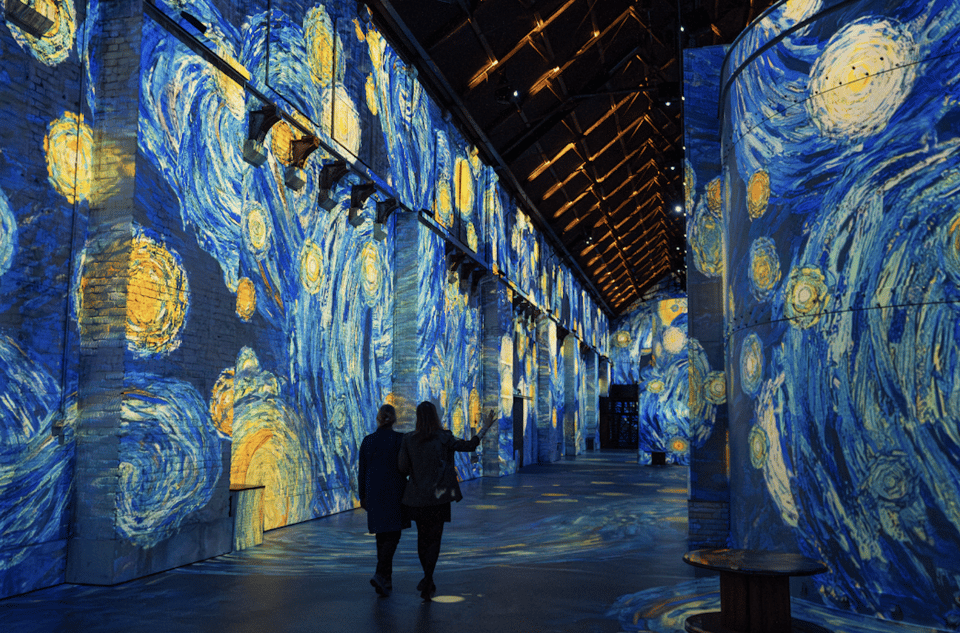
- First and last daily time slots only: the Dutch Masters exhibition runs only at those booked moments.
- Doors open 15 minutes early: you need to be ready when your exact start time hits.
- One show per slot: the program plays once and begins right on schedule.
- Walls up to 17 meters high: the building size is part of the effect, not just the tech.
- Short Mondriaan segment after Dutch Masters: you get a second, focused artistic chapter.
- Locker use included: plan to store luggage or large bags before you enter.
Fabrique des Lumières in Westergas Park: how the building changes the art
If you’ve ever stood in a museum and wished a painting could move, this is the closest thing Amsterdam offers. Fabrique des Lumières is set in an old industrial space in Westergas Park, and that matters. The walls can reach 17 meters high, so the projections don’t feel like a screen. They feel like the room itself is turning into the artwork.
The place also gives you room to walk between sequences. That’s useful because the show isn’t one single film you sit through without breaks. You move through different spaces and themes, and your eyes keep resetting as the projection style changes. The result: the art stays fresh rather than turning into background entertainment.
I also like the venue’s practical vibe. You’re not dealing with a rigid, museum-like flow where you’re rushed along. You’re in a controlled show space that still lets you orient yourself and find your view.
You can also read our reviews of more tours and experiences in Amsterdam

Dutch Masters and Mondriaan: what the show is actually doing
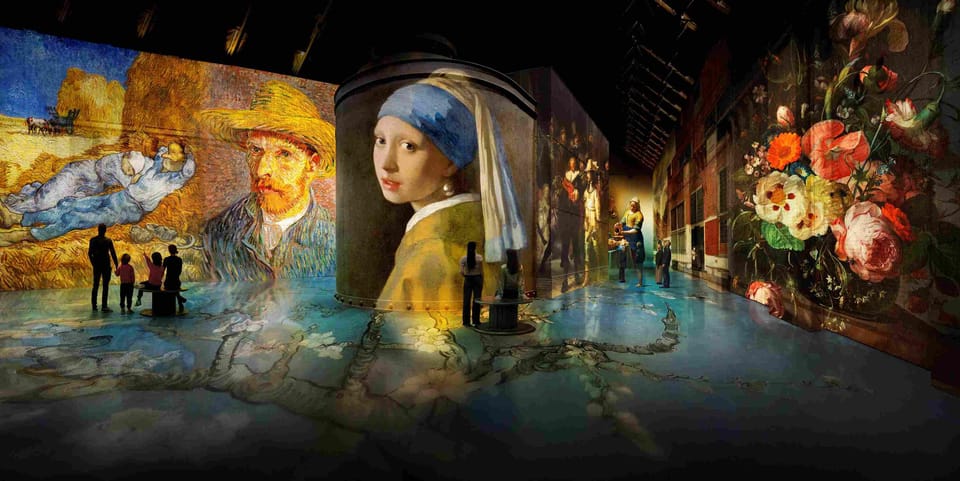
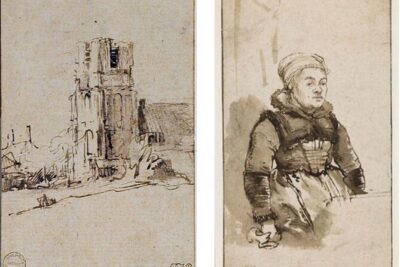
This is a digital art show built around major Dutch artists—Vermeer, van Gogh, Rembrandt, and Mondriaan—but it’s not just a slideshow of famous images. The idea is to bring you into the paintings through light projections synchronized with music.
Here’s why that can work even if you’re not a die-hard art person. In a museum, you look at a painting and then your brain does the connecting. Here, the show does some of the connecting for you. It frames scenes from daily life and then turns them into a larger emotional arc. You don’t just see a face or a street—you see how the composition and color language can feel alive when it’s mapped across walls.
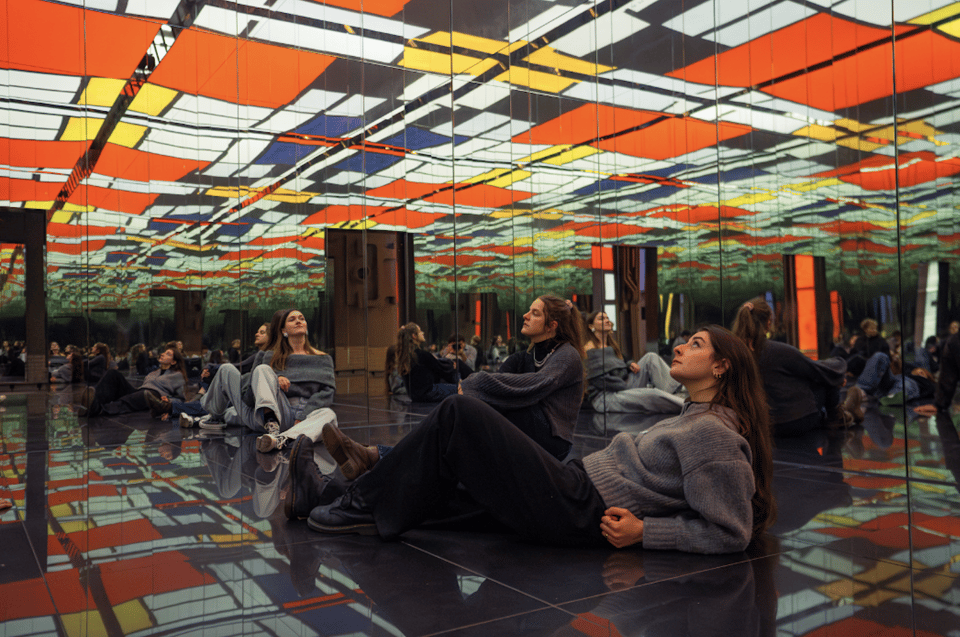
After the main Dutch Masters program, you get a shorter dedicated segment focused on Mondriaan. The show follows his evolution toward neoplasticism, the style associated with freeing himself from traditional painting rules. That second act is a nice change of pace: you go from recognizable Dutch storytelling to a more abstract, theory-forward visual world.
Your timed slot matters: the show starts exactly when booked
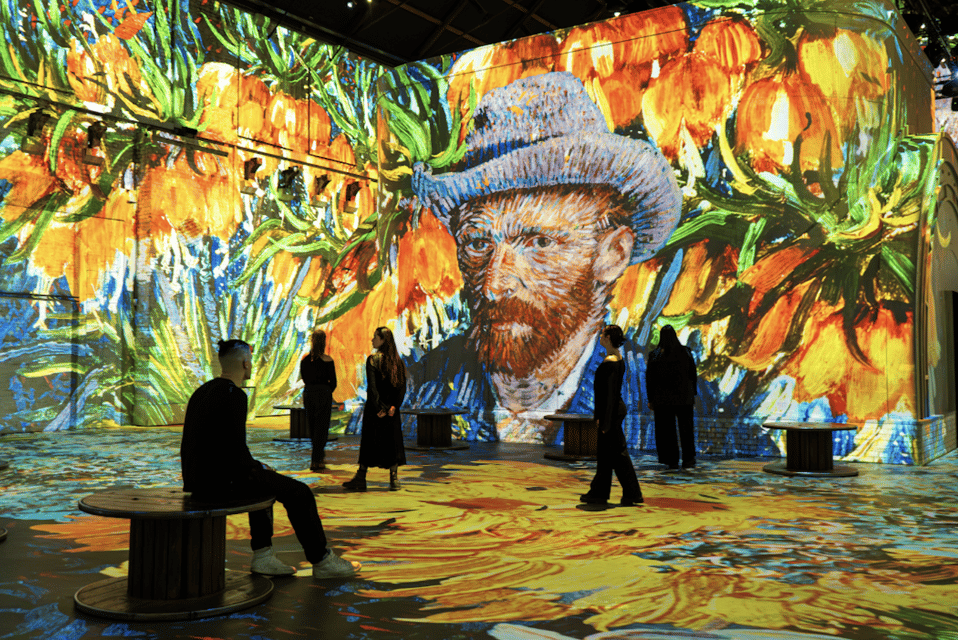
This exhibition isn’t “anytime” viewing. The Dutch Masters part runs only during the first and last time slot of the day, and each slot is a single, scheduled event.
A few things you should treat as non-negotiable:
- Doors open 15 minutes before your time.
- The exhibition is shown only once.
- The show starts exactly at your booked time.
- After the exhibition, the venue closes (so you can’t plan to linger for more content like a museum stop).
That means your best strategy is to arrive early enough to breathe, not to sprint. The hall can feel hidden within the park area, so if you’re coming by tram or walking from nearby sights, give yourself buffer time. If you miss the first minutes, you won’t get them back because the show is not designed for catch-up.
Also note a useful point: the ticket is timed entry, so you should be able to skip the ticket line and go straight to the right flow once you’re inside.
What you’ll experience inside: light, scale, and changing rooms
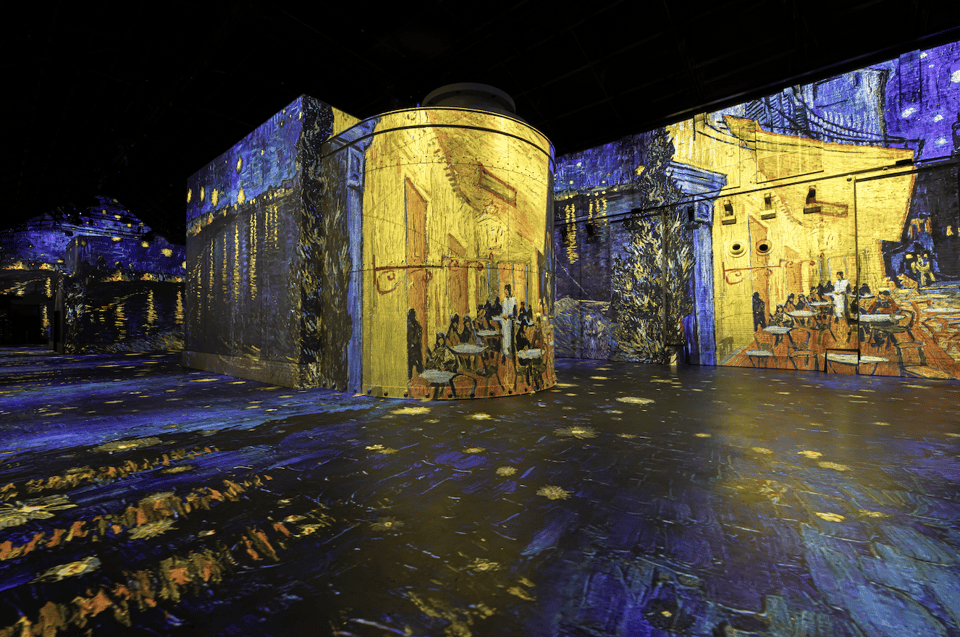
Think of the show as a sequence of rooms and visual chapters. You’ll spend your time inside an industrial shell with moving projections across large surfaces. The programming is designed so each section shifts the mood: classical scenes, familiar Dutch subjects, then modern and contemporary ideas.
A detail I’d call out from how people describe the experience: the show often feels like you’re stepping into the canvas rather than watching images on a distant wall. That effect comes from the scale and from how the projections fill the field of view. When the music ramps up, the visuals tend to follow it like a conversation.
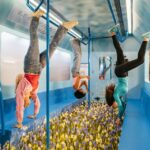
You may notice different viewing zones too. Some areas seem made for sitting back. Others feel like you get closer to the spectacle. Reviews also mention a mirror room, which tells you they’re not only projecting paintings—you’re sometimes getting a reflective or “hall-of-the-art” moment that changes your perception of what you’re watching.
What to expect overall:
- Large-scale projection rooms with walls up to 17 meters.
- A program that moves through different themes rather than staying on one track.
- Music that’s clearly matched to what’s happening visually.
The music is part of the interpretation
If you’ve ever heard a great soundtrack and thought, finally, the music is doing something, you’ll probably feel that here. The projections run with accompanying music, and the show isn’t trying to be quiet or neutral.
That matters because Dutch Masters painting can feel still in a traditional gallery. Music adds momentum. It changes how long you hold your gaze. It also helps when you don’t know every background detail about each artist. You can follow the emotion even if the art history homework isn’t your thing.
One practical tip: pick a viewing spot where you can hear clearly. There’s no way to guarantee perfect audio from every corner, and some people have found that language or audio clarity can depend on where they sit. If you care about understanding every layer of narration, arrive early enough to position yourself before the show begins.



Comfort and rules: lockers included, floor seating likely
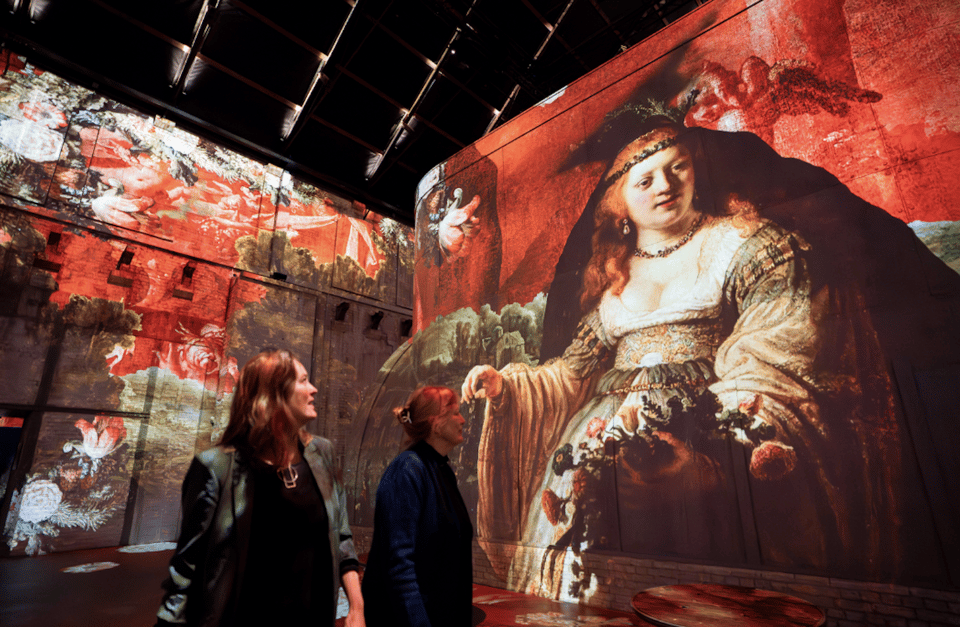
Fabrique des Lumières includes locker use with your timed entry ticket. That’s important because the venue has restrictions. You’re not allowed pets, baby strollers, or luggage/large bags.
So come prepared:
- Store anything bulky in the lockers before you start.
- Keep your hands free for the show. You don’t want to spend time juggling bags or searching for items while everyone else is settling in.
Comfort is the big “real life” issue. Multiple people note that you’re often sitting on the floor, and that can be uncomfortable in a large, industrial space. If you run cold easily, wear layers. Bring thick socks if you’re the type who ends up freezing inside churches and trains in winter.
Also consider crowd noise. This is a popular Amsterdam activity, and while the rules keep the flow organized, you may still want to choose a viewing spot that helps you focus.
How much time to plan for in Amsterdam
Your ticket is for one day, but you should plan your schedule around the show itself, not around museum-style wandering.
Because:
- Doors open only 15 minutes before
- The show starts at your booked time
- It runs once
- It closes afterward
…you’ll have the smoothest day if you treat it like a fixed appointment. Add travel time plus a small buffer so you don’t end up showing up stressed and late. If your day already includes multiple museum tickets, this show can still work well because it’s one stop that doesn’t require studying labels for hours.
If you want a strong pairing, think in terms of contrast:
- The show gives you Dutch Masters through light and music.
- Nearby museums give you the originals, brushwork, and texture up close.
You don’t need to do both, but doing both can give you an interesting comparison: the show explains feeling; the museum explains making.
Value for about $21: what you’re paying for
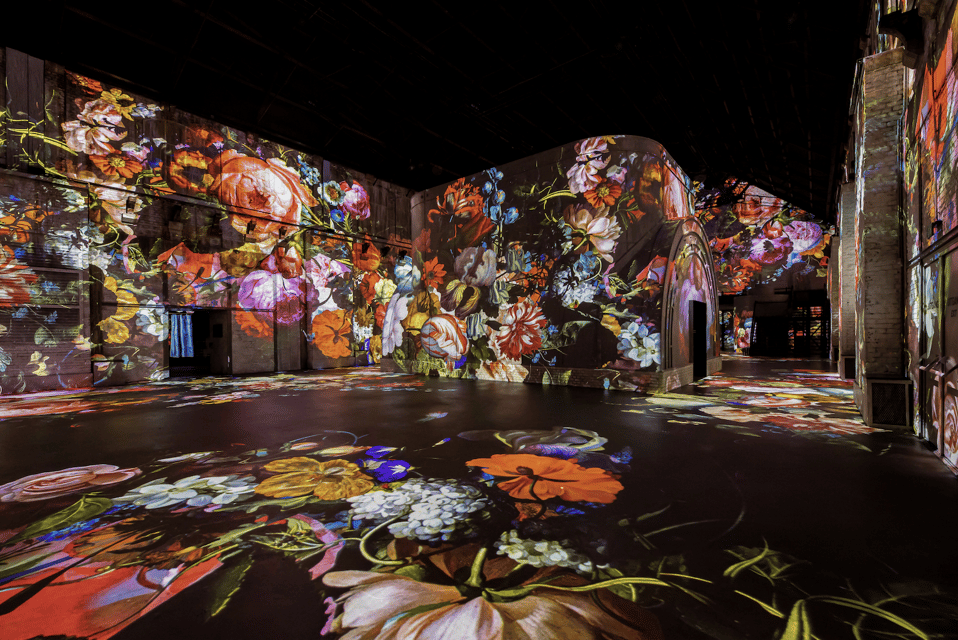
At around $21 per person, you’re buying a ticket to a large-scale production—projection across a huge area, sound design, and a building designed for this format. You’re also getting locker use included, and the ticket is timed entry with skip-the-ticket-line support.
Is it the same value as seeing one painting in a museum for years? No. But it’s a different category:
- You’re not paying for an art object.
- You’re paying for a full show that changes how you perceive the art.
The best value is for people who enjoy art even when it’s presented in a modern format, and who like being in the middle of a planned experience with lights and sound doing the guiding.
If your goal is only to look at Dutch Masters quietly for details, a traditional museum visit may suit you better. But if you want a memorable one-ticket, one-room-at-a-time art experience, this can be a great match.
Who should book this (and who might skip it)
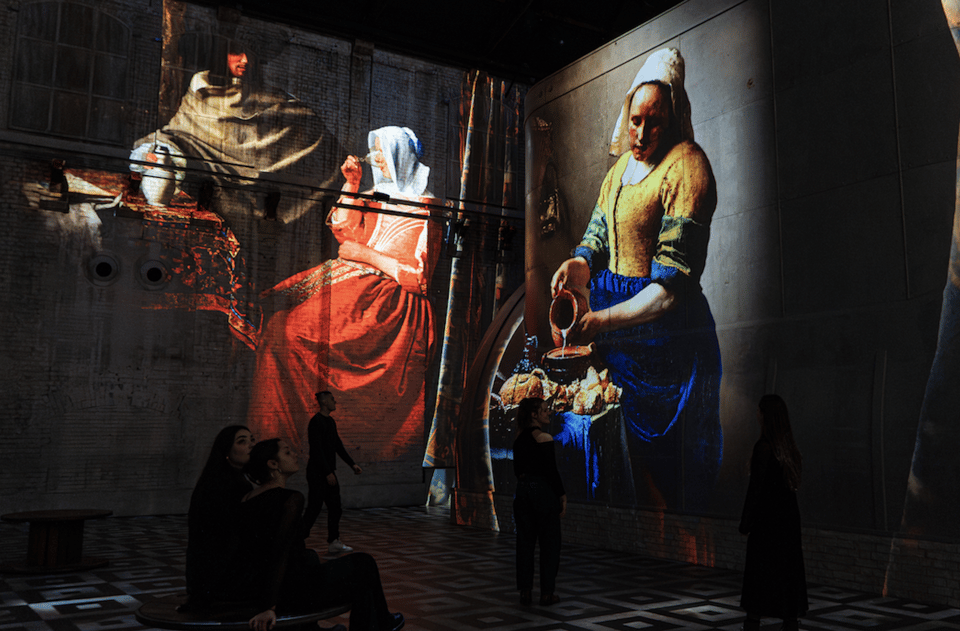
I’d steer you toward Fabrique des Lumières if:
- You like visual spectacle that still centers major Dutch artists.
- You want a break from ticketed museums while still doing something art-focused.
- You enjoy music that’s written to match what you’re watching.
- You want a high-impact activity that works for non-experts too.
I’d be more cautious if:
- You’re very sensitive to cold or uncomfortable seating. Floor viewing seems to be a common experience.
- You need a traditional guided museum format with lots of on-the-spot information.
- You have conditions where this kind of projected show wouldn’t be safe. The Dutch Masters exhibition is not suitable for people with epilepsy.
If you’re traveling with kids, the show can be exciting, but noise can affect your enjoyment. Picking the calmest viewing position helps.
Should you book Fabrique des Lumières Dutch Masters?
If you want one Amsterdam activity that’s unmistakably modern, built around big-name Dutch artists, and designed to make you feel something fast, I think it’s an easy yes. The scale (those massive walls), the show structure (multiple chapters plus a Mondriaan segment), and the music tie-in are the reasons it works.
Book it if you can commit to the exact first or last daily time slot and you’re okay with the fact that this is a scheduled show, not a roaming museum. Skip it if you need flexible arrival times, hate floor seating, or prefer studying artwork in person without projections and soundtrack.
If you’re still deciding, treat this as your “wow” stop. Then use a museum visit for the close-up, brushstroke reality. That combo is a satisfying way to see Dutch art in two very different languages.
FAQ
What time slots are available for the Dutch Masters exhibition?
The Dutch Masters exhibition is only available during the first and last time slot of the day.
When should I arrive for my booked time?
Doors open 15 minutes before the exhibition. The exhibition starts exactly at your booked time slot, and it is shown only once.
How long is the experience?
The show is described as lasting an enjoyable amount of time by many visitors, and some mention it as about an hour, but your best plan is to treat it as a fixed timed program rather than a casual stop.
Is a guide included?
No. A guide is not included.
Are lockers available, and are they included?
Yes. Locker use is included with your ticket. Pets, baby strollers, and luggage or large bags are not allowed.
Is it wheelchair accessible, and is it safe for everyone?
It is wheelchair accessible. The Dutch Masters exhibition is not suitable for people with epilepsy.