REVIEW · AMSTERDAM
Amsterdam Countryside and Villages Bike Tour
Book on Viator →Operated by Yellow Bike Tours & Rental · Bookable on Viator
Amsterdam turns quieter fast on two wheels. This bike tour mixes classic city sights with a real countryside detour into villages, dikes, and the Dutch obsession with water management.
I really like the way the morning timing works. You get the best of Amsterdam plus countryside context, then you’re done early enough to enjoy the rest of your day.
One thing to keep in mind: it’s about 3.5 hours of active riding, and the total distance can feel like a workout if you’re not used to cycling (especially with kids).
In This Review
- Key highlights at a glance
- A morning bike escape from central Amsterdam
- Price, bikes, and what you’re really paying for
- Meeting point and how you’ll actually start the day
- Stop-by-stop: from Nieuwezijds Kolk to Waterland villages
- Stop 1: Nieuwezijds Kolk 29 (about 15 minutes)
- Stop 2: Amsterdam Centraal Station (about 10 minutes)
- Stop 3: Buiksoterweg Ferry to the Northern side (about 10 minutes)
- Road along the Noord-Hollandskanaal (photo and cruising time)
- Stop 4: Krijtmolen d’Admiraal windmill (about 15 minutes)
- Polders and Waterland: the Dutch water story in plain language
- Stop 5: Buikslotermeerdijk (about 10 minutes)
- Stop 6: Waterland (about 15 minutes)
- Ransdorp break: old village vibes and a lunch stop
- Stop 7: Ransdorp (about 45 minutes, includes break)
- Durgerdam and the dike-side views
- Stop 8: Durgerdam (about 15 minutes)
- Guide experience: why the small group can matter
- Weather reality: plan for wind and rain
- Who should book this tour (and who might pass)
- Is it worth $54.01? My value take
- Should you book this Amsterdam countryside bike tour?
- FAQ
- How long is the Amsterdam Countryside and Villages Bike Tour?
- What time does the tour start, and where do I meet?
- Is lunch included?
- What’s included in the tour price?
- How physically demanding is it?
- Is the tour canceled if weather is bad?
Key highlights at a glance
- Small group (max 13) so you’re not stuck watching the guide disappear ahead
- Ferry crossing the IJ with bikes on board, which feels like a mini adventure
- Waterland polder education that makes Dutch water control actually make sense
- Village time with a lunch break in Ransdorp, plus easy photo stops along the way
- Historic city framing at Nieuwezijds Kolk and Central Station before you head out
A morning bike escape from central Amsterdam
This tour is built for people who want variety without wasting half a day in transit. You start in the oldest part of Amsterdam and then keep moving outward, so the city-to-country shift happens while you’re still fresh, not tired and late.
What I like most is that the ride doesn’t just show scenery. Your guide ties the stops to Dutch life—why the land looks the way it does, why certain buildings matter, and how water control shaped where people live. It makes the countryside feel earned, not random.
And because it’s a morning tour, you’re free for lunch plans, museums, canals, or just wandering. That’s a big value if you hate losing your afternoon to logistics.
You can also read our reviews of more cycling tours in Amsterdam
Price, bikes, and what you’re really paying for
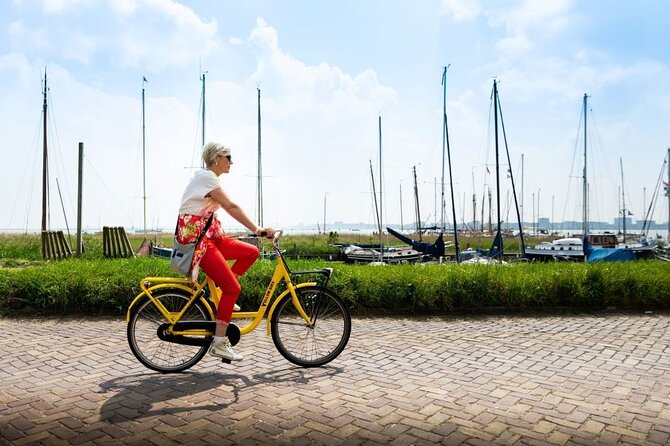
At $54.01 per person for about 3 hours 30 minutes, the cost is less about “admission” and more about guided routing plus bike support. You’re paying for someone to get you from stop to stop safely, efficiently, and with explanations you likely won’t get just biking on your own.
What’s included is the bicycle, and that matters in Amsterdam. A lot of people want to try cycling but don’t want the headache of figuring out where to go, how to cross certain areas, and how to stay oriented once you leave the center.
The not-included piece is food. You’ll have a 30–40 minute break at a lunch café, where you can order something simple and local. You’re not locked into a set menu, which I consider a plus—especially if you’re picky or want a specific drink.
A practical note: some riders mention e-bikes making the ride easier. Even if you’re fit, an e-bike can smooth out the day if the weather turns windy or rainy.
Meeting point and how you’ll actually start the day
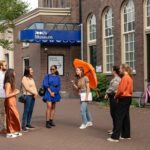
You meet at Nieuwezijds Kolk 29, 1012 PV Amsterdam, and the tour ends back at that same spot. Start time is 10:00 am, which is ideal if you want to beat the day’s crowds.
This is also close to public transportation, so you’re not forced into a long walk from wherever your hotel drops you off. And since you’ll have a mobile ticket, you can keep things simple—no paper to track.
The tour’s physical level is listed as moderate fitness, and that’s honest. You’re riding for a chunk of time. One review even references roughly 25 km, which helps set expectations. If you’re comfortable cycling for 1–2 hours on city routes, you’ll likely be fine.
Stop-by-stop: from Nieuwezijds Kolk to Waterland villages
The itinerary moves in a logical arc: history inside Amsterdam first, then you cross water, then you settle into polder country, and finally you reach old fishing-village life along the dikes.
Stop 1: Nieuwezijds Kolk 29 (about 15 minutes)
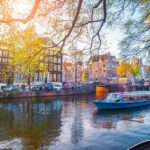
This is a strong opening. You’re at a spot tied to Amsterdam’s oldest part of the city, so your guide can frame what you’re seeing right away—why the city grew where it did, and why the old core still feels different.
Why it matters: If you only see canals and bridges from the center, Amsterdam can feel like one big postcard. This start helps you understand how old the foundations are before you leave them behind.
Downside to consider: If you hate quick photo stops, treat this as a “get bearings fast” moment. It’s short, so you won’t linger.

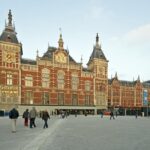
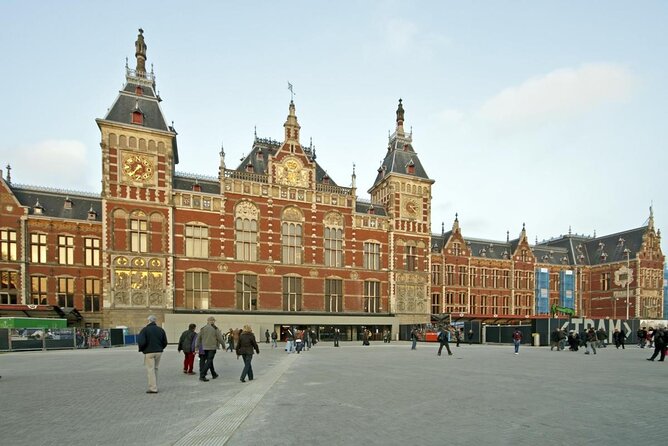
Stop 2: Amsterdam Centraal Station (about 10 minutes)
You’ll check out Central Station, built from 1881 to 1889 by P.J.H. Cuypers. The architecture is described as neo-Gothic-Renaissance style, with plenty of decorative sculptures.
What you’ll notice: Even if stations aren’t your thing, Amsterdam Centraal is visual. You’ll see enough detail to feel like you walked through a landmark, not just rode past it.
Stop 3: Buiksoterweg Ferry to the Northern side (about 10 minutes)
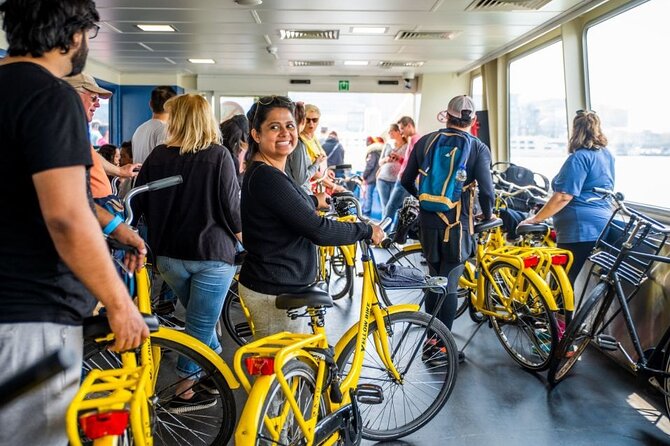
Then comes one of the most fun transitions: you take the Buiksoterweg Ferry, crossing the IJ river with your bikes.
Why this works: It breaks the ride into “city mode” and “country mode.” It also gives you a safe, clear waypoint while still feeling like you’re doing something special, not just getting from A to B.
If it’s windy, you’ll feel it here—but that’s also part of the charm.
Road along the Noord-Hollandskanaal (photo and cruising time)
This segment is your slow-build toward the Waterland area. You’re on a road tied to the canal system, which fits perfectly with the tour’s water-management theme.
Stop 4: Krijtmolen d’Admiraal windmill (about 15 minutes)
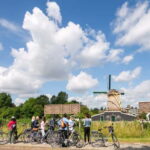
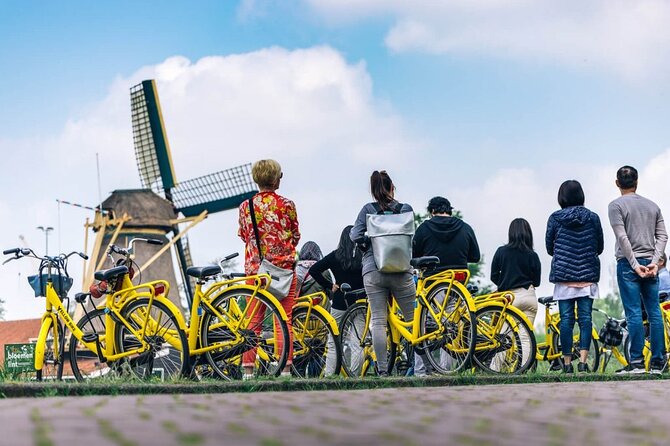
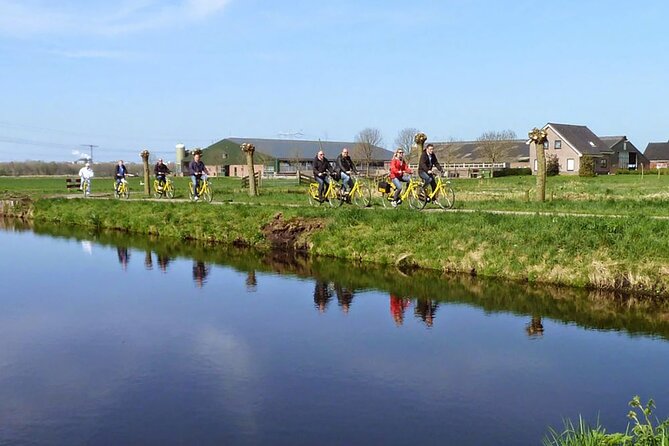
This stop is made for photos: Krijtmolen d’Admiraal is a historic Dutch windmill, and the point is simple—capture the typical look of rural Holland.
What to watch for: Windmills are easy to overestimate as “just a windmill.” But here, it’s also a visual reminder of how Dutch industry and land use depended on technology that could handle local conditions.
Polders and Waterland: the Dutch water story in plain language
After the windmill, the tour shifts from “pretty stops” to “this explains everything.”
Stop 5: Buikslotermeerdijk (about 10 minutes)
You’ll learn about reclaimed marshland—polders created after lakes in the Waterland area were pumped dry. In other words, the land you’re biking across didn’t simply exist forever in its current form.
Why I love this part: It turns the scenery into a story with cause and effect. You start seeing why the Dutch keep talking about water, dikes, pumping, and planning.
Stop 6: Waterland (about 15 minutes)
This is the moment the day really changes. You escape the busy center and end up in a world of villages and cows, plus a clearer explanation of how the Dutch manage water over centuries.
The best way to enjoy this: Pause, breathe, and look at the edges of the land. Even when you’re on a bike, you can spot the logic of low-lying areas and why engineering matters.
Possible drawback: If you’re hoping for mostly city landmarks and museums, this section is more about understanding rural life than collecting big-ticket sights.
Ransdorp break: old village vibes and a lunch stop
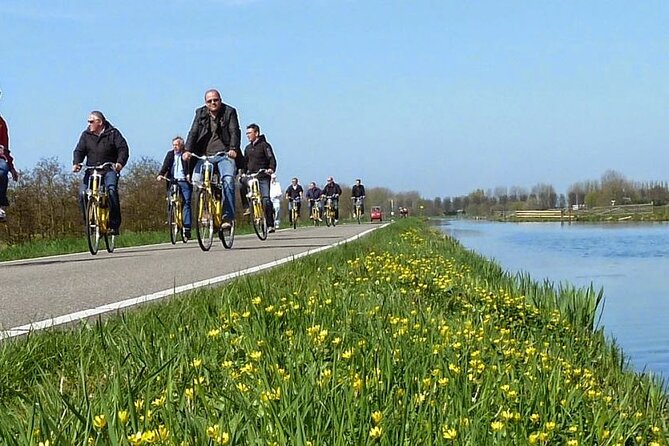
Stop 7: Ransdorp (about 45 minutes, includes break)
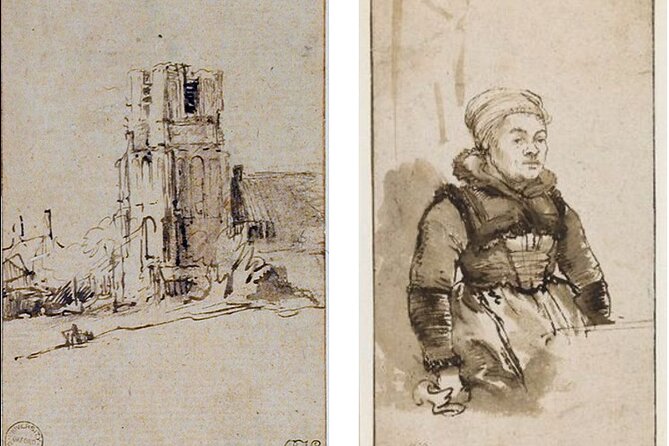
Ransdorp is one of the most interesting stops on the day, partly because it’s clearly old village Amsterdam north of the center. You’ll see a village with a special church tower that’s noted as being painted by Rembrandt.
And you get time to breathe: there’s a 30-minute break (with total stop time around 45 minutes), where you can choose lunch.
Why the break is valuable: You’ll likely feel the ride in your legs by then. A real break keeps the tour from turning into “bike-rush-bike-rush” mode.
Lunch tip: Because lunch isn’t included, look at the café options for whatever fits your day. If the weather is rough (windy or rain), ordering something warm can be a morale boost.
Durgerdam and the dike-side views
Stop 8: Durgerdam (about 15 minutes)
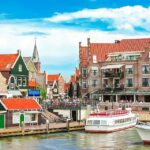
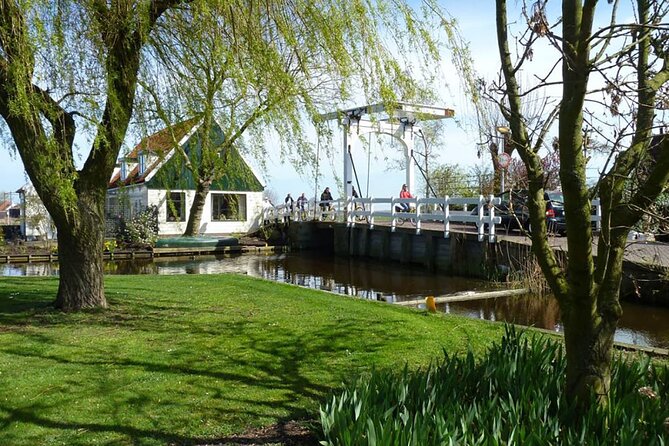
Durgerdam is described as an old fisherman’s village. The fun part isn’t only what you see—it’s how you ride there: biking along the waterside over the dike gives you views that feel open and wide compared to inner-city streets.
What you’ll likely remember: The contrast. After canals, station architecture, and village streets, the dike-side path gives you a feeling of space.
If weather is bad: You’ll still get the views, but you’ll probably want to keep your hands steady and your eyes up—dike roads and open water can be breezy.
Guide experience: why the small group can matter
One reason this tour gets consistently high scores is the guide energy. Names that show up in feedback include William and Willem, plus David as another top guide.
The common thread: guides are friendly, clear, and willing to encourage you through the ride. In one review, the guide’s constant smiles and encouragement were specifically called out. That matters on a day when weather can flip.
Bikes also come in for praise. People mention bikes being in good shape, and that the ride can be easier on e-bikes. And because the group is capped at 13 travelers, it’s easier to ask questions, get help, or just keep the day from feeling chaotic.
Weather reality: plan for wind and rain
You should assume Dutch weather can change quickly. One review describes a blustery day with rain at times, but the tour still felt enjoyable.
That’s a good sign: the route clearly works even when conditions aren’t perfect. Still, you’ll be happier if you bring basic rain protection.
What I’d pack:
- A light rain layer (not just a hoodie)
- Something to protect hands if it’s wet and chilly
- Sunglasses or a cap if the wind whips water around
If the provider cancels due to poor weather, you can be offered another date or a full refund, so you aren’t stuck.
Who should book this tour (and who might pass)
This is a strong pick for you if:
- You want countryside access without giving up your morning
- You like history explained in context, not in a textbook voice
- You’re comfortable biking at least moderately and don’t mind stops every so often
- You want a small group with a human guide, not a headcount-only experience
It might be less ideal if:
- You have very limited cycling comfort
- You want a tour heavy on museums and indoor time
- You’re traveling with kids who aren’t ready for a longer ride (one review notes a 10-year-old found it difficult on their own)
Good compromise for families: If kids can ride in a supported way or you can use an e-bike, the day becomes more manageable. But if your child can’t comfortably do a longer stretch, plan accordingly.
Is it worth $54.01? My value take
For me, the value comes from three things working together:
- Guidance plus routing: you’re getting a guided route that takes you to the north side, ferry crossing, and village areas without you having to map it yourself.
- Time efficiency: you see city architecture and then shift into Waterland while you still have energy. Then you’re done early.
- Meaningful context: the polder explanation and the water-management story make the countryside feel like more than just scenic riding.
You pay less than you’d spend on a private guide, and you get more than you’d get from an unguided bike rental because the stops aren’t random.
Should you book this Amsterdam countryside bike tour?
I’d book it if your ideal Amsterdam day includes cycling beyond the core and you want real context for what you’re seeing. The ferry, the polder education, the old village stop, and the dike-side Durgerdam views add up to a tour that feels like a proper day out, not a quick loop.
I’d think twice only if you dislike riding for hours or you need lots of indoor time. Otherwise, pack for weather, consider an e-bike if you’re offered one, and enjoy the fact that Amsterdam has an easy escape route if you’re willing to pedal.
FAQ
How long is the Amsterdam Countryside and Villages Bike Tour?
It runs for about 3 hours 30 minutes.
What time does the tour start, and where do I meet?
It starts at 10:00 am. You meet at Nieuwezijds Kolk 29, 1012 PV Amsterdam, Netherlands.
Is lunch included?
No. You’ll stop at a characteristic lunch café for about 30–40 minutes, and you can order something to eat there.
What’s included in the tour price?
The tour includes bicycle use. A mobile ticket is provided, and the tour is offered in English.
How physically demanding is it?
It’s marked as moderate fitness. You’ll be riding for a sustained period, so it helps to be comfortable on a bike.
Is the tour canceled if weather is bad?
Yes, it requires good weather. If it’s canceled due to poor weather, you’ll be offered a different date or a full refund.