REVIEW · AMSTERDAM
Amsterdam Cheese and Wine Canal Cruise
Book on Viator →Operated by Boat Amsterdam · Bookable on Viator
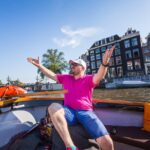
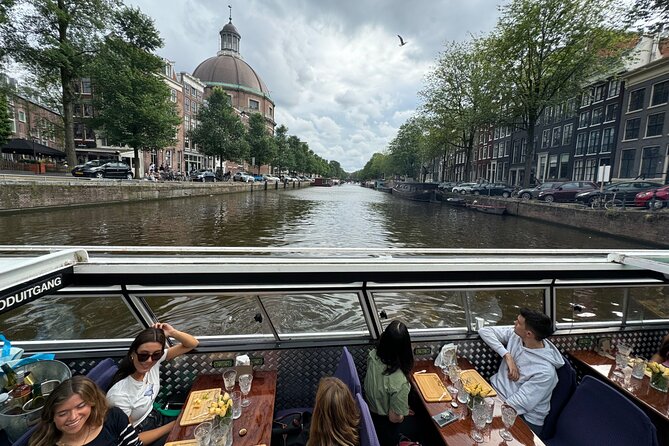
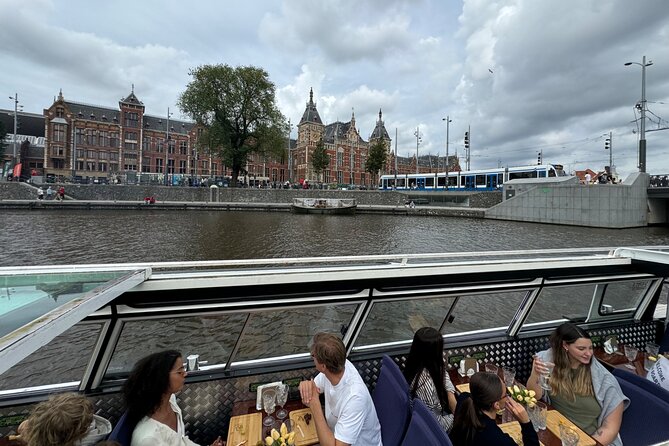
Cheese, wine, and canals—what a combo. This Amsterdam canal cruise with cheese and wine turns one hour of sightseeing into a guided food break, with stops across Herengracht, the Jordaan, and the Anne Frank area. I especially like the live guide commentary that makes the scenery click, plus the easy “sit back and taste” format for a first-time visit. One thing to keep in mind: the boat experience may vary, and you may not get the fully glass-covered, table-on-board setup you expect from marketing photos.
You also get a smart mix of postcard moments and practical context, like why Amsterdam’s canal belt is UNESCO-listed and how the canal neighborhoods differed by class. When the guide leans into it, the trip can feel both fun and focused, and I’ve seen names like Floris and Robbie, Ronald, Lex, Tom, Pippin, Berent, and Michel tied to high-energy, story-driven tours.
In This Review
- Key Points That Matter Before You Go
- Why This 1-Hour Cheese-and-Wine Cruise Makes Sense
- Where You Board on the Amstel: Amstel 51F (and How the Timing Works)
- The Route: Herengracht, the Jordaan, Anne Frank, and the Canal Belt’s Signature Views
- Herengracht: A First Glance at the Upside of the Canal Belt
- Reguliersgracht: The 7-Bridges View You Actually Want
- Jordaan: Plant-Name Streets and the Working-Class Canal Story
- Prinsengracht #263: The Former Anne Frank Home Area
- Westerkerk (Westerchurch): Renaissance Style and an 87-Meter Tower
- Herengracht vs Prinsengracht: Why the Houses Look Different
- UNESCO Canal Belt Facts: 165 Canals, 1680 Bridges
- Amstel Church: A Temporary Wooden Church That Lasted
- Magere Brug (Skinny Bridge): The Old Drawbridge Moment
- Hermitage Museum (Amstelhof): Art in a Former Nursing Home
- Blauwbrug (Blue Bridge): The Pont Neuf Connection
- Cheese, Wine, and Beer: What the Included Tastings Are Like
- Live Guides: The Real Secret Sauce Behind the 4.6 Rating
- Boat Comfort Reality Check: Photos vs Reality and Weather Planning
- Price and Value: Is $45.01 Fair for a Food-and-Views Hour?
- Should You Book This Amsterdam Cheese and Wine Canal Cruise?
- FAQ
- FAQ
- How long is the Amsterdam Cheese and Wine Canal Cruise?
- What does the tour cost?
- What’s included in the ticket?
- Is the tour in English?
- Where do I meet for the cruise?
- What sights are on the cruise route?
- How big is the group?
- Can I cancel for a full refund?
- Are service animals allowed?
Key Points That Matter Before You Go
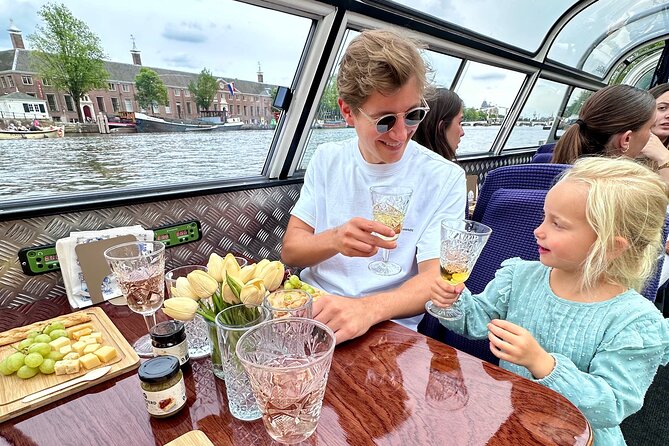
- Cheese and drinks included: Dutch cheeses, plus Heineken beer, wine, soda, coffee, and tea
- Live English commentary: In-person guide talks while you glide past the canal belt
- Classic canal belt highlights in one hour: Herengracht, the Jordaan, Anne Frank area, and major bridges
- The Reguliersgracht 7-bridges view: A rare angle where seven bridges line up in one shot
- UNESCO canal belt context: 165 canals, about 100 km of waterways, and 1680 bridges (Venice has about 400)
- Small-group feel: Max 36 travelers, and some departures can feel extra intimate
Why This 1-Hour Cheese-and-Wine Cruise Makes Sense
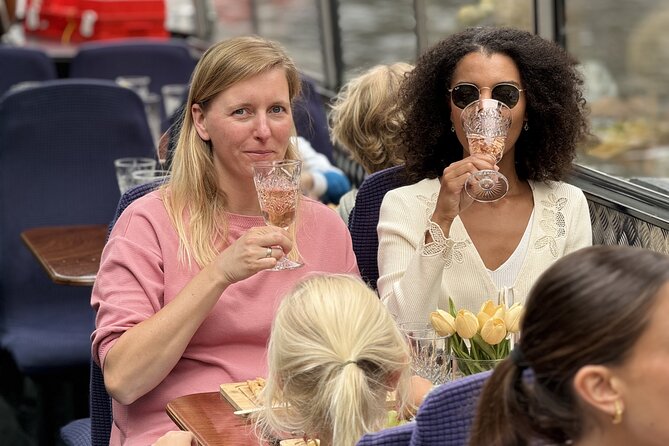
Amsterdam’s canal system can feel endless—beautiful, yes, but also easy to overdo. This tour solves that problem by giving you a compact route with a built-in excuse to snack and sip while you look. At around $45 per person for a 1-hour cruise, the value comes from the combination: guided sightseeing plus multiple included drinks. You’re not just paying for water views; you’re also paying for the guide’s storytelling and the tastings.
I also like that it’s designed for energy management. You get a guided walk-through of the city’s biggest “where am I?” questions—why canals look the way they do, which neighborhoods were built for whom, and what certain landmark buildings mean—without needing to stand in lines or hop between multiple stops for hours.
The practical catch is simple: since this is on the water, comfort matters. If you’re sensitive to sun or cold, plan for it and be ready for weather to affect your experience. One upset booking complained about an open-air setup and less shielding than expected—so it’s worth thinking ahead about what kind of boat you want.
You can also read our reviews of more boat tours in Amsterdam
Where You Board on the Amstel: Amstel 51F (and How the Timing Works)
You start at Amstel 51F, 1018 EJ Amsterdam, and the cruise ends back at the same meeting point. You’ll use a mobile ticket, and the tour includes an in-person guide in English (and Dutch as well, when applicable). With a maximum group size of 36, it’s large enough to run reliably but small enough that the guide can usually keep the energy on track.
A couple of reviews mention a quiet, safe feeling on an electric boat for evening departures. That’s not something you should bet your plan on, but it’s a good clue that at least some boats used on these routes feel modern and easy to enjoy.
If this is your first evening in Amsterdam, this is the kind of activity that helps you get your bearings fast. If you’re coming for the food and drink, the included menu makes it feel more like a social experience than a formal museum tour.
The Route: Herengracht, the Jordaan, Anne Frank, and the Canal Belt’s Signature Views
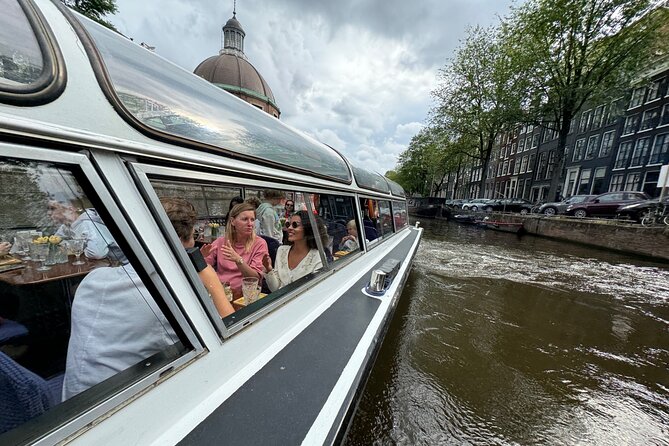
This is a guided loop through several key “layers” of Amsterdam: the wealthier canal belt areas, the working-class transition zones, and the landmarks that show up in photos for a reason.
Herengracht: A First Glance at the Upside of the Canal Belt
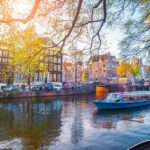
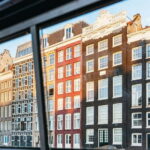
You’ll start cruising through the canals of Herengracht, one of the showpieces of the UNESCO-listed canal belt. Herengracht is tied to Amsterdam’s upper class canal design, so the vibe here is more stately and designed-for-status than many of the surrounding waterways.
What you’ll notice right away is how the canal belt architecture looks “composed” from the water. It’s easier to see proportions and building lines from a boat than from street level.
Reguliersgracht: The 7-Bridges View You Actually Want
Next up is Reguliersgracht, famous for the monumental view where seven bridges line up one after the other. This is one of those Amsterdam moments where the water gives you an angle the streets can’t: the bridges become a sequence, not a bunch of separate photos.
If you care about pictures, this is the stop where you want your phone ready—while the guide keeps the pace manageable and the boat stays oriented toward the view.
You can also read our reviews of more wine tours in Amsterdam
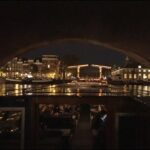
Jordaan: Plant-Name Streets and the Working-Class Canal Story
Then you cruise toward the Jordaan area. Here, Leliegracht leads you into a neighborhood designed for Amsterdam’s growing working class. The name Jordaan comes from the French word jardin, meaning garden, and that shows up in the street naming—many streets reference plants and trees.
This part matters because it isn’t just pretty. The canal belt pattern shifts here: the houses are smaller, and the street plan reflects an older ditch layout used to cut costs. It’s Amsterdam’s class geography, written in bricks and street alignments.
Prinsengracht #263: The Former Anne Frank Home Area
A major highlight is the mention of Prinsengracht #263, associated with the Frank family hiding during World War II. The guide points you toward the building linked to Het Achterhuis (the diary) and the famous history connected to this place.
You don’t need to be a history buff to appreciate why it belongs on a canal cruise. The boat gives you a quiet way to pass these locations without feeling rushed or overwhelmed.
Westerkerk (Westerchurch): Renaissance Style and an 87-Meter Tower
You’ll also see Westerkerk, built between 1620 and 1631 in Renaissance style. The tower is famous for being Amsterdam’s highest church tower at 87 meters. The guide also connects it to the Anne Frank diary and notes the imperial crown on top, tied to 17th-century city symbolism and trade.
This is a great “vertical” moment on the cruise. As you go past, you can actually compare the tower height against the canal belt buildings around it.
Herengracht vs Prinsengracht: Why the Houses Look Different
As the route continues along Prinsengracht, the guide explains something you can see with your eyes: Prinsengracht is relatively more modest compared to Herengracht. Herengracht served the upper class; Prinsengracht works as a transitional canal between the richer canal belt and the surrounding working-class neighborhoods.
On the water, this translates into simpler facades—less width, fewer decorations, and a more sober look.
UNESCO Canal Belt Facts: 165 Canals, 1680 Bridges
At some point during the cruise, you get the big picture: Amsterdam’s canal belt has been on UNESCO’s World Heritage List since 2008. There are 165 canals, totaling about 100 km, with an average depth around 2.6 meters, and 1680 bridges across them. The contrast with Venice is often used to emphasize how canal-heavy Amsterdam is—Venice has about 400 bridges.
This isn’t trivia for trivia’s sake. Once you know the scale, the city’s layout makes more sense when you’re planning how to walk later.
Amstel Church: A Temporary Wooden Church That Lasted
You’ll also pass Amstel Church, dating from 1668. The guide explains it began as a temporary wooden church for new canal belt residents, with plans for a permanent stone church that never happened. That’s why the temporary structure endured—nearly 350 years later.
Today, it hosts cultural events, which helps you connect the landmark to living Amsterdam instead of treating it like a sealed-off artifact.
Magere Brug (Skinny Bridge): The Old Drawbridge Moment
Then comes Magere Brug, the famous Skinny Bridge. It’s described as the oldest still-working, partly wooden drawbridge and a National Monument. The bridge dates to the 17th century, and the current version dates to 1934. Car traffic hasn’t been allowed since 2003.
This bridge is popular for films too, and it helps explain why it looks the way it does—built narrow because the city was short on money, and designed so people could only pass with a bit of squeezing. It’s one of those engineering stories that turns into a visual you remember.
Hermitage Museum (Amstelhof): Art in a Former Nursing Home
You’ll pass the Hermitage Museum in the Amstelhof building. The building dates from 1681, originally serving as a nursing home for around 300 years. In 2007, it was converted into a museum, keeping some rooms restored.
The guide may mention it as an annex of the Hermitage in Saint Petersburg, sharing a portion of its art collection. That “paired collections” idea adds context if you’ve heard of the Russian museum already.
Blauwbrug (Blue Bridge): The Pont Neuf Connection
Finally, you’ll see Blauwbrug, the Blue Bridge. The name comes from a previous drawbridge with blue railings, and the current bridge dates to 1883, inspired by Pont Neuf in Paris. The imperial crowns tied to city arms and the Holy Roman Empire’s symbolism show up again in the bridge design.
This is a good last viewing point because it ties Amsterdam’s canal era to European building trends.
Cheese, Wine, and Beer: What the Included Tastings Are Like
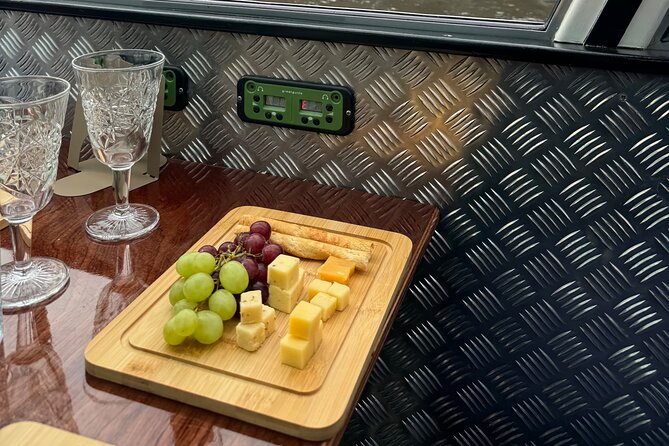
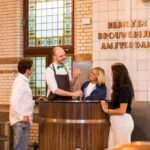
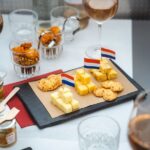
The whole point of this tour is that you don’t just watch food culture—you sample it. You get a fine selection of Dutch cheeses, paired with a drinks lineup that can include Heineken beer, wine, soda, coffee, and tea.
In the best moments, the tastings are generous enough to feel like a planned meal-course experience rather than a snack. One of the strongest praise points is that cheese portions and pairings feel well thought out, and there’s mention of grapes and breadsticks showing up alongside the cheese and crackers.
A few practical tips from how these tours tend to run:
- If you drink wine and beer, pace yourself. A one-hour cruise moves fast, and it’s easier to enjoy the view with a steady rhythm.
- If you’re hungry after, you’ll likely be fine—this is more of a tasting than a full dinner—but it can take the edge off a travel-day appetite.
- If you’re sensitive to alcohol, you still have soda, coffee, and tea in the included list, which makes the experience more flexible.
Live Guides: The Real Secret Sauce Behind the 4.6 Rating
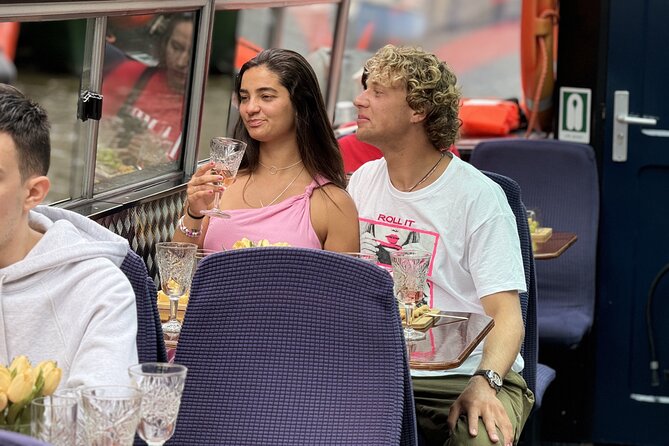
The biggest repeated strength across the experience is the human factor: the guide’s storytelling. You’re not just getting dates and names—you’re getting a sense of how Amsterdam thinks and builds.
I’ve seen guides listed by name in successful outings—Floris and Robbie, Ronald, Lex, Tom, Pippin, Berent, and Michel—and the through-line is consistent: the commentary stays lively, and the guide is ready to answer questions without turning it into a quiz show.
One review detail that’s especially useful for you: some guides talk through not only the landmarks, but also the city’s quirks, local humor, and what’s happening during seasonal events (like light festivals). If you’re in town on an off-day, that kind of extra local color can make the cruise feel like a shortcut to understanding the city.
Boat Comfort Reality Check: Photos vs Reality and Weather Planning
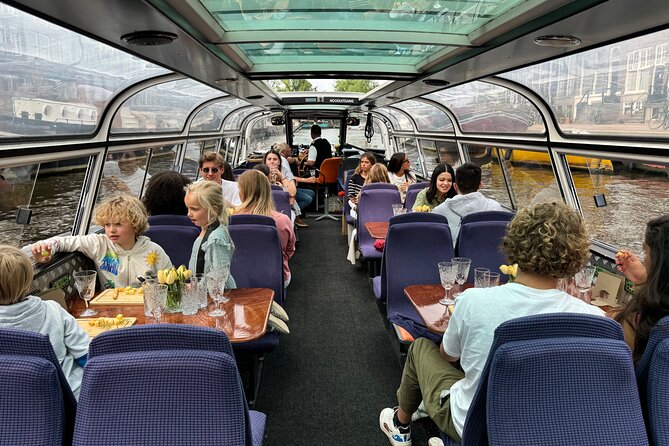
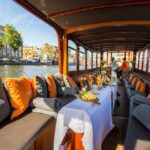
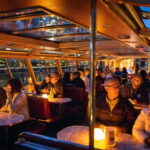
Here’s the honest part. While many experiences sound like they’re calm and well-run, one unhappy booking complained the boat setup didn’t match the photos in a key way: they expected a glass-roof or fully sheltered layout, but got an open-air boat with bench seating and no individual table. They also said plastic flaps left gaps where cold air got in.
That doesn’t mean every departure is like that. But it does mean you should think of the cruise as a boat ride with variable comfort, not as an indoor tasting theater.
My practical advice:
- Wear layers. Amsterdam evenings can turn cool fast.
- Bring sunglasses if it’s bright; bring a light hat or cap if you’re sun-sensitive.
- If you need shade for health reasons, ask about the boat type before you commit.
- If you’re expecting a fixed table for food, know that some boats use simpler bench setups.
And if your priority is calm views and easy storytelling, the cruise can still deliver—especially on evenings when the pace feels relaxed.
Price and Value: Is $45.01 Fair for a Food-and-Views Hour?
At $45.01 per person, this is not a bargain-basement canal cruise. What makes it feel fair is that your money buys multiple things at once:
- a guided tour with commentary in English
- a route through major sights across the canal belt
- included Dutch cheeses plus a full drinks lineup (beer, wine, soft drinks, and hot drinks)
In other words, you’re combining “see Amsterdam” and “eat/drink Amsterdam” without the usual add-ons. If you were to piece that together separately, you’d likely spend more than one ticket’s worth of money on transport, a paid cruise, and drinks on top.
Who gets the best value?
- Couples and small groups who want a simple first-night activity
- People who want history-light context while they eat
- Visitors short on time who still want the canal belt highlights
Who might want to shop around?
- If you want a very specific kind of boat comfort or a fully sheltered viewing setup
- If you’re only interested in one or two landmarks and don’t care about food/drink
Should You Book This Amsterdam Cheese and Wine Canal Cruise?
If you want an easy win on your first day, I’d say yes—with one caveat. Book it if you’re excited by the idea of sampling Dutch cheeses and sipping drinks while a guide lines up the biggest canal belt sights for you. It’s also a good choice if you like a guided explanation that connects neighborhoods like the Jordaan and the Prinsengracht area to Amsterdam’s class layout.
Don’t book it if your trip depends on specific boat comfort details shown in photos, like a fully enclosed or glass-roof vessel, or if sun/shade needs are strict. In that case, send a quick question to confirm the boat type used for your departure time.
FAQ
FAQ
How long is the Amsterdam Cheese and Wine Canal Cruise?
It runs for about 1 hour.
What does the tour cost?
The price is listed at $45.01 per person.
What’s included in the ticket?
You get Dutch cheeses and alcoholic beverages (Heineken beer and wine) plus soda, coffee, and tea, along with live in-person commentary from an English-speaking guide.
Is the tour in English?
Yes. The guide is offered in English (and Dutch as well).
Where do I meet for the cruise?
Meet at Amstel 51F, 1018 EJ Amsterdam.
What sights are on the cruise route?
The route includes stops and views around Herengracht, Reguliersgracht (the seven-bridges view), the Jordaan area, Prinsengracht #263 (the Anne Frank House area), Westerkerk, Amstel Church, Magere Brug (Skinny Bridge), Hermitage Museum (Amstelhof), and Blauwbrug (Blue Bridge).
How big is the group?
The tour has a maximum of 36 travelers.
Can I cancel for a full refund?
Yes. You can cancel up to 24 hours in advance for a full refund.
Are service animals allowed?
Yes, service animals are allowed.