REVIEW · AMSTERDAM
Amsterdam bike tour with a French-speaking guide local!
Book on GetYourGuide →Operated by Amsterdam Velo - Tours en Francais · Bookable on GetYourGuide
Pedaling Amsterdam feels like a postcard, but real. I love the French-speaking local guide who explains what you’re seeing, and I love the Batavus bikes with hand brakes that make the ride feel controlled right from the start. You’ll cover classic sights plus neighborhoods locals actually wander, without wasting time trying to figure it all out.
One thing to consider: the group is kept to a maximum of 12, which is still fun, but if you’re hoping for a totally silent ride, this isn’t that kind of experience.
In This Review
- Key highlights you’ll feel right away
- Why this Amsterdam bike tour is such a smart first day
- The value angle: what you get for $40
- Getting started at IJdok 47 (near Centraal)
- Two departures to fit your day
- The bike setup: Batavus hand brakes and ride comfort
- Who this ride style suits best
- The route, stop by stop: what you’ll see and why it matters
- 1) Museumkwartier: the museum area as an urban pattern
- 2) Dam Square: where the city’s public life shows up
- 3) Westerkerk: church views and the skyline story
- 4) De Negen Straatjes: the small-street maze that feels local
- 5) Haarlemmerbuurt: daily-life Amsterdam instead of just icons
- 6) Anne Frank House area: heavy subject, handled by context
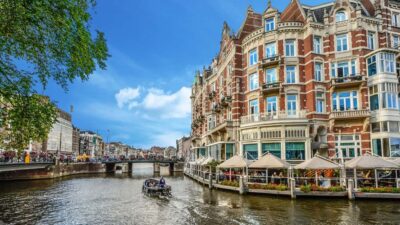
- 7) Grachtengordel: canals and architecture you can start to “read”
- 8) The Jordaan: canals meet neighborhood soul
- Safety and how the tour keeps you confident on Amsterdam bikes
- After the tour: what to do with the knowledge you just bought
- Price, group size, and the biggest practical trade-off
- If you like these, you’ll probably like this tour
- Should you book? My straight recommendation
- FAQ
- FAQ
- Is the Amsterdam bike tour offered in French?
- How long is the bike tour, and when does it run?
- Where do we meet for the tour?
- What does the tour price include?
- What type of bikes are used?
- What age is this tour suitable for?
- Are electric bikes, tandems, or cargo bikes included?
- Can I store luggage before or after cycling?
- Is there a discount for renting a bike after the tour?
Key highlights you’ll feel right away
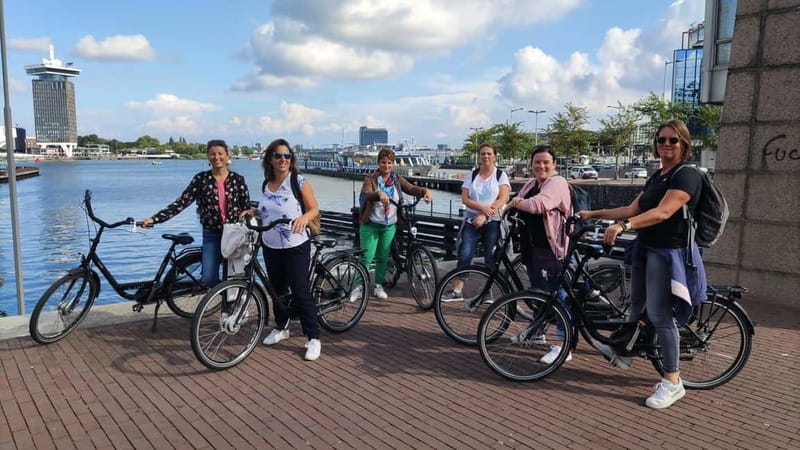
- French guide, local context: history, cultural differences, and daily life, explained in French
- Small group size (max 12): more attention, less waiting around
- Batavus bikes with hand brakes: easier control for most riders
- Route that hits multiple neighborhoods: museum area, canals, De Negen Straatjes, Jordaan
- Bike + helmet support: helmets included if necessary, plus child seats if needed
- After-tour tips: restaurant and “brown café” recommendations plus maps
Why this Amsterdam bike tour is such a smart first day
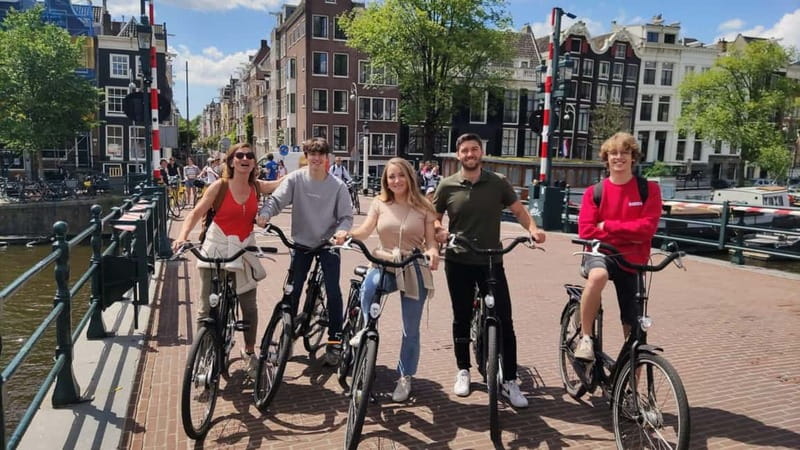
Amsterdam can overwhelm you fast. Bikes, canals, bikes on bridges, bikes everywhere. So I like tours that help you read the city quickly, before you start wandering on your own.
This one works because you’re not just getting moved from stop to stop. You’re riding with a French-speaking local who ties sights to daily life and how the city grew. That means you’ll understand why canals look the way they do, why certain neighborhoods feel different, and why you see the same architectural patterns repeating across streets.
The ride itself is practical. The bikes are Batavus, and they’re set up with brakes under the handlebars (hand brakes, not foot brakes). That matters in Amsterdam, where you’ll brake more often than you think—at crossings, near slow cyclists, and when you need to slow for foot traffic.
You can also read our reviews of more cycling tours in Amsterdam


The value angle: what you get for $40
At about $40 per person for 2.5 hours, the best value is what’s included: bike rental. In a city where renting can add up fast, getting the bike covered lets you spend your money on the guide’s time and route planning. Add to that a small group cap and helpful ride safety guidance, and it starts to feel like a bargain rather than a luxury.
Getting started at IJdok 47 (near Centraal)
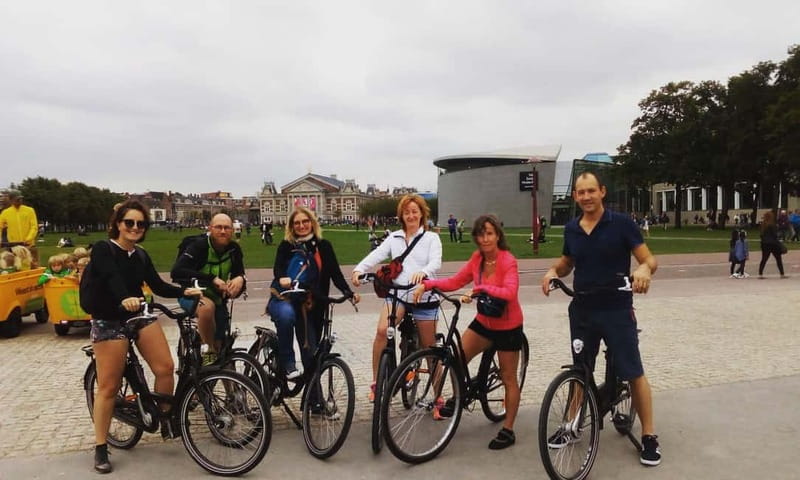
You meet at IJdok 47, close to Central Station (Centraal Station). This is a convenient anchor point, especially if you’re still sorting out your bearings.
What I like about starting here is timing and energy. If you’re arriving by train, you can grab the tour early and stop the mental juggling of maps, bike rules, and street names. It’s also a smooth way to transition from the station area into the neighborhoods that shape how Amsterdam feels.
Two departures to fit your day
There are two daily start times: 10:30 a.m. and 1:30 p.m. If you want lighter crowds and more springy energy, the morning departure usually makes sense. If you slept in or you want to do museums later, the afternoon departure helps you place the ride as your mid-day reset.
The bike setup: Batavus hand brakes and ride comfort
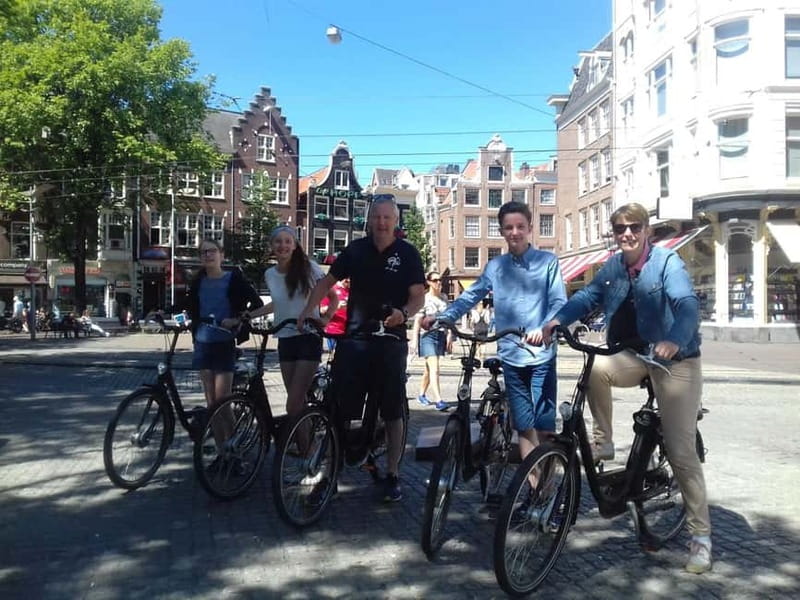
This tour uses Dutch Batavus bikes in all sizes, and they’re equipped with hand brakes. You won’t be learning on a foot-brake setup, and that’s a big deal for riders who want predictable braking with just the handlebars.
The bikes also come with the kind of basics you actually use:
- luggage racks for your stuff
- space for a water bottle (helpful in a long sightseeing loop)
Helmets are included if necessary, and child seats are available for smaller kids and bigger children. Bikes are available for ages 8 and up, with options for families who need a child seat.
You can also read our reviews of more guided tours in Amsterdam





Who this ride style suits best
This is a good choice if you:
- want a structured route without feeling locked into a huge bus schedule
- like learning while you move (rather than standing still for hours)
- prefer a small-group pace where your guide can actually keep an eye on everyone
If you’re the type who hates group dynamics at all, you might find the max-12 setup still a little social. But compared with large-city tours that feel like moving in a crowd, this feels more like an organized bike ride with explanations.
The route, stop by stop: what you’ll see and why it matters
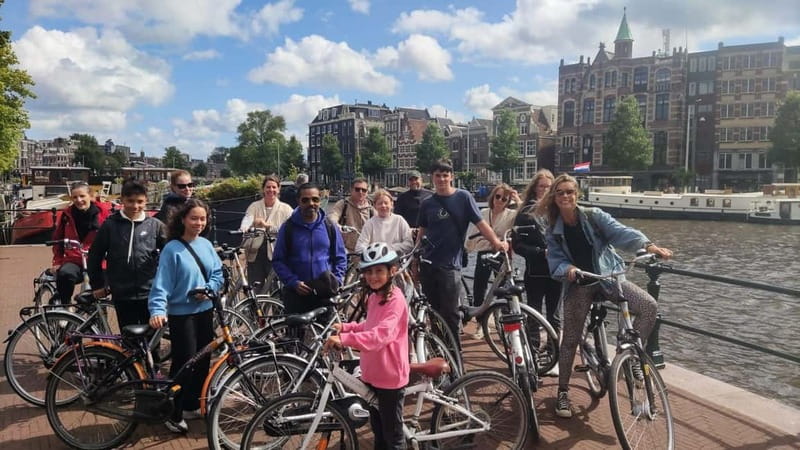
The tour is designed to cover the core parts of Amsterdam that most people miss when they wander alone. You’ll get canals, architecture details, and neighborhood vibes—plus context on how Amsterdam works day to day.
1) Museumkwartier: the museum area as an urban pattern
In the Museumkwartier area, you’ll get a feel for Amsterdam’s “designed” side—wide streets, big sightlines, and the kind of planning that makes the museum district feel deliberate.
The guide’s job here is more than pointing. You’ll learn how neighborhoods shape movement and how Amsterdam’s layout affects daily life. Even if you don’t plan to enter a museum today, this stretch helps you understand the city’s geography in a memorable way.
2) Dam Square: where the city’s public life shows up
From the more open museum area, you’ll reach Dam Square, Amsterdam’s famous central square. This is where the city’s energy becomes obvious fast: it’s a place people pass through, meet, and connect to major landmarks.
Why this stop is valuable: it’s a shortcut to understanding Amsterdam’s “public face.” You’ll get cultural context and history tied to the way the square functions now, not just what it used to be.
3) Westerkerk: church views and the skyline story
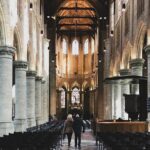
Next is Westerkerk. This is a great stop for architecture and skyline context. Churches in Amsterdam often act like anchors—signals that help you orient the city in your mind.
This is also where you’ll notice how Amsterdam buildings frame streets and canals like part of a single visual system. You’ll get a clearer sense of why certain buildings look “positioned,” even when the city’s streets were built long ago.
4) De Negen Straatjes: the small-street maze that feels local
De Negen Straatjes is the kind of neighborhood you can walk for hours, but you can also get lost fast if you’re on your own. On this tour, it’s more manageable because you’re moving with a plan.
This stop is about texture: narrow streets, shop-lined lanes, and the rhythm of a neighborhood that feels lived-in rather than purely touristic. It’s a perfect moment to pause mentally and say: okay, this is Amsterdam’s small-scale style.
Practical note: if you’re a slower rider, De Negen Straatjes is also where you might feel the most foot-traffic pressure, since pedestrians cluster here. That’s one reason a guide and group pacing help.
5) Haarlemmerbuurt: daily-life Amsterdam instead of just icons
Then you head to Haarlemmerbuurt, which shifts the mood. This is less about postcard monuments and more about neighborhood character.
I like this part because it gives you the “in-between” Amsterdam—street life, local movement patterns, and that subtle difference between areas that feel like shopping streets versus residential fabric.
If you’re the type who wants to find a good place to eat after the tour, this stop helps you understand what kind of streets lead to better local meals and less tourist strain.
6) Anne Frank House area: heavy subject, handled by context
You’ll pass the area around the Anne Frank House. The guide focuses on history and the city’s cultural differences and daily life, which is important here because this isn’t a light stop.
Even if you don’t go inside (the tour itself is bike-based), the ride gives you the right context to understand why the area holds such weight. It’s one of those moments where having explanations in French matters—because it’s easier to process the story when you can actually follow the details.
7) Grachtengordel: canals and architecture you can start to “read”
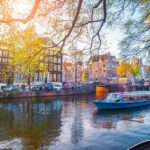
Now the tour leans into what Amsterdam is famous for: the canal belt (Grachtengordel). Here, you’ll learn the “secrets” of Dutch architecture—how design choices show up across different canals and buildings.
This is the part where you stop seeing canals as only views and start seeing them as structure. Once you understand the city’s layout logic, your later self-guided canal wandering becomes much more satisfying.
Practical note: canal areas often mean slower riding and careful braking, because bridges, crossings, and pedestrians mix together. This is where that hand-brake setup pays off.
8) The Jordaan: canals meet neighborhood soul
Finally, you ride into the Jordaan, a neighborhood that feels romantic and everyday at the same time. It’s a place where street layout, canal edges, and building scale all create atmosphere.
I like ending here because it gives you something memorable to explore on foot after the tour. The guide’s recommendations afterward are meant for exactly this: you finish the ride, then you can walk into a neighborhood with a plan.
You return back to IJdok 47 to wrap up the loop.
Safety and how the tour keeps you confident on Amsterdam bikes
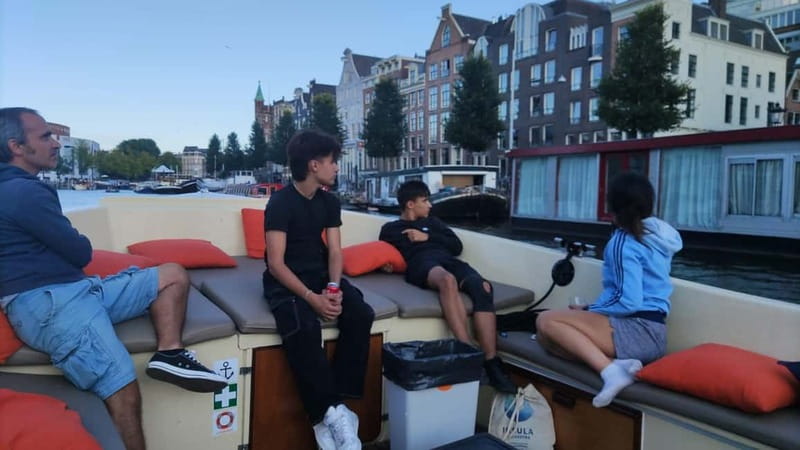
Amsterdam bike culture can be intimidating. What changes everything is guidance at the start. In one highlight from a past tour, the guide Marcel explained bike-riding rules and it went smoothly because the group knew what to do.
Even if you’re an experienced rider, Amsterdam throws curveballs: pedestrian crossings that don’t look like your home city rules, cyclists moving with different instincts, and tight intersections. Having the group coached on how to navigate keeps things calm.
And honestly, the bike choice helps too. Hand brakes feel natural for most riders, and the bike sizes for ages 8 and up mean you’re not stuck with a one-size-fits-all setup.
After the tour: what to do with the knowledge you just bought
The tour doesn’t end when you dismount. You get a list of recommendations—restaurants, brown cafés, and other stops—and maps to help you move around afterward with less trial and error.
This matters because Amsterdam is so easy to overplan. When you already know which neighborhoods to aim for, you spend your time eating and walking instead of re-figuring the city again.
Also, you can often have luggage stored: it’s possible to leave suitcases when you cycle around. That’s handy if you want to tour before heading to your next place or returning to the station area.
Price, group size, and the biggest practical trade-off
The main reason this tour feels like good value is that bike rental is included. You’re paying for the guide + the ride + the bike, not just a walking explanation.
The trade-off is group size. The tours are limited to max 12 people per guide, which is better than big commercial groups, but it’s still a group. If you’re very sensitive to social noise or prefer private moments, you might feel the difference. One piece of feedback you should keep in mind is that some people prefer even fewer riders.
My take: for most people, 12 is the sweet spot for Amsterdam biking—small enough to be attentive, large enough to keep the ride lively.
If you like these, you’ll probably like this tour
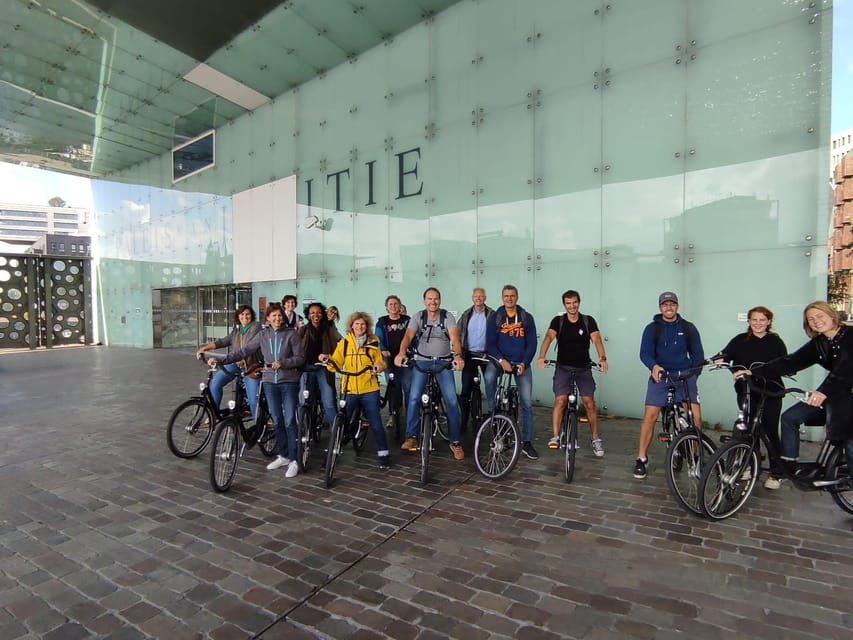
This Amsterdam bike tour is a strong fit for:
- first-timers who want a guided overview fast
- people who want French explanations while riding
- travelers who care about architecture and canal-belt context, not just photos
- families with kids who need child seats and a supported bike experience
It’s less ideal if you:
- want a silent, private experience
- can’t handle any group pace (even small groups)
- prefer not to ride on city bikes at all
Should you book? My straight recommendation
Book this if you want to get oriented fast and you like learning while you move. The small-group French-guided format and the practical bike setup (Batavus hand brakes, racks, helmet support if needed) make it an efficient way to understand Amsterdam before you start free roaming.
Skip it only if you strongly prefer private tours or you’re nervous about bike logistics. If you’re generally comfortable following instructions, you’ll come away with the city in your head, not just images on your phone.
FAQ
FAQ
Is the Amsterdam bike tour offered in French?
Yes. The live tour guide and the tour are in French.
How long is the bike tour, and when does it run?
The duration is 2.5 hours. There are two daily departures at 10:30 a.m. and 1:30 p.m.
Where do we meet for the tour?
The meeting point is IJdok 47, near Central Station (Centraal Station Amsterdam).
What does the tour price include?
The price includes bike rental. Bikes are included in the price, and helmets are provided if necessary.
What type of bikes are used?
The tour uses Dutch brand Batavus bicycles. They have hand brakes (brakes under the handlebars), not foot brakes.
What age is this tour suitable for?
Bikes are available for ages 8 and up. Child seats are available if needed for small and big children.
Are electric bikes, tandems, or cargo bikes included?
No. Electric bikes, tandems, and cargovelo are not included.
Can I store luggage before or after cycling?
Yes, it’s possible to leave suitcases and luggage while you cycle around.
Is there a discount for renting a bike after the tour?
Yes. There is a 10% reduction on bicycle rental if you want to rent bikes after the guided tour. There is also a 10% reduction on another guided tour with a French guide by boat or visiting the windmills.