REVIEW · AMSTERDAM
e-Scavenger hunt Amsterdam: Explore the city at your own pace
Book on Viator →Operated by Qula · Bookable on Viator
Amsterdam has a way of eating your whole day. This self-guided e-Scavenger hunt makes that walking feel like a quest, with smartphone clues and friendly competition built in. You choose your start time, take breaks when you want, and wander key sights without syncing your schedule to a group.
I especially like the value per group: it’s priced for up to 6 people, so a family or close friends crew can split the cost. I also like how practical it is for real life—no fixed start time and no time limit—so rain, naps, and coffee stops don’t wreck your plan. One catch to keep in mind: you’ll need a smartphone and data to play, and you’re doing a lot of city walking (just at the speed of your own team).
In This Review
- Key things I’d plan around
- Entering Amsterdam via Canal Rings and Coffee Breaks
- Price and logistics: why $37.29 can be a smart deal
- Where you start: Stationsplein, then you’re off
- How the smartphone trail works (and what you’ll actually do)
- Stop-by-stop: the Amsterdam route your phone leads you through
- 1) Canal Ring (Grachtengordel): where you slow down on purpose
- 2) Anne Frank House area: famous, busy, and worth planning for
- 3) Westerkerk: a church you can’t ignore
- 4) Dam Square & Damstraat: the center of gravity
- 5) Old Center: character streets over fast sightseeing
- 6) Royal Palace Amsterdam: power, form, and quick focus
- 7) Rijksmuseum: museum district without paying museum prices
- 8) Van Gogh Museum: a big name with room to breathe
- 9) The Jordaan: neighborhood mood, not just monuments
- 10) Centraal Station: the end feels close, even if it isn’t
- 11) Amsterdam Canal Ring (again): repeat views, different angle
- 12) Red Light District (De Wallen): handling a sensitive area with structure
- 13) Leidseplein: your last big “scene” stop
- How long it takes: plan for 3 hours, but expect flexibility
- Rain, crowds, and getting stuck: how to keep the fun going
- Who this is best for (and who might want a different plan)
- Practical tips before you start
- Should you book this e-Scavenger hunt?
- FAQ
- How long does the e-Scavenger hunt take?
- Is there a fixed start time?
- Where do we start the trail?
- Does it end at the same place?
- What does the group size include?
- What do I need to play on my phone?
- What languages are available?
- Is this a private experience?
- Is it accessible for hearing impaired visitors?
- Can I cancel for free?
Key things I’d plan around
- Start anytime, 24/7: pick the day and hour that match your energy level.
- Pause and stop anytime: you can stretch it beyond the suggested play time.
- Designed for groups up to 6: fewer people means less arguing over answers.
- Riddles across major areas: canal ring, museum district, Old Center, and De Wallen are all on the route.
- Multi-language support: English, German, French, Dutch, Spanish, Italian, and more.
- Smartphone-first experience: you’ll get instructions by email and follow them on your phone.
Entering Amsterdam via Canal Rings and Coffee Breaks
The Qula Amsterdam City Trail is basically a guided walk, minus the guide. Instead of listening to a person talk at you, your phone gives riddles and assignments that nudge you from place to place. That shift matters in Amsterdam, where the city can feel like one long blur of facades unless you have a reason to look closer.
This format also helps with the biggest practical problem in family travel: getting everyone to move at the same time. Kids (and adults) tend to walk farther when they’re chasing answers instead of just covering distance.
The route is designed to pull you through some of the most recognizable areas, but the pacing is yours. If you want longer stops for photos, or you want to duck into a café when clouds show up, you can.
You can also read our reviews of more city tours in Amsterdam



Price and logistics: why $37.29 can be a smart deal

The price is listed as $37.29 per group, for up to 6 people. That’s the kind of pricing that can make sense even if you’re not trying to save every euro. With most guided options, the cost scales with the number of people. Here, you’re buying one team experience.
A good way to think about value: compare it to paying for one private guide or doing a paid activity where you only get 60–90 minutes. This trail is set up for about a 3-hour experience in the real world, and it can run longer since there’s no time limit. You’re also not paying for museum entry—your tour is mostly about getting around and seeing the city with prompts.
A practical downside is obvious but worth stating: if you show up without a working phone and connectivity, the whole thing stalls. Smartphone plus data is listed as not included, so come prepared.
Where you start: Stationsplein, then you’re off
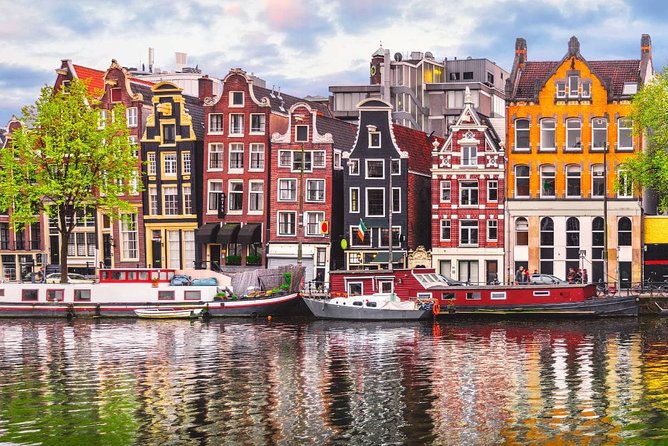
The trail starts at Stationsplein, 1012 AB Amsterdam, and it ends back there. That matters more than it sounds. Starting near a major transit hub is convenient, especially if you’re doing this on a mixed travel day when you might arrive late or leave early.
The activity operates every day, 24/7, with opening hours shown as 12:00 AM–11:59 PM. That’s great because Amsterdam plans often shift on weather, crowds, and energy. If you want to start later in the day to avoid earlier congestion, you can.
It’s also set up as a private experience, meaning only your group plays. No surprises, no joining other teams, and no waiting for stragglers because the phone is your timing.
How the smartphone trail works (and what you’ll actually do)
After booking, you receive an email with instructions for playing the trail on your smartphone. You’ll use an Android or iPhone-compatible setup, and then you follow the quest at the starting point.
The gameplay is simple: you read prompts, solve riddles or assignments, and keep moving. As you progress, you’re guided through a series of stops that include both headline sights and neighborhood-feeling streets.
You’ll want to bring two basics:
- A charged phone (the kind you can read easily while walking)
- Enough mobile data to avoid dead ends
The good news is that the experience is designed to be easy to use. It’s also listed as user-friendly for hearing impaired, and service animals are allowed.
The trail also supports multiple languages, which is useful if your team includes more than one native language. That keeps everyone in the game instead of translating on the fly.
Stop-by-stop: the Amsterdam route your phone leads you through
This trail is built around a chain of landmarks and neighborhoods. Here’s what each stop area gives you, plus the kind of moments you should expect at ground level.





1) Canal Ring (Grachtengordel): where you slow down on purpose
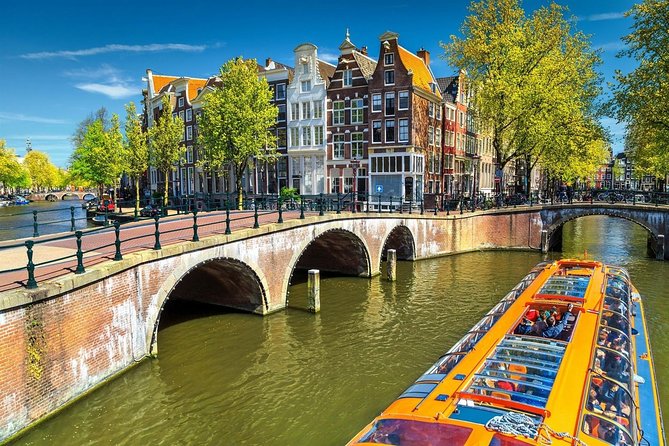
You begin in the canal ring area, which is where Amsterdam looks like a postcard but can still feel oddly flat if you don’t know what to notice. The trail helps by turning sightseeing into a puzzle. You’ll likely pay more attention to the bridges, canal edges, and street alignments because the prompts push you to observe instead of just pass through.
If you like walking in “stop, look, answer” rhythm, this is a strong opener. It sets the tone that you’re not racing the city—you’re reading it.
2) Anne Frank House area: famous, busy, and worth planning for
The route includes the Anne Frank House area. Even if you don’t go inside (your trail doesn’t list museum tickets), the neighborhood still hits hard. Your prompts can help you engage with the story location-by-location rather than treating it like a quick photo stop.
Consider timing here. This area is often busy in any season, and your experience pace depends on how smoothly you can move while reading prompts. If you’re the kind of team that likes quiet corners, starting at an off-peak time can help.
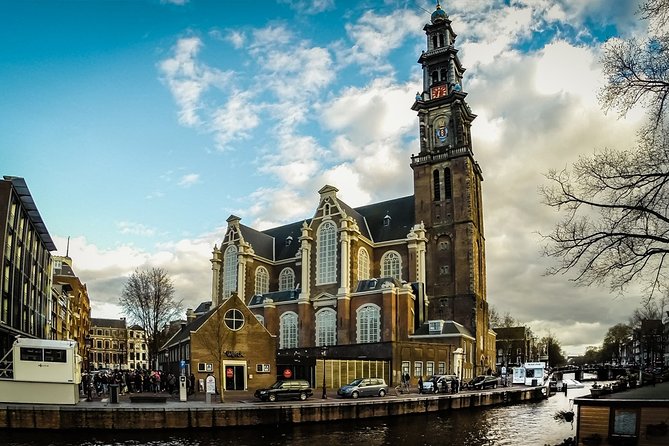
3) Westerkerk: a church you can’t ignore
Westerkerk appears next. In Amsterdam, churches are often both architectural anchors and practical landmarks for orientation. A clue-based approach works well here because you’re forced to stop and look up, not just glance at the sidewalk.
If your team enjoys architecture or just likes the satisfaction of solving a prompt at a recognizable sight, this stop is a good payoff.
4) Dam Square & Damstraat: the center of gravity
Dam Square and Damstraat are classic Amsterdam energy: crowds, history, and big “you are in the middle of it all” vibes. The trail keeps you from spending all your time doing the same people-watching loop. You’re moving with a purpose, which can make the noise feel less chaotic.
That said, Dam Square can be crowded. You may need patience as you coordinate around other pedestrians while you answer questions.
5) Old Center: character streets over fast sightseeing
You then move through the Old Center area. This is where the trail shines for people who want more than the postcard version of Amsterdam. Instead of only circling major squares, you’re pulled along streets that feel more like the city’s everyday body.
If you enjoy small details—doorways, canal crossings, the rhythm of storefronts—this part will probably be where the trail feels most fun.
6) Royal Palace Amsterdam: power, form, and quick focus
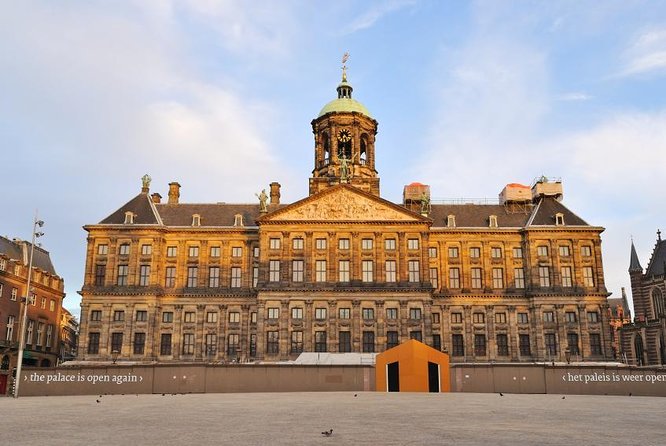
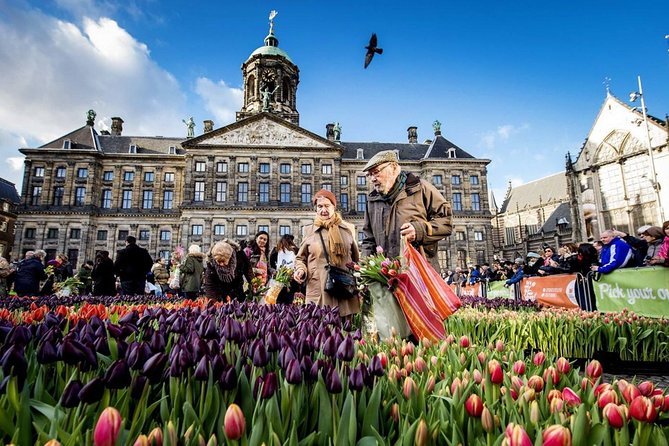
Royal Palace Amsterdam is included. Even if you don’t enter, you’ll get the “spot it, respond to it” experience that suits a self-guided format. Your prompts help turn a quick glance into an actual moment of attention.
This stop also makes the route feel balanced. You’re not only doing canals and museums; you get civic landmarks that shaped the city.
7) Rijksmuseum: museum district without paying museum prices
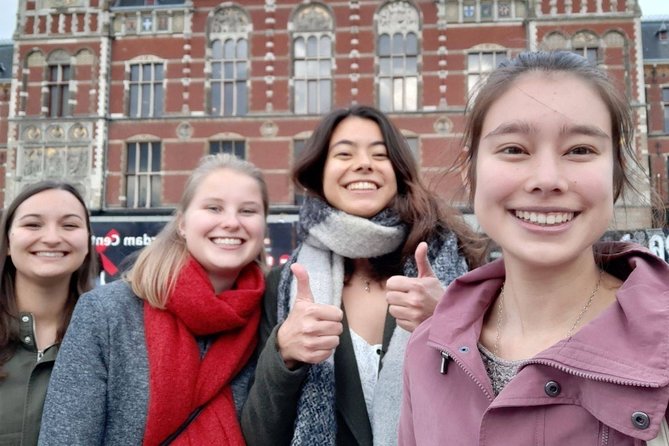
Next up: Rijksmuseum. The trail doesn’t automatically mean museum entry, but it places you in the Museumplein orbit where Amsterdam’s art-and-culture identity lives.
For many teams, this is a great midpoint. You’ve already seen the center and historic landmarks, and now you shift to a more open, visitor-friendly district—often easier to walk and regroup.
8) Van Gogh Museum: a big name with room to breathe
The Van Gogh Museum is also part of the route. Again, even if you don’t buy a ticket here, the area helps you understand why people travel to Amsterdam for art. Your prompts encourage you to keep moving so you don’t lose the quest energy.
If your team gets museum fatigue, you still get value from simply being in the right place and solving the riddle prompts there.
9) The Jordaan: neighborhood mood, not just monuments
You then hit The Jordaan. This is a different Amsterdam texture—less about grand buildings and more about street life. The trail’s structure helps you glide through the neighborhood rather than getting stuck in a single lane of cafés or shops.
If your group likes wandering and doesn’t want a rigid “tour guide route,” this is one of the best segments to enjoy slowly.
10) Centraal Station: the end feels close, even if it isn’t
Centraal Station shows up later on. That’s useful psychologically. Even while you’re still mid-quest, you’re already thinking about how the route will close, which can motivate teams to push through the remaining prompts.
It’s also a practical waypoint for getting oriented in a city that can bend your sense of distance.
11) Amsterdam Canal Ring (again): repeat views, different angle
You’ll pass the canal ring again through a section that’s listed as Amsterdam Canal Ring and includes Herengracht. A second pass can be a plus. It lets you compare how the canals look from a different stretch of walking, and it keeps the route from feeling like one straight line.
It also gives you a chance to slow down. By now you’re in the rhythm of the trail, so you may notice details that escaped you earlier.
12) Red Light District (De Wallen): handling a sensitive area with structure
De Wallen is included. This is one of those Amsterdam topics that can turn a family walk uncomfortable if you’re not ready for it. The trail doesn’t mention any special handling, so use your common sense as a team.
If you’re traveling with kids, decide in advance how you want to manage this segment. The prompts and competition can keep the focus on completing the game, but you should still be prepared for the neighborhood’s mood.
13) Leidseplein: your last big “scene” stop
Finally, you reach Leidseplein (Leiden Square). It’s a lively, central area where you’re likely to find space to regroup—also a good place to grab something warm if the weather turns.
The trail ends back at the meeting point, so this stop works as a “we’re finishing soon” moment.
How long it takes: plan for 3 hours, but expect flexibility
The duration is listed as about 3 hours. You’ll see that within 2 hours the trail guides you along the best spots while playing riddles and assignments on your phone.
Here’s the real-life trick: build slack. Since there’s no time limit and you can pause and stop, your actual time depends on how often you stop to read, take photos, or argue over answers.
From experience with city walking styles, teams usually fall into two modes:
- Solve-focused: keep moving and finish faster
- Break-focused: coffee, benches, and extra wandering stretches it out
Either mode is fine because you control the schedule.
Rain, crowds, and getting stuck: how to keep the fun going
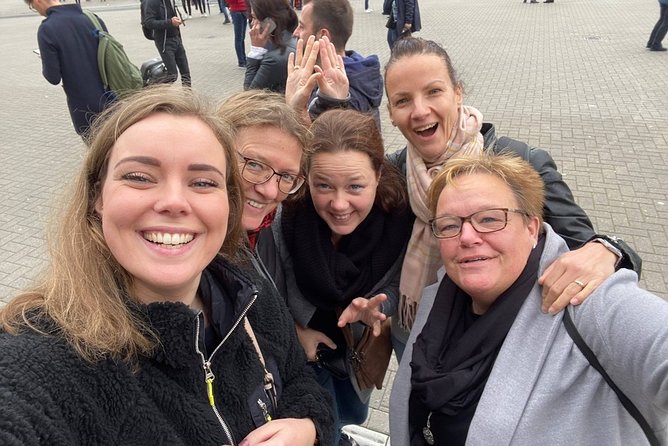
Amsterdam weather can change fast, and the trail is still an easy plan for a rainy day because it’s self-paced. Your best protection is preparation: waterproof shoes help more than umbrellas that blow inside-out.
Crowds are another factor. The route hits high-traffic zones like Dam Square and prominent museum landmarks. When the crowd gets thick, answer time can slow you down. That’s not a problem if your goal is exploring, but it can be frustrating if you want a strict timeline.
If your team can’t solve a question, don’t burn time. Move onward if the app allows it in the moment, and come back later if you want. The trail is designed as a continuous walk rather than a single-question trap.
Who this is best for (and who might want a different plan)
This trail fits best when you want:
- A fun, interactive way to see Amsterdam’s main areas
- Something that keeps kids engaged without hiring a full private guide
- A group-friendly activity for up to 6 people
It’s also great for people who like light structure. You get stops and prompts, but not a rigid schedule. That’s useful if you’re already planning to revisit some neighborhoods and just want a smart loop to start your day.
If you’ve been to Amsterdam many times already, you might find some stops familiar. In that case, the payoff is less about seeing brand-new sights and more about noticing details through the riddles and assignments.
Practical tips before you start
- Start the email instructions at home if possible, so the app setup isn’t a headache in the street.
- Charge your phone fully. City walking + screen time can drain batteries faster than you expect.
- Bring a compact snack and water. The trail encourages breaks, and it’s better than hunting mid-walk.
- Assign one person as the navigator on the team. Solving riddles is easier when everyone isn’t holding the phone at the same time.
- If you’re sensitive to the De Wallen segment, make a team plan before you reach it.
If your goal is an easygoing walking game, these steps keep the experience smooth.
Should you book this e-Scavenger hunt?
I think this is a smart booking when you want a flexible, group-based activity that turns Amsterdam into a puzzle route. No fixed start time and no time limit are the big wins, especially if your day is a little unpredictable.
Book it if:
- You’re traveling with family or close friends
- You want something active but not exhausting
- You’re okay using a smartphone as your guide
Skip or swap plans if:
- You don’t want to rely on a phone and mobile data
- Your group hates walking through busy areas like central squares
- You’re not comfortable with the inclusion of De Wallen
If you match those conditions, Qula’s e-Scavenger hunt is one of the more cost-effective ways to get oriented quickly while still enjoying the city at your own pace.
FAQ
How long does the e-Scavenger hunt take?
It’s listed as about 3 hours. The trail guides you along the best spots within about 2 hours, and you can continue longer since there’s no time limit.
Is there a fixed start time?
No. You can start at a time of your choosing, and the trail is available 24/7.
Where do we start the trail?
You start at Stationsplein, 1012 AB Amsterdam, Netherlands.
Does it end at the same place?
Yes. The activity ends back at the meeting point.
What does the group size include?
The city trail is for a team of up to 6 people.
What do I need to play on my phone?
You’ll need your own smartphone, and mobile data is required. Smartphone and data are not included.
What languages are available?
The trail is offered in multiple languages, including English, German, French, Dutch, Spanish, Italian, and more.
Is this a private experience?
Yes. It’s private for your group only.
Is it accessible for hearing impaired visitors?
It’s listed as user-friendly for hearing impaired.
Can I cancel for free?
Yes. Free cancellation is available up to 24 hours in advance for a full refund.