REVIEW · AMSTERDAM
Van Gogh and Rembrandt Immersive Experience Entry Amsterdam
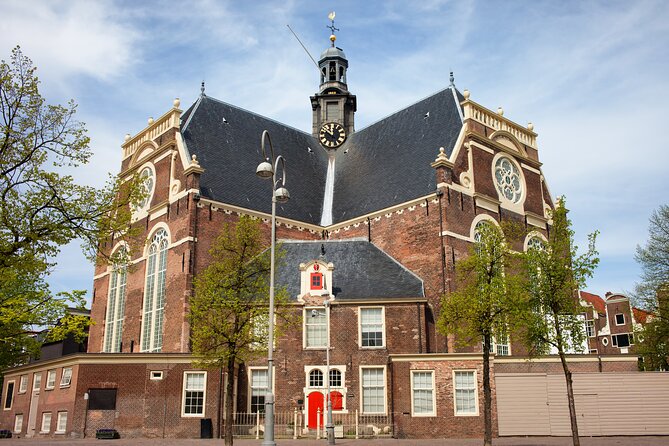
Book on Viator →Operated by Tours & Tickets · Bookable on Viator
Vincent van Gogh and Rembrandt in one church. The Noorderkerk becomes a 360° “moving canvas,” with projections and sound built around how Van Gogh studied Rembrandt and used him as inspiration. The story is told through Van Gogh’s letters and artwork from both masters, wrapping you in the same images that fueled Vincent’s fascination.
Two things I really like here are the setting and the storytelling style. First, the location is dramatic: you’re not staring at panels on a wall, you’re inside the artwork. Second, the show uses Van Gogh’s letters to the brother, which gives the visuals a human thread instead of feeling like a basic slideshow.
One thing to consider: the experience depends a lot on where you sit or lie down. Some viewers have flagged sightline problems from lighting fixtures, and seating comfort can vary—so pick your spot carefully when you enter.
In This Review
- Key highlights you’ll care about
- Inside Amsterdam’s Noorderkerk: the setting does half the work
- The Van Gogh–Rembrandt story: why it feels more personal than typical art media
- What the show looks and sounds like: a 360° canvas in motion
- Seating, beanbags, and comfort: plan your view like it’s a show
- Timing and duration: what 45 to 60 minutes feels like
- Price value in Amsterdam: $19.74 and what you’re actually buying
- Who this is for (and who should skip it)
- Should you book Van Gogh and Rembrandt in Amsterdam?
- FAQ
- How long is the Van Gogh and Rembrandt show?
- Where does the experience take place?
- What ticket format do I need?
- What is included in the price?
- Is this part of the official Van Gogh Museum?
- When will I get confirmation after booking?
- Are service animals allowed?
- Can I cancel for a full refund?
Key highlights you’ll care about
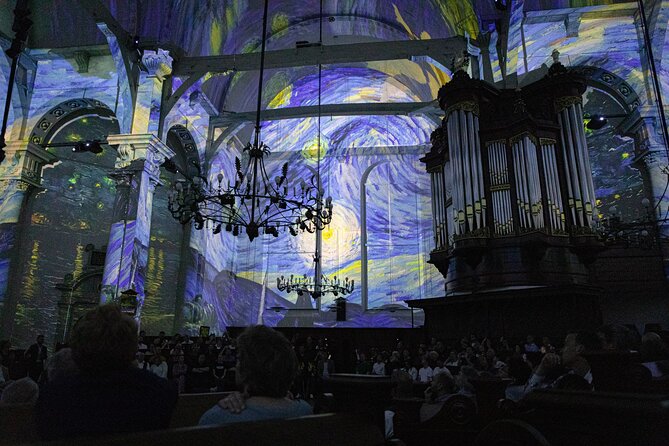
- Noorderkerk’s full interior setting turns the church into part of the artwork
- Van Gogh letters create a personal narrative, not just art facts
- 360° projection effects let you watch from multiple angles as scenes shift
- Beanbags + seating give flexibility, including chances to lie down
- Real production varies by viewing spot, so plan where you’ll watch from
Inside Amsterdam’s Noorderkerk: the setting does half the work
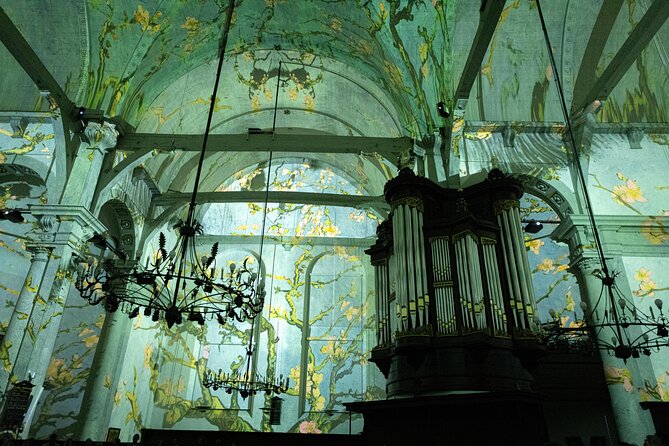
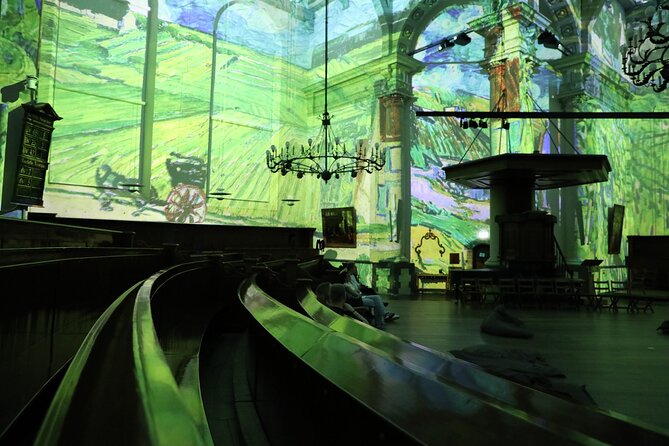
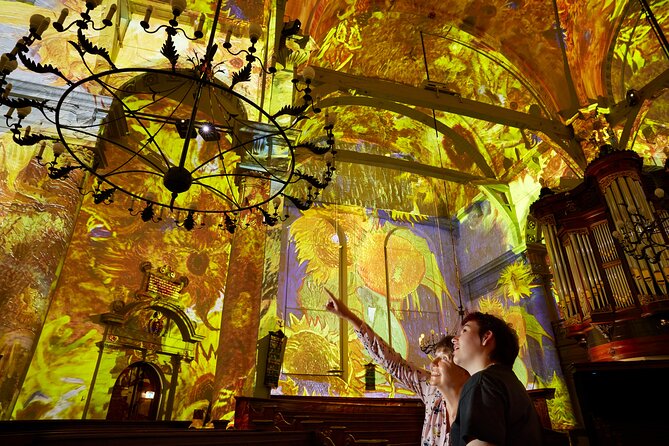
This show takes place in the Noorderkerk, a monumental Amsterdam church with a big, open interior. That matters, because the production isn’t just projected onto a single screen. Instead, the show uses the walls, ceiling, and the whole interior space, building a surrounding visual experience that feels made for the architecture.
You enter and then choose how you want to experience it: you can sit, lie on beanbags, or walk around while the story plays. That choice changes how you feel the show. If you want a cinematic, all-at-once effect, you’ll probably park yourself in a seat area. If you want to move with the changing visuals, walking can help you see different parts of the 360° setup.
The biggest practical tip is simple: get your place early. With a show timed to a set start, your view depends on how close you are to the center of action. Some people end up behind fixtures or in spots where the light hits at awkward angles, so don’t assume every area is equal.
Also, don’t treat it like a museum tour. This is a sound-and-light presentation built around atmosphere and imagery in a specific setting, not a guided walkthrough where you’ll stop for long explanations beside each artwork.
You can also read our reviews of more tours and experiences in Amsterdam.



The Van Gogh–Rembrandt story: why it feels more personal than typical art media
The theme is the connection between the two painters—and how Van Gogh became fascinated by Rembrandt and was inspired by him. The show lays that path out using two main ingredients: Van Gogh’s letters (to his brother) and artwork from both artists.
I like this approach because it gives you more than “Rembrandt was great.” Letters let you hear Van Gogh’s thinking in a way that’s harder to replicate in a normal gallery talk. Instead of just seeing styles and techniques, you get a sense of why Rembrandt’s paintings and etchings mattered to Vincent in the first place.
You’ll also see the relationship framed as something active, not passive admiration. Van Gogh isn’t presented as someone simply copying. It’s more like he’s studying a model he respects—then taking those influences and transforming them into his own way of seeing. The story even leans into a modern-sounding idea: Rembrandt as an early influencer, in the sense that his work shaped what Van Gogh wanted to chase.
Of course, this format has a tradeoff. If you’re hoping for a strict, detailed timeline of both artists’ lives, you may feel the pacing is more emotional than academic. Some people come out feeling that the production doesn’t give them enough narrative structure, even if they enjoy the visuals.
What the show looks and sounds like: a 360° canvas in motion
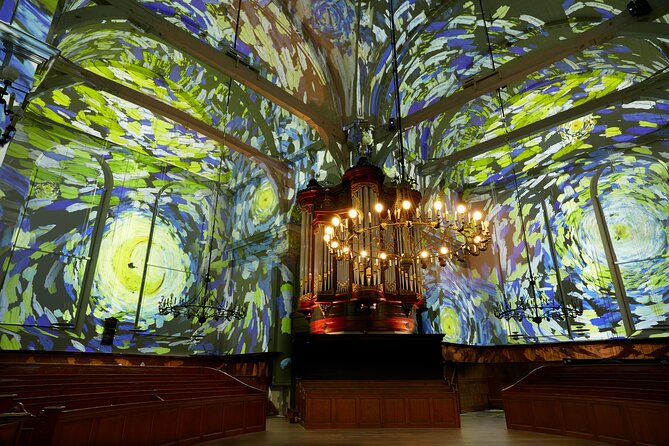
This is described as the first son-et-lumière (sound and light) show shown on such a scale inside a national monument. That phrasing signals what to expect: the production is built for the space, not layered on top of it.
The “moving canvas” concept isn’t just marketing. When the story shifts, the visuals spread across the full interior rather than staying in one corner. You end up watching multiple surfaces at once—walls, ceiling, and the areas around you—so the experience can feel bigger than a screen-based show.
Sound also plays a big role. Even when you’re not following every word, the audio helps you track when scenes change and when the story is steering toward the next connection. That makes the show easier to enjoy if you’re not fluent in Dutch, since the format leans on atmosphere and recurring themes.
Still, production quality can be a concern depending on where you sit. A few reviews mention lighting fixtures blocking views and graphics or video looking like they could be upgraded. That doesn’t mean the show is bad—just that the experience isn’t uniform. If you’re sensitive to bright lights or you wear glasses and glare bothers you, choose a spot with less overhead obstruction.
Seating, beanbags, and comfort: plan your view like it’s a show
You get choices here, and that’s one of the best reasons to go. Beanbags are available, and so is regular seating. A few people specifically recommended getting a comfy seat because not every beanbag is equally comfortable, and the show lasts long enough for comfort to matter.
Here’s the reality: lying down can be great for the full “ceiling” effect, but it’s not always ideal if you’re easily distracted by shadows or if your neck gets tired. Sitting is usually safer for comfort over time, but if you sit too far back, the visuals might feel less crisp.
Then there’s the view issue. Some visitors have had poor visibility due to lighting fixtures obscuring part of the scene. You can’t eliminate that risk entirely, but you can reduce it by staying alert when you’re finding your spot.
My practical take: when you enter, don’t rush to the first available place. Take 20 seconds to look around and find a spot where you can see both the most important visual surfaces and the center of the show area without bright obstacles in your line of sight.
Also remember this is a church interior. Surfaces can feel different than a theater, and audio can reflect off the stone. It usually works well, but it means you’ll notice the setting more—good or bad.
Timing and duration: what 45 to 60 minutes feels like
The show is listed as about 1 hour, but one review described it as closer to 45 minutes. That variation is believable because these presentations can feel shorter once you’re in the flow of the story and visuals.
Plan for it to be a focused block in your Amsterdam day. This isn’t something to squeeze between two frantic museum stops unless you’ve built in buffer time. If you’re trying to fit it alongside other major sights, aim for a calmer schedule around it.
Because it’s a mobile ticket experience, you’ll want your phone charged and ready. Mobile entry tends to be straightforward, but you don’t want last-minute battery stress while you’re in a line.
Average booking time is also a clue. It’s commonly booked around 27 days in advance, which tells me it’s popular enough to sell out some slots. If you’re traveling in peak seasons, I’d book early so you can choose a start time that matches the rest of your day.




Price value in Amsterdam: $19.74 and what you’re actually buying
At $19.74 per person, this is priced like an affordable ticket for a short cultural show. It’s not in the same category as a full-day museum ticket, and that’s good—because it’s also a different product.
You’re paying for three things: the Noorderkerk setting, the sound-and-light production, and the specific story framing around Van Gogh and Rembrandt. If you love art but don’t want to spend your afternoon walking galleries, this can be an efficient way to get the connection between the artists without a long lecture.
Is it worth it? I’d say yes if you’re open to learning through visuals and atmosphere. People who really enjoy it tend to like the unusual format—lying on beanbags inside the church while the art story plays around you.
But if you want a deep, structured interpretation with lots of slow, close-ups and detailed narration, you might find the production too light on story detail. A couple reviews call out missing narrative clarity or tech that could be improved. That’s not unusual for art shows that prioritize spectacle. So match your expectations to the format.
Who this is for (and who should skip it)
This show is a good fit if you:
- like art history, but prefer stories through sound and visuals
- want a break from typical museum pacing
- enjoy unusual settings and don’t mind sitting for the duration
- are comfortable choosing where to watch for best sightlines
It’s not the best match if you:
- need a strict, step-by-step timeline with a lot of close detail
- are highly sensitive to lighting effects
- plan to stay in a spot that might block your view without checking first
Also note the experience is not the official Van Gogh Museum. If your plan is mainly to see official museum galleries, don’t assume this ticket replaces that.
Should you book Van Gogh and Rembrandt in Amsterdam?
I’d book this when you want a creative, relatively low-cost art experience in a remarkable Amsterdam church. The strengths are real: the 360° setting in the Noorderkerk and the way the show connects the artists through Van Gogh’s letters and Rembrandt’s influence.
Skip it if you’re looking for a polished, uniform view from any seat and a fully detailed, guide-like storyline. A few people were disappointed with visibility and the amount of narrative clarity, and that can matter if you’re the type who hates compromises.
My recommendation: go if you can pick a viewing spot thoughtfully, and if you’re excited by the idea of watching art history as a sound-and-light presentation in a church. If that sounds fun, this ticket is one of the more atmospheric ways to spend an hour in Amsterdam.
FAQ
How long is the Van Gogh and Rembrandt show?
It’s listed as about 1 hour. One review described it as lasting around 45 minutes, so it may feel shorter depending on the session.
Where does the experience take place?
It takes place inside the Noorderkerk in Amsterdam.
What ticket format do I need?
You receive a mobile ticket.
What is included in the price?
Admission to the immersive experience is included.
Is this part of the official Van Gogh Museum?
No. This is not the official Van Gogh Museum.
When will I get confirmation after booking?
You’ll receive confirmation at the time of booking.
Are service animals allowed?
Yes, service animals are allowed.
Can I cancel for a full refund?
Yes. You can cancel up to 24 hours in advance for a full refund. If you cancel within 24 hours of the start time, it’s not refunded.